Biography
Nerses IV the Gracious
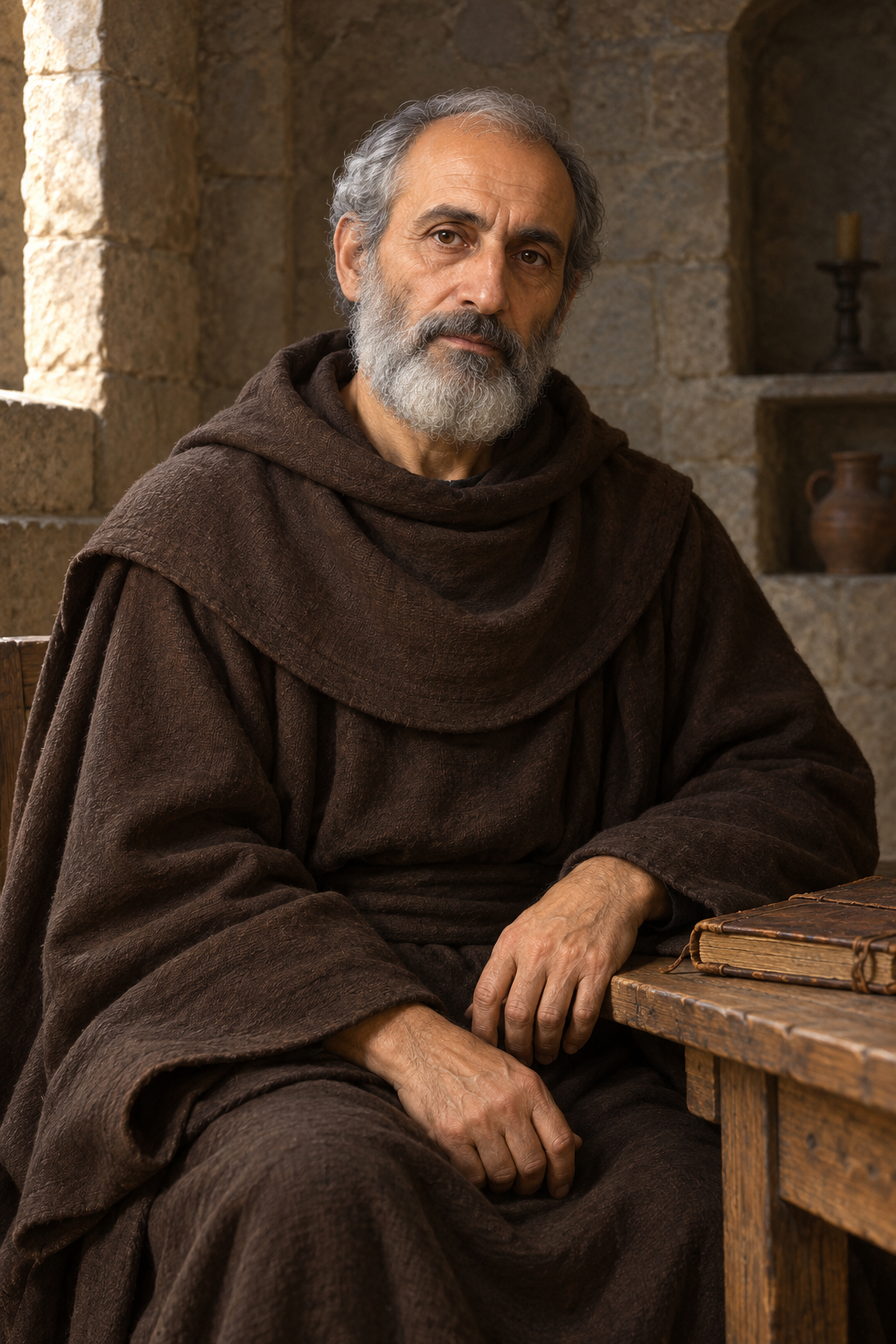
About Nerses IV the Gracious
Nerses IV the Gracious was an Armenian monk, bishop, poet and church leader whose writings joined pastoral instruction with a sustained concern for Christian reconciliation. Born around 1102, he served as Catholicos of Armenia from 1166 until his death on August 13, 1173. His Armenian epithet, Shnorhali, is commonly rendered “the Gracious.”
He received his education at Garmir Vank, the Red Monastery near Kesun. As a bishop he became a close adviser to his older brother Gregory, who preceded him as catholicos. Their church’s leadership was established at Hromgla, overlooking the Euphrates. Nerses’ work brought him into contact with both Greek and Latin churchmen. His later reputation as a mediator grew from these encounters and from the theological correspondence through which he sought to explain Armenian belief to other Christians.
That task required more than courteous language. In the profession of faith sent to Emperor Manuel Comnenus in 1166, Nerses explained the Armenian understanding of Christ’s divinity and humanity. He insisted that divine and human actions belonged to the same Christ, rather than to two separate persons. The text draws repeatedly on scriptural episodes: hunger and the feeding of a crowd, tears at Lazarus’ tomb and the restoration of Lazarus to life. These examples make a demanding theological argument concrete. The account here follows Dulaurier’s nineteenth-century French translation, not a new translation of the Armenian original.
The same exposition defended Armenian liturgical customs, including the use of unleavened bread in the Eucharist. Nerses appealed to biblical texts rather than treating inherited practice as sufficient proof by itself. His desire for reconciliation therefore included a detailed explanation of his own church’s teaching and worship; it did not require him simply to abandon them.
His responsibilities also reached into ordinary social life. Armine Melkonyan’s study of his 1166 Encyclical Letter describes instructions for clergy, rulers, soldiers, tradespeople, farmers and women. Nerses opposed excessive taxation, dishonest weights and the exploitation of poor borrowers. He urged employers to provide adequate food, limit working hours, pay what they owed and allow servants to leave rather than retaining them by force. He also expected priests to read competently and understand liturgical music.
These teachings belong to a hierarchical medieval society. The letter’s advice to women treated cosmetics as a danger to men, and its marriage rules assigned different minimum ages to boys and girls. Nerses opposed marriages involving abducted partners and required a public ceremony. His practical concern for vulnerable people coexisted with assumptions about gender and authority that modern readers may question. Both aspects are part of the surviving record.
Nerses’ literary achievement extended beyond doctrinal statements and pastoral rules. He wrote poems, prayers, hymns and theological works. Armenian worship preserved his voice through the Book of Hours and hymnal. The Armenian Church includes him among its Holy Translators, a title that encompasses writers, interpreters and teachers from several centuries, rather than only the people who translated the Bible into Armenian. He was buried at Hromgla after his death in 1173.
In a 2023 encyclical marking 850 years since his death, Catholicos Karekin II remembered Nerses as a spiritual and cultural guide during a period of displacement and difficulty. The commemoration emphasized the breadth of his audience: his teaching addressed those who governed and those who worked, as well as members of religious communities. It also placed his efforts toward Christian unity within the continuing responsibilities of the Armenian Church. His legacy was presented as a living source of instruction, not simply an achievement belonging to the medieval past.
Karekin also emphasized Nerses’ attachment to Etchmiadzin even while the patriarchal seat was elsewhere. His praise of that spiritual center linked the dispersed community with its homeland. The encyclical understood his music and poetry as ways of sustaining Armenian Christian identity, alongside their role in worship. This remembrance joins his cultural achievement to the pastoral needs of people living away from home.
That legacy has an institutional expression in St Nersess Armenian Seminary, founded in Evanston, Illinois, in the United States in 1961. Its own history explicitly identifies him as its patron saint and links his example to theological study, pastoral care, liturgical renewal and ecumenical understanding. The seminary’s choice of patron connects the formation of later clergy with the varied responsibilities that marked his life.
He is also the titular saint of the Armenian Apostolic church in Dohuk. A heritage survey records that the church was built in 2008 and consecrated in 2009, providing a place of worship for a community that had previously relied on neighboring churches.
In May 2026, the Holy See announced his inclusion in the Roman Martyrology, recognizing a saint long venerated in the Armenian tradition. The announcement highlighted his hymns, pastoral work and pursuit of reconciliation. This recognition should not be confused with a newly established date for his original Armenian veneration.
Wondering how to weigh the stories and sources? Learn how to read a saint biography.