Biography
Nicetas of Medikion
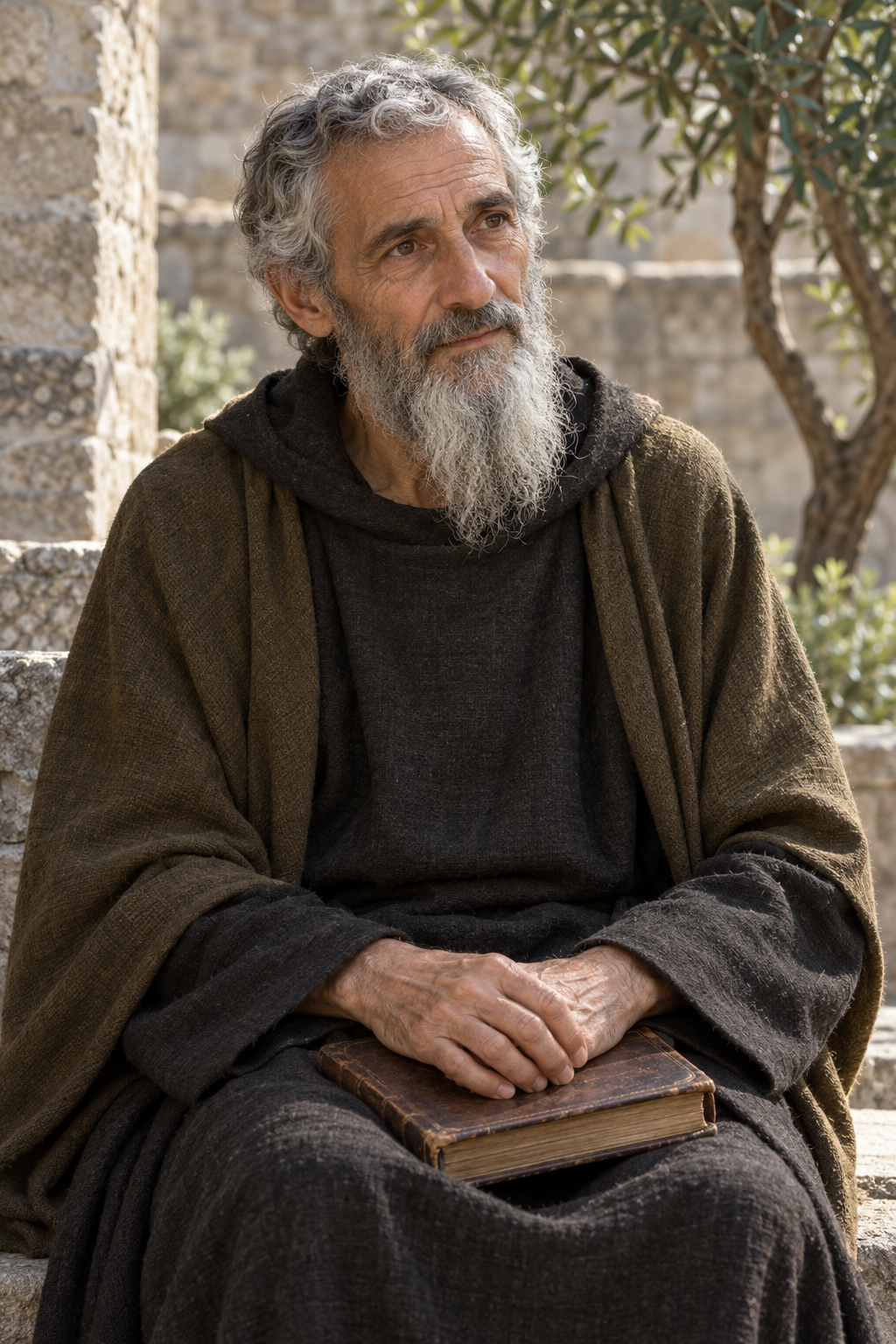
About Nicetas of Medikion
Nicetas of Medikion led a monastic community in Bithynia during a bitter conflict over religious images. Born around 760 in Bithynian Caesarea, he became a priest and eventually succeeded the founder of Medikion as abbot. His defense of icons brought exile under Emperor Leo V. Yet his story also includes a compromise that he came to regret, followed by renewed resistance. The scholarly Prosopographie der mittelbyzantinischen Zeit places his death on April 3, 824.
His early life is preserved through monastic tradition. The Orthodox Church in America recounts that his mother died shortly after his birth and that his grandmother raised him. His father, Philaretos, also entered religious life. Nicetas learned from a hermit named Stephen before joining the monastery governed by Nikephoros. There he became known for the care he took of the community, and the monks chose him to lead them after their founder’s death. The account also attributes healings to his prayers; these belong to the devotional record of his life.
His responsibilities had developed before he became abbot. The prosopographical study describes his ordination by Patriarch Tarasios and his work alongside Athanasius in managing the monastery. It dates his appointment as abbot to 813. A different saint’s Life places Nicetas at the council of Nicaea in 787, but the study cautions that his name is absent from the council’s acts and his own Life does not mention attendance. His participation should therefore not be presented as an established achievement.
The renewed campaign against images placed monastic leaders under direct pressure. Afinogenov’s account follows Nicetas through imprisonment and a winter journey to the fortress of Masalaion, followed by an order to return to Constantinople. Officials eventually offered the exhausted abbots a compromise: they would not have to renounce icons explicitly, but they must receive communion from the iconoclast patriarch Theodotos. Nicetas agreed after other prisoners urged him to do so. His subsequent repentance became a central episode in the account of his suffering.
The Orthodox commemoration likewise acknowledges that he accepted communion and later repudiated the arrangement. It remembers his renewed imprisonment and his death in 824. This account celebrates steadfastness while retaining the episode in which his resolve faltered.
The Latin version of Theosterictus’s Life gives the confrontation a sharper voice. It represents Nicetas as telling the emperor that he had yielded to older monks and would no longer share communion with the emperor’s church. The narrative then follows his detention at the Mangana palace and confinement on the island of Saint Glykeria. It describes a guard who treated him kindly and another official who restricted his food and movement. These details are the biographer’s account of coercion and endurance, not a surviving prison register.
The evidence also permits comparison between the biography and letters. Afinogenov notes that Theodore the Studite’s correspondence agrees with much of the Life but gives a monk named Arsenius a role in prompting Nicetas’s repentance. The Life presents that decision as Nicetas’s own initiative. The letters also suggest that Theodore and Nicetas did not agree on every church question. Their shared opposition to iconoclasm did not erase differences between them. These contrasts help preserve a less uniform picture of the relationships behind the saint’s later reputation.
Nicetas’s work as a spiritual guide receives particular attention in modern scholarship. Dirk Krausmüller reads a passage in which the abbot notices changes in a monk’s expression and behavior, then invites him to speak privately. The monk’s own confession supplies what observation alone cannot reveal. Krausmüller argues that this portrait emphasizes experienced human judgment rather than supernatural access to another person’s thoughts. It makes patient attention and conversation central to the biographer’s understanding of good leadership.
The same scholar notes that the Life does not make Nicetas predict the exact moment of his death, although such predictions occur in other saints’ biographies. He connects this restraint with teaching that people must remain ready for death without knowing its hour. This is an interpretation of the narrative’s choices, rather than evidence that every monk of the period understood holiness in the same way. The study treats Medikion’s writings as a distinctive contribution to debates about spiritual authority and human limits.
After Leo’s death, the Life describes Nicetas helping people in need near Constantinople, including people outside his own faith. It places his last residence on a small property opposite the city. After his death, monks brought his body by boat to Medikion and buried him beside Nikephoros. Other accounts differ about his final residence, so the exact death location remains uncertain.
Byzantine Catholics commemorate Nicetas on April 3 as an abbot who endured imprisonment and exile for the defense of icons. The service also remembers him as a guide responsible for a community’s spiritual welfare. His lasting remembrance joins that daily responsibility to the better-known struggle over religious images.
Wondering how to weigh the stories and sources? Learn how to read a saint biography.