Biography
Nicetas of Remesiana
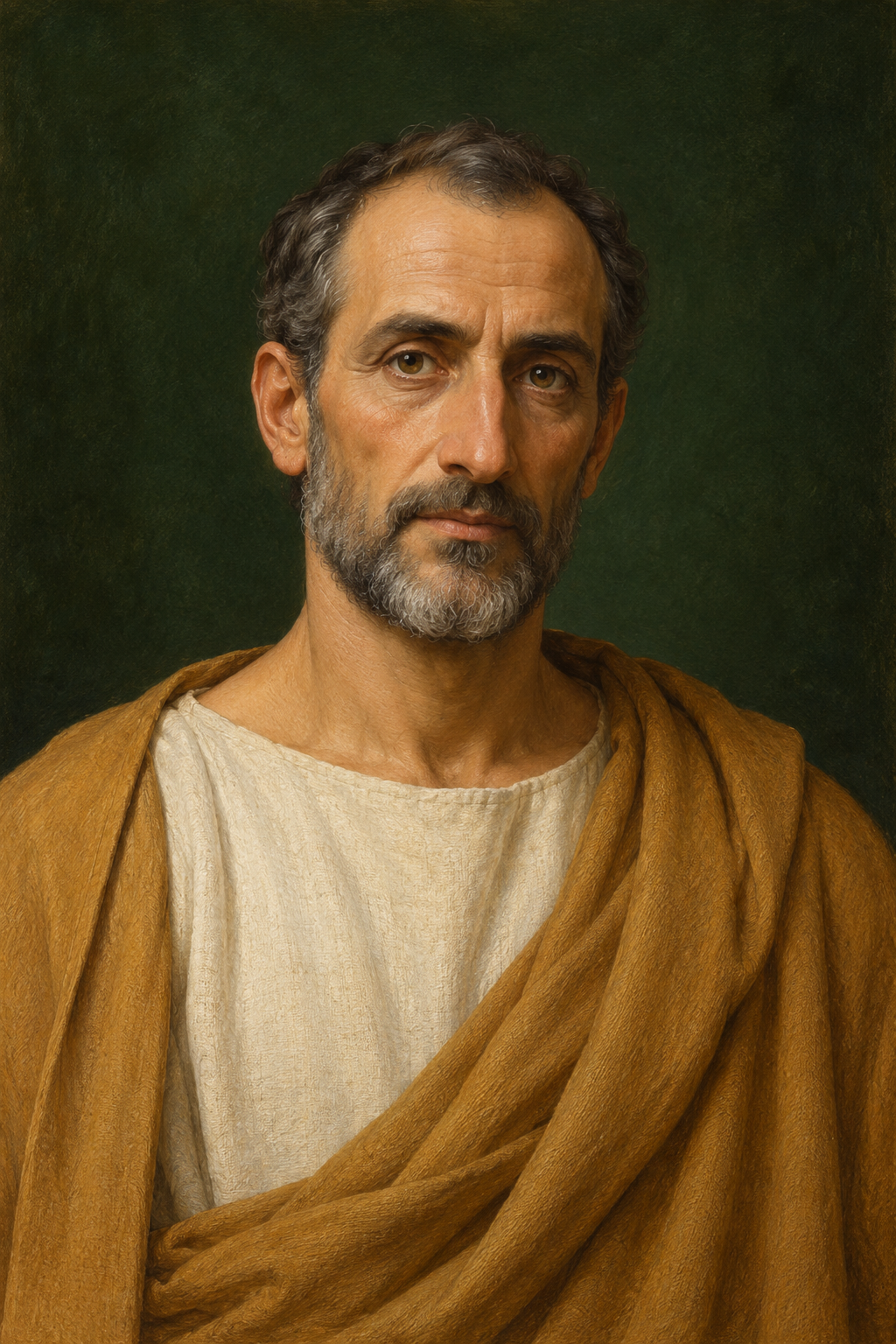
About Nicetas of Remesiana
Nicetas was a bishop and Latin Christian writer associated with Remesiana, now Bela Palanka in Serbia. He visited his friend Paulinus of Nola around the turn of the fifth century. Paulinus’s farewell poem is an important source for his life, but his birth date and birthplace are unknown.
Remesiana lay on an important route through the Balkan peninsula, connecting the region with Aquileia and Constantinople. His teaching prepared people for baptism. Surviving portions of his six-book manual explain faith, the Holy Spirit, and the Creed. He defended the full divinity of the Son and Spirit against competing Christian teachings. Other sermons support night vigils and communal singing. His discussion of the Creed also has an important place in the history of the phrase “communion of saints.”
The manual survives incompletely: some books are known through fragments, while others are lost. Its reconstructed outline therefore preserves more of the intended teaching programme than the surviving text itself can supply. His approach took account of readers who could not easily consult written books. Maria Grazia Bianco notes his explanation that some believers were unable to read, while others lacked time because of their everyday occupations. Learning the Creed by memory supplied a concise account of faith that they could retain. He also addressed rural listeners, seeking language they could understand and remember. The emphasis was on making instruction available across differences of education and circumstance.
Bianco describes a teacher interested in spiritual formation rather than prolonged technical controversy. That preference did not remove his doctrinal commitments; it shaped how he explained them. His writings continued to be useful long after his own episcopate. In the eighth century, Alcuin recommended them to Arno of Salzburg for instructing peoples conquered by Charlemagne. Bianco contrasts this preparation with mass baptism, showing how the surviving fragments belonged to a later discussion about the meaning of conversion as well as to Nicetas’s original pastoral work.
In Stanisław Pamuła’s account of the catecheses, profession of faith required a change of conduct. Nicetas urged believers to abandon practices he condemned as incompatible with Christian life, including divination, fraud, robbery and drunkenness. These injunctions express the bishop’s religious and moral teaching; they do not establish that every listener had practiced each offense. His concern was that the words spoken in baptism should correspond to the life that followed.
The teaching also explained the varied scriptural names of Christ. Terms such as Word, Wisdom, Light and Life gave listeners different ways to approach the same Son of God. Pamuła places these explanations within a wider tradition of baptismal instruction. He also highlights Nicetas’s insistence that worship of Father, Son and Holy Spirit belongs together. For the bishop, a person’s Christian name alone did not ensure spiritual commitment. Instruction called for perseverance in the faith publicly professed, bringing religious understanding and practice into the same account of belonging to the Church.
His defense of singing likewise concerned the shape of Christian community. György Heidl reads the sermons on vigils and psalmody together: night prayer joined singing with readings, while psalmody expressed the unity of the worshippers. In Nicetas’s theological account, the biblical songs anticipated the Church’s praise, and the congregation’s singing joined the praise of angels. This is an explanation of the religious meaning he assigned to music, not a claim that its heavenly effects can be historically demonstrated.
The texts reached modern readers through a complicated manuscript history. The sermons circulated under names including Nicetius of Trier, and their surviving versions required comparison. Heidl describes the work of editors who assessed different manuscript traditions and corrected earlier printed texts. That history helps explain why identifying Nicetas’s writings has mattered so much to the study of his life. A text preserved under another bishop’s name cannot be assigned to him merely because the two names resemble one another.
Nicetas is sometimes credited with the Te Deum, but that attribution remains unproved. Paulinus praised his hymn-writing; no hymn securely survives under his name. Identifying another surviving work about a consecrated virgin with the book Gennadius attributed to him is also uncertain.
Claims about his missionary journeys require similar care. Historian Philippe Henri Blasen challenges the portrayal of Nicetas as a founder of the Romanian Churches through preaching in Trajan’s Dacia. His study argues that Paulinus’s references to Dacia borrow poetic motifs from Ovid. Those lines cannot simply be read as a precise itinerary across the Danube.
Catholic calendars commemorate Nicetas on June 22. Romanian Orthodox Christians honor him on June 24. He is the patron of their parish in Susa, Italy, founded in May 2012. Its first Divine Liturgy followed on his feast that June. The community worships in the Madonna del Suffragio church and has developed children’s catechesis and choral activities. This parish dedication is a documented expression of his continuing veneration.
Wondering how to weigh the stories and sources? Learn how to read a saint biography.