Biography
Nicetas the Goth
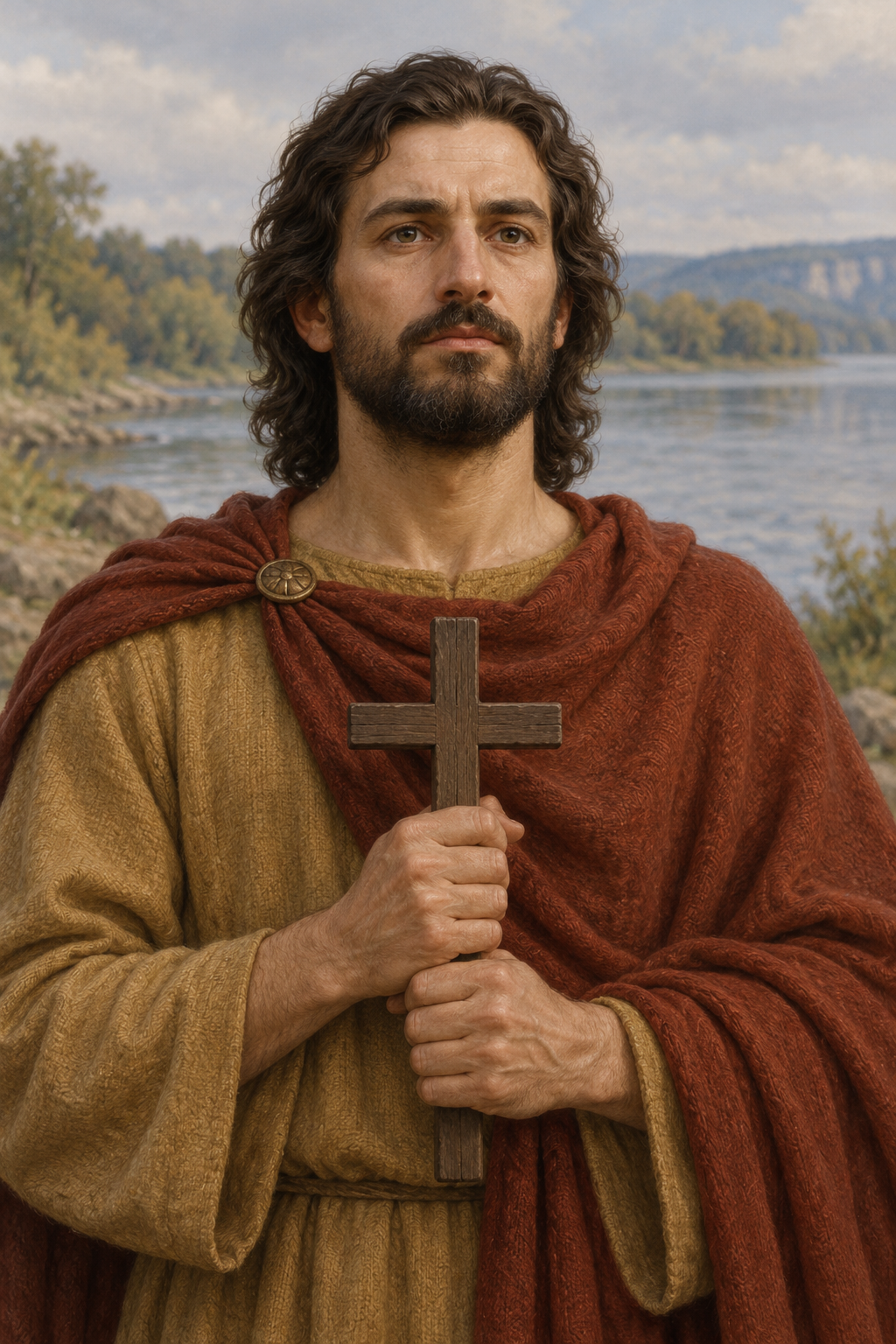
About Nicetas the Goth
Nicetas the Goth is remembered as a Christian martyr from the Danube region, traditionally dated to the fourth century. The Orthodox Church in America commemorates him on September 15 and places his death in 372. Its account describes his witness among the Goths, his resistance to the persecutor Athanaric and his death after torture and exposure to fire.
The surviving narrative is later than the events. Giovanni Antonio Nigro places the oldest Greek Passion near the end of the fifth century, in Mopsuestia in Cilicia. Its historical setting borrows extensively from the church historian Socrates. Nigro questions the account’s claim that Nicetas was taught by Theophilos, a bishop associated with the Council of Nicaea. He also treats the description of noble birth cautiously, since it may follow a familiar literary convention rather than preserve independent family information. The account’s effort to establish Nicetas’ orthodoxy shapes its presentation of Gothic Christianity. These observations counsel restraint about his education, ancestry and precise place in the religious disputes of his time.
The Passion devotes more attention to his relics than to his daily life. As Miodrag Marković explains, the story follows their transfer to Mopsuestia and their placement in a church dedicated to him. Its healing stories and account of a failed attempt to remove relics elsewhere express the city’s attachment to its shrine. They are evidence for the development of devotion, rather than independently verified miracles.
Later retellings became entangled with a story about a different Nicetas, supposedly the emperor Maximian’s son. Marković traces this merging through texts and images. He also notes that the early accounts of the Gothic martyr do not identify him as a soldier, despite later military portrayals. His September feast cannot securely establish the day of his death: the oldest Passion associates September 15 with a transfer of relics and gives no death date.
The Orthodox life recounts that Marianus recovered Nicetas’ body and brought it to Cilicia. It also records prayer to him for children’s protection from congenital conditions. This is a devotional invocation, without a claim of medical effectiveness.
His remembrance also has a continuing local place in southern Italy. The Archdiocese of Lecce’s newspaper identifies him as Melendugno’s patron. Its account of the 2025 celebration describes the mayor presenting the town’s keys to the saint’s statue, a procession and an early morning Mass at the old abbey. Such observances record the community’s relationship with its patron; they do not add evidence about his fourth-century life.
A separate parish observance invokes his protection during earthquakes. Reporting the January 2026 celebration, the same diocesan newspaper describes a bonfire and procession, with the patronage feast on January 28. The parish priest presents the observance as a shared act of faith, memory and hope.
Wondering how to weigh the stories and sources? Learn how to read a saint biography.