Biography
Nicholas the Studite
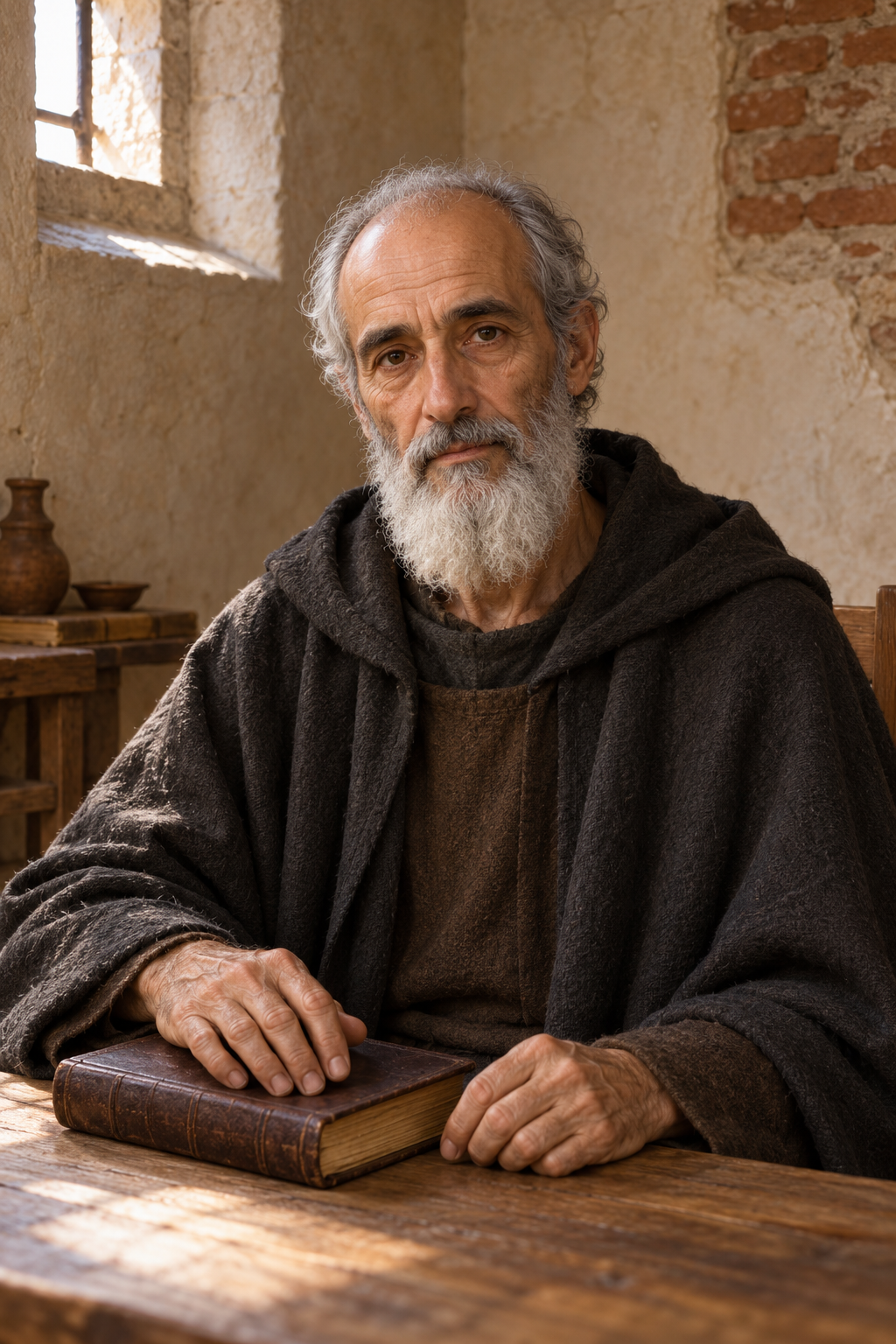
About Nicholas the Studite
Nicholas the Studite was a Cretan monk whose life became closely tied to the monastery of Stoudios in Constantinople. Born at Kydonia in 793, he went to the capital as a boy to join his uncle Theophanes, a monk there. Abbot Theodore placed him in a school connected with the monastery. Nicholas later entered the community and was ordained a priest.
His education included shorthand and calligraphy. Copying books became an important part of his work, and his skill helped equip him to serve Theodore as a secretary. Their association is documented beyond the later stories of Nicholas’s life: Theodore’s surviving correspondence includes a letter addressed to him and numerous other references to him.
The two men defended the veneration of icons during the reign of Emperor Leo V, when imperial policy opposed it. Nicholas shared Theodore’s exile and imprisonment. The Orthodox Church in America remembers both men’s endurance under punishment as a defense of their religious convictions. Nicholas’s later title, Confessor, belongs to this memory of suffering for his faith.
The scholarly account in the Prosopographie der mittelbyzantinischen Zeit follows their confinement from Metopa to Boneta and then Smyrna. Their biographies describe severe beatings and Nicholas caring for Theodore afterward. They were released following Leo’s death. Nicholas remained his companion, and after Theodore died in 826, he arranged the burial on Prinkipo, according to his life.
Release did not bring immediate security. The prosopographical account cites a letter from Theodore describing how the approach of Thomas the Slav’s army forced the companions to flee in 821. Their route took them through Prinkipo and Chalcedon toward Constantinople. Both fell ill and rested for a week during this journey. The same letter also places them in contact with the deposed patriarch Nicephorus. The correspondence thus supplies details of their shared displacement alongside the later biographies.
Under Emperor Theophilus, Nicholas again needed a place away from the capital. Afinogenov describes Irene, a woman who provided him with an estate in Thrace called Phirmupolis. It became a monastery associated with Stoudios. After icon veneration was restored in 843, he returned to Stoudios but continued to prefer periods of solitude at Phirmupolis. His repeated movement between the two communities preceded the later dispute over the patriarchate.
Nicholas eventually became abbot of Stoudios himself. His leadership was interrupted by withdrawal and renewed conflict. In 858 he opposed the removal of Patriarch Ignatius and the appointment of Photius. He left the monastery and later returned as a prisoner. After the change of emperor and Ignatius’s restoration in 867, Nicholas resumed his position. He died the following year.
These later conflicts also left traces outside his biography. A papal letter of 865 invited Nicholas to Rome among representatives of Ignatius’s supporters; it does not establish that he travelled there. His final illness brought another succession at Stoudios. He named Clement as his replacement and was buried beside the earlier abbot Naucratius in the monastery’s church.
The detailed life of Nicholas survives in two forms. Afinogenov identifies the earlier version as probably the work of Nicholas’s disciple Anthony Mauros, written between 911 and 920 and preserved in Slavonic translation. A Greek revision followed. These accounts contain healing stories as well as information about monastic life, so their devotional purpose remains part of how they are read.
Nicholas’s reputation as a copyist has also shaped the history of manuscript attribution. A Russian scholarly catalog connects him with the Uspensky Gospels, a Greek manuscript dated 835.
The catalog identifies the volume as a parchment Gospel book of 344 leaves, now held by the Russian National Library. It entered the Imperial Public Library as part of Bishop Porfiry Uspensky’s collection, purchased in 1883. The catalog associates Nicholas the Confessor with the volume and places its production at Stoudios; that identification is qualified by the paleographical discussion below.
That identification needs caution. Vatican Library scholar Timothy Janz describes its scribe as a monk named Nikolaos whose connection with the Studite community is likely. He does not establish that this was the abbot. He also explains why several other manuscripts once assigned to the same hand are now distinguished from it. A familiar name and a shared style are insufficient to prove who copied a particular book.
Janz points to an obituary notice added by the Gospel book’s scribe. It names Plato, Theodore and Joseph, linking the book to the circle around the Studite monastery. That connection helps explain why scholars associate the volume with this monastic setting. The comparison of handwriting is more restrictive: Janz notes that letter shapes in another manuscript, Vatican Greek2079, differ from those in the Gospel book. Similar scripts could be used by different people.
Nicholas is commemorated on February 4 in both Orthodox and Catholic calendars. The Roman Martyrology notice remembers a monk repeatedly exiled for his defense of sacred images who finally served as superior of Stoudios and died peacefully.
Wondering how to weigh the stories and sources? Learn how to read a saint biography.