Biography
Nicola Saggio
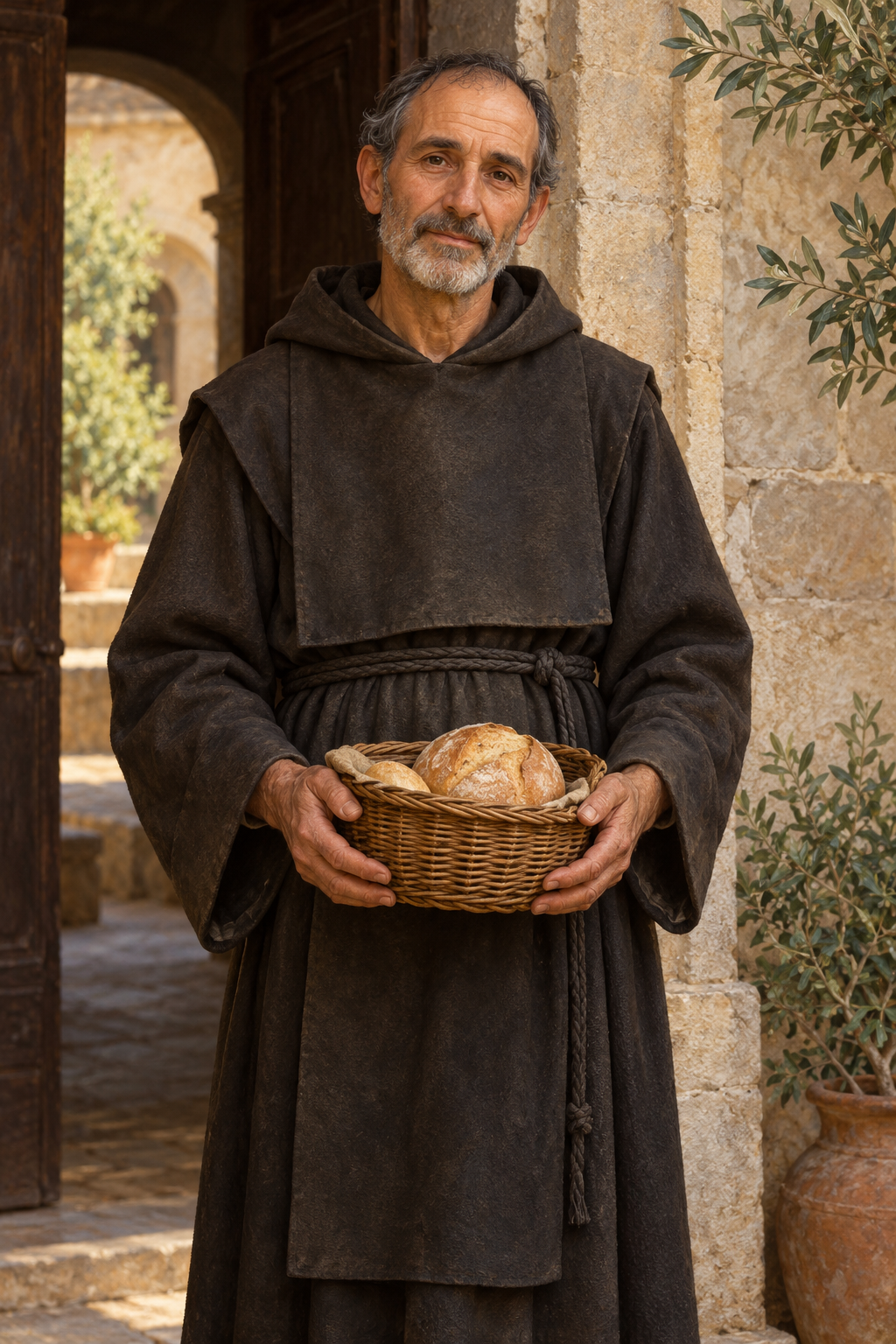
About Nicola Saggio
Nicola Saggio, known in religion as Nicholas of Longobardi, was a professed oblate of the Order of Minims. He was born at Longobardi on January 6, 1650, and received the baptismal names Giovanni Battista Clemente. His family’s poverty limited his schooling, and he worked in the fields before entering religious life. He began his novitiate at Paola in 1670 and made his profession the following year.
His service involved the work on which a community depended: cooking, gardening, caring for the sacristy, collecting alms and answering the door. After assignments in several Calabrian houses, he went to Rome in 1679 to assist an elderly parish priest at San Francesco di Paola ai Monti. He also taught catechism to children. The official biography places these practical responsibilities alongside his prayer, rather than treating them as interruptions to it.
Stefania Nanni’s historical account follows the connections between his spiritual life and his social world. A pilgrimage to Loreto in 1683, undertaken during the Ottoman siege of Vienna, marked a change toward more severe fasting and vigils. His reputation for holiness grew. When his superiors sent him back to Paola, the reasons were less clear: Nanni cautions that the sources do not establish whether the move was protective or disciplinary, or confirm later suggestions that he was mistreated there.
At Longobardi he helped complete the convent church through donations and voluntary labor. Later, in Rome, he moved between poor households and prominent families whose resources could support charitable work. Nanni describes an effective network of assistance involving religious communities, confraternities and individual benefactors. His connections with the Colonna and other aristocratic families were therefore part of a wider social setting, not simply a list of distinguished admirers. His confessors sometimes moderated his bodily austerities.
The Minim biographical account gives more concrete examples of that assistance. Nicola arranged food for people who came to the convent, found clothing and marriage necessities for poor women, supported students with his superiors’ permission and sent help discreetly to households reluctant to make their poverty public. The last detail is especially revealing: need could be hidden behind a family’s former position or fear of embarrassment. The account also describes his care for sick people, combining visits and religious consolation with financial assistance when it was needed. These are features of the Order’s remembered portrait of him, drawn from its biographical and canonization traditions.
The same biography remembers cooking vessels kept in his cell and a basket of bread reserved for people arriving after the soup had been distributed. It also describes him giving his bed to pilgrims. These small details make the account of charity concrete: someone arriving late or needing a place to sleep still mattered.
A letter written by the Minim superior Francesco Marinelli before the 2014 canonization recalls an episode attributed to Father Thomas of Spoleto. When Thomas wanted to rebuke two poor people for their conduct, Nicola urged compassion and reminded him that the friars themselves had shelter and security. The story belongs to his devotional memory, but it expresses a consistent concern: those receiving help should not be met with contempt. Marinelli also recalls Nicola giving priority to people awaiting food over an audience with Clement XI.
The same letter interprets his life through the connection between penance and generosity. Religious austerity, it argues, loses its purpose when it produces no care for others. Nicola’s ordinary duties and welcome at the convent door illustrate that reading. The letter does not make unusual mystical experiences the only measure of his religious life; it asks how prayer changes the treatment of another person.
Marinelli is more reserved about the pilgrimage to Loreto: he says that its interior experiences cannot be known. What the community remembered was a change in Nicola’s conduct afterward. This distinction allows the reported spiritual turning point to be acknowledged without inventing a private revelation.
Nicola died in Rome on February 3, 1709. His remembrance also has a material history. Records published by the Minims describe the examination of his remains in 2010, including the opening of sealed containers within the older tomb. On February 3 that year, the postulator Ottavio Laino accompanied a reliquary from Rome to Paola. His signed account records its delivery to Archbishop Salvatore Nunnari with the seals intact, followed by public veneration. These records document the handling of relics rather than establishing miraculous claims about them.
Longobardi names him as principal patron of its municipal territory. The town’s historical account points visitors toward his birthplace and the church associated with his work. A parish at Longobardi Marina also bears his name. In 2023 its celebrations marked fifty years since his recognition as the town’s protector, with religious services and civic events prepared together. The local remembrance connects the religious oblate’s life with the community from which he came.
Wondering how to weigh the stories and sources? Learn how to read a saint biography.