Biography
Nikolaus Ludwig von Zinzendorf
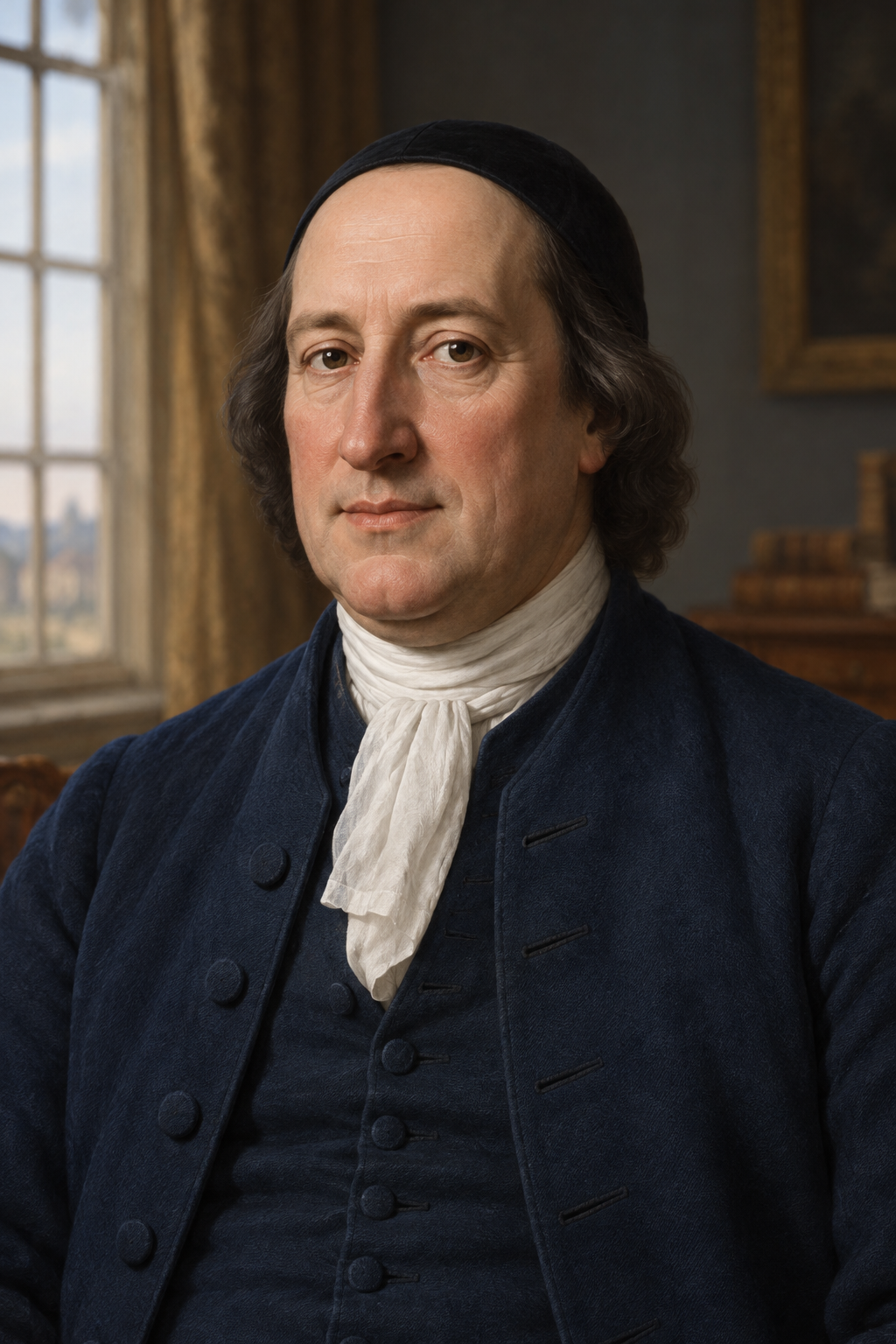
About Nikolaus Ludwig von Zinzendorf
Nikolaus Ludwig von Zinzendorf was a Moravian bishop whose search for Christian unity helped shape religious communities in Pennsylvania. A German nobleman, he welcomed Protestant refugees onto his estate and became the leading figure in the renewed Unity of Brethren. He hoped that their community would bring Christians together across denominational boundaries. His visit to Pennsylvania in 1741–1743 included organizing the congregation at Bethlehem, meeting other religious groups and traveling among Indigenous communities and European settlements.
Born in Dresden in 1700, he received an education shaped by Pietism, a movement emphasizing lived faith. He attended August Hermann Francke’s school in Halle, studied law at Wittenberg and entered service at the Dresden court. After marrying Erdmuthe Dorothea von Reuss in 1722, he established his home at Berthelsdorf. Refugees from Bohemia and Moravia began arriving that year. They brought traditions of the older Unity of Brethren, while German Pietists also joined the emerging settlement of Herrnhut.
He left state service in 1727 and devoted himself to this religious work. He was consecrated a bishop in 1737. The settlements he helped develop supported both their residents’ religious life and missionaries traveling elsewhere. Their work extended across Europe and the Atlantic. He encouraged a form of Christian witness that crossed linguistic and cultural boundaries, while his innovations also provoked controversy among other Christians.
His Caribbean activity reveals a serious contradiction in that vision. In a farewell letter written on St. Thomas in February 1739, he addressed enslaved Christians in a local creole language. Alongside religious encouragement, he told them to obey enslavers and overseers. He justified racial slavery as a divine punishment and insisted that spiritual salvation did not confer bodily freedom. The modern editors of the letter note that he also needed the cooperation of white enslavers for the mission. That context explains the audience he sought to persuade; it does not turn the letter into an argument for emancipation.
After arriving in New York in December 1741, he traveled to Philadelphia and Bethlehem. During the following months he preached in German settlements across southeastern Pennsylvania, reaching Conestoga. In the summer of 1742 he began a series of journeys to Indigenous settlements north of the Blue Mountains. He left Pennsylvania in January 1743 and later described these experiences to a Moravian gathering in London.
A letter discussed by the Moravian Archives records his account of meeting an Iroquois delegation. He described sending a message through Conrad Weiser and asking permission to preach. He also reported an invitation from Onondaga representatives. This evidence preserves Zinzendorf’s understanding of the exchange, rather than establishing agreement by every Indigenous community. It shows that his mission depended on communication with particular people and on negotiations about whether he and his fellow preachers would be received.
At Bethlehem, his visit became part of the town’s remembered beginnings. The Moravian Archives preserves an account in the Single Brothers’ diary that attributes the naming of the settlement to him on Christmas Eve 1741. The community already existed: Moravians had purchased land and begun building earlier that year. His contribution was to name and organize a developing settlement, rather than to create it alone. The diary connected the name with the biblical Bethlehem and the nearby Lehigh River.
His efforts at religious cooperation met resistance. In Philadelphia he preached to a Lutheran congregation and accepted its invitation to become pastor, but his leadership divided the congregation. He and his followers eventually left and formed another church shared by Lutherans and Moravians. Seven interdenominational meetings followed between January and June 1742. Historian Martha K. Robinson explains that participants feared Zinzendorf intended to absorb their churches into his own movement. Attendance declined, and the hoped-for union did not take shape.
Within Moravian communities, his theology found expression in everyday arrangements as well as worship. Historian Craig D. Atwood describes an intense devotion to Christ’s suffering and love, communicated through hymns, sermons and ritual. Believers of either sex could be described as brides of Christ, while the Holy Spirit was addressed through maternal imagery. These forms of devotion unsettled some contemporaries. Communities organized residents into groups by age, sex and marital status, and important decisions could be submitted to the drawing of lots. Atwood emphasizes that religious ideas and communal life developed together.
He died at Herrnhut on May 9, 1760. A church account of his final days records continued attention to the Daily Texts and concern for congregations overseas. It also describes his forceful objection to allowing non-Moravians to live in the new North Carolina settlement of Bethania. His desire for wider Christian fellowship thus coexisted with strict boundaries around Moravian communal life. He was buried at Herrnhut on May 16.
Lutheran churches commemorate him as a renewer of the church and hymnwriter on May 9. Trinity Parish in Newton lists his Episcopal commemoration on May 10. These remembrances recognize his religious influence while leaving room for an honest examination of his leadership, failed efforts at unity and defense of slavery.
Wondering how to weigh the stories and sources? Learn how to read a saint biography.