Biography
Nuno Álvares Pereira
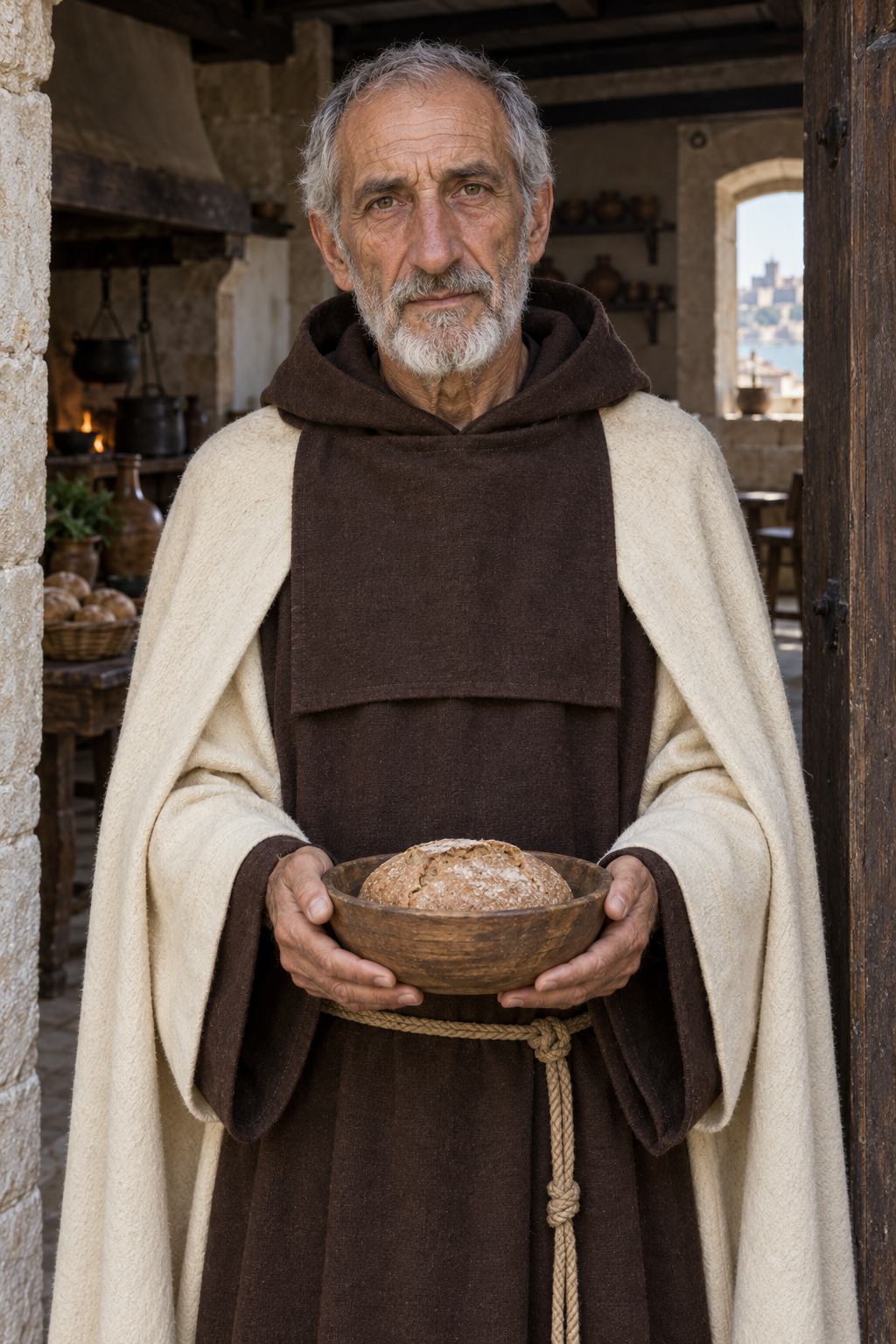
About Nuno Álvares Pereira
Nuno Álvares Pereira was born in Portugal in 1360, probably at Cernache do Bonjardim. He was the son of Álvaro Gonçalves Pereira, a Hospitaller knight and prior of Crato, and Iria Gonçalves do Carvalhal. Born outside marriage, he was legitimized by royal decree while still a small child. His upbringing prepared him for the chivalric world of the Portuguese nobility.
He entered court life at thirteen as a squire to Queen Leonor Teles. At sixteen, at his father’s insistence, he married Leonor de Alvim, a wealthy widow. They had three children. Their daughter Beatriz later married Afonso, a son of João I and the future first duke of Bragança. Nuno’s family connections thus became entwined with the dynasty whose rise his military career had helped secure.
The death of King Fernando in 1383 brought a struggle over the succession. Nuno supported João, master of Avis. He commanded Portuguese forces during the crisis and was made constable of the kingdom when João became king. The victories associated with him, especially Aljubarrota, were central to the preservation of Portuguese independence from Castile. His later military service included the Portuguese conquest of Ceuta in 1415.
Monteiro’s study gives a concrete account of his methods. At Atoleiros in April 1384, he ordered his mounted men to dismount and arranged infantry and crossbowmen on ground that hindered the opposing cavalry. At Aljubarrota in August 1385, he helped select a narrow position protected by slopes and watercourses. The Portuguese forces adjusted their front when the opposing army changed its approach. Obstacles, missile fire and coordinated movements helped break the attack. His reputation rested on the preparation and handling of troops as well as personal courage.
His power also had a harder local face. Oliveira’s study of Almada records that, after failing to enter its castle in 1384, Nuno sacked the town and its outskirts. As lord of Almada he later exercised substantial authority over revenues, officials and justice. In 1403 his plans for watermills brought a dispute with the king over rights in the tidal creeks. Their eventual settlement allowed the undertaking to proceed and protected the possibility of transferring the mills to the Carmo monastery. These transactions connected his economic interests with the religious house he was establishing.
The authority of a great lord remained visible in everyday administration. Oliveira identifies officials appointed under Nuno and his involvement in the choice of local judges. His officers participated in municipal affairs as well as hearing appeals. His mother, Iria Gonçalves, also acted for him in managing property. The surviving documents show the constable dealing with contracts, revenues and delegated power, alongside the military actions for which he was better known.
His wife died in 1387, and he did not marry again. The official biography connects his spirituality with Eucharistic prayer and devotion to Mary. His personal standard carried Christian images, and he supported the building of churches and monasteries.
Over time he transferred much of his property to his family and religious foundation. Monteiro distinguishes the marriage settlement for Beatriz, gifts to Carmo and the major distributions to his grandchildren in 1422. He moved into the Lisbon convent and entered the Carmelite order in 1423 as a donato, a lay associate brother. He retained administrative responsibilities for the house he had founded. His withdrawal therefore involved a change of life within an institution whose material future he had helped arrange.
The Carmelite prior general Fernando Millán Romeral describes Nuno’s resistance to privileges in his final years. He wanted to be known by his religious name, Nuno de Santa Maria, and to undertake humble work. Prince Duarte persuaded him to abandon plans to beg in the streets or leave for a distant monastery. The same account recalls his refusal of priesthood and his devotion to the Eucharist. His late vocation was expressed through austerity, prayer and service within the community.
The official canonization biography remembers his daily distribution of food to poor people. He died at Lisbon in 1431 and was popularly remembered as the holy constable. Formal recognition took much longer. The church confirmed his longstanding cult in 1918, and his cause advanced again before his canonization in 2009.
His public memory joined religious devotion with national history, sometimes uneasily. Luís Oliveira Andrade describes disputes over the treatment of his relics after the 1918 recognition, when religious and political groups disagreed about their destination and public display. In 1951 they were transferred to Lisbon’s church of the Santo Condestável. These later arguments show the different meanings attached to the soldier and the religious brother.
Benedict XVI canonized Nuno on 26 April 2009. His homily emphasized prayer and trust in God alongside military ability. It recalled his devotion to Mary and his retirement to the convent he had commissioned. Benedict presented his life as an example of Christian commitment practiced amid difficult public responsibilities.
Wondering how to weigh the stories and sources? Learn how to read a saint biography.