Biography
Odo of Cluny
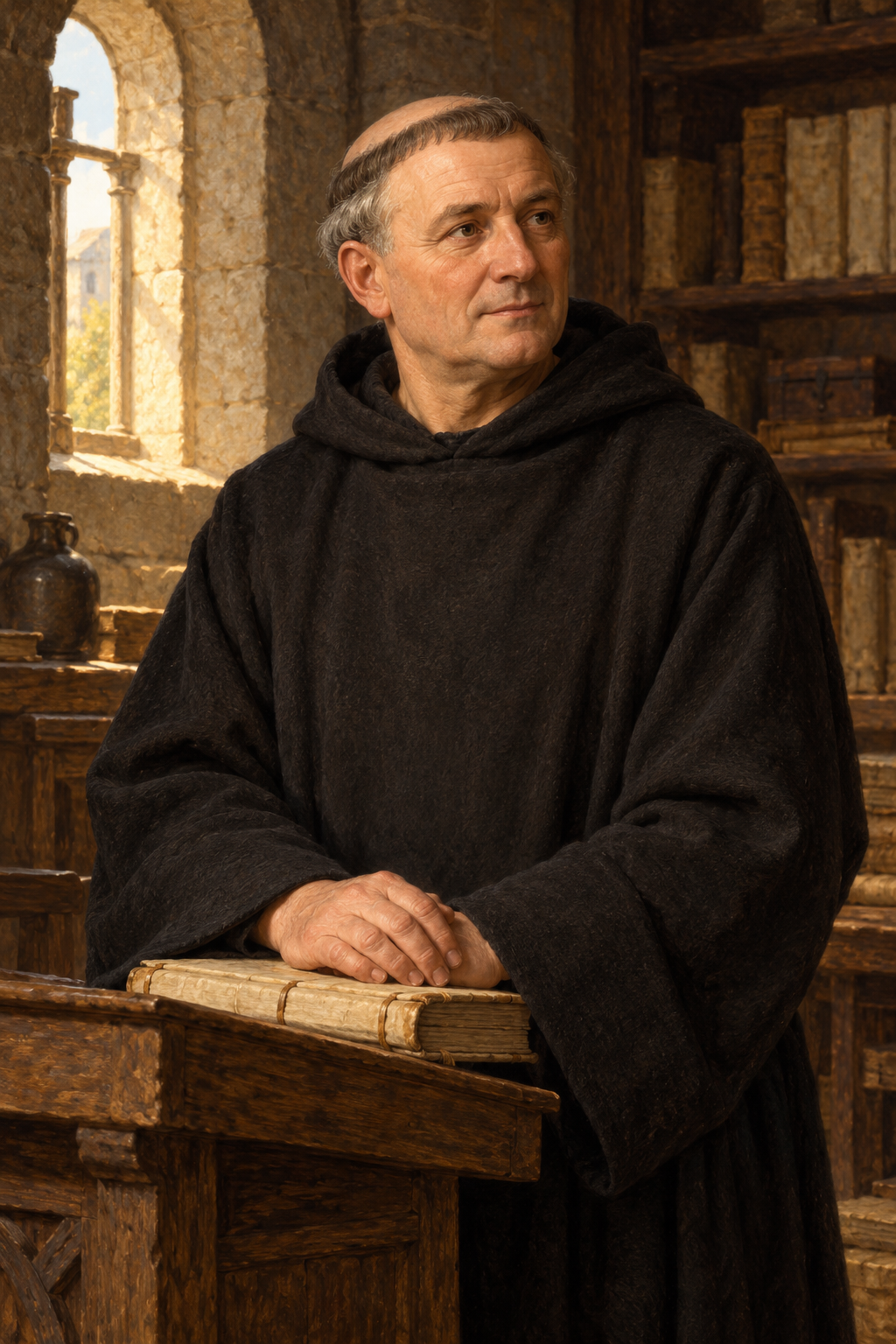
About Odo of Cluny
Odo of Cluny was a Benedictine abbot whose work helped spread monastic reform through France and Italy. Born around 880, he grew up with a strong devotion to Martin of Tours. Benedict XVI’s account, drawing on the life written by John of Salerno, describes a young man attracted to prayer and eventually to the Rule of Benedict. He became a monk at Baume before taking responsibility for Cluny in 927. The monastery became the center from which he encouraged other communities to renew their religious life.
His education included study at Tours and Paris under Remigius of Auxerre. At Baume he served as a teacher before succeeding Berno as abbot of Cluny. The New Catholic Encyclopedia records a substantial body of donations during his abbacy, alongside his work as a writer. His Occupatio is a poem in seven books reflecting on sacred history. His Collationes set out moral and spiritual instruction, while his life of Gerald of Aurillac presented a model of holiness outside the monastery. These writings gave his influence a form that could outlast his travels.
A papal privilege issued in 931 authorized Odo to reform monasteries and receive monks from houses that had not adopted the reform. The Catholic Encyclopedia makes an important distinction: most of the reformed monasteries remained independent, and some became centers of renewal themselves. His work did not immediately create a single, fully centralized organization. It depended on relationships between communities, on recognized authority and on people willing to change how they lived. Odo’s journeys brought him repeatedly to Italy, including Rome, Subiaco and Monte Cassino. He was also entrusted with negotiations between King Hugh of Italy and Alberic of Rome. The abbot’s responsibilities thus extended from the practices of the cloister to disputes among rulers.
Laura Attardo’s account for Clunypedia emphasizes the network of aristocratic supporters behind this work. Odo’s repeated journeys helped build relationships with powerful families, bishops and rulers who became benefactors. His position therefore involved more than personal austerity: maintaining a religious community also required material support and sustained contact with people outside it. The spiritual ambitions of reform and the practical needs of monasteries remained closely connected.
The writing that guided this reform could be severe. In a study of touch in medieval monastic sources, Karolina Białas examines Odo’s Occupatio and its treatment of the senses. He warned particularly against bodily desire, presenting it as a danger across different ages and social ranks. His imagined audience was chiefly male and monastic, living apart from women. In that setting he treated contact with women as a special moral threat and used degrading bodily imagery to discourage attraction. These passages are part of his surviving teaching and should not disappear behind a general description of kindness.
Białas also shows that his treatment of the body was not simply a rejection of every sensory experience. In his account of the Incarnation, Christ becomes visible and accessible to human touch. The senses could serve knowledge of God, even while Odo feared their misuse. This tension helps explain the spiritual discipline of his writing, without turning its disparaging portrayal of women into a judgment readers must accept.
Other memories emphasize a gentler manner. Benedict XVI recounts John of Salerno’s story that Odo asked children he encountered to sing and offered them small gifts. The same catechesis stresses his confidence in divine mercy: correction was meant to lead people toward a changed life, rather than leave them in despair. These recollections belong to a biographer’s portrait of an admired teacher. They offer another part of his religious memory alongside the demanding language of his own works.
A further anecdote preserved in the Norwegian Catholic biography concerns a man who believed monks owed him money. After the man threw a stone at Odo, the abbot paid him. When he learned that the authorities intended to cut off the attacker’s hand, he intervened to obtain his release. Told as a traditional account rather than an independently verified court record, it expresses how Odo was remembered as a protector even of someone who had threatened him.
Odo died at Tours on November 18, 942, after falling ill in Rome. His commemoration on November 18 preserves the date of his death. Although later musical treatises circulated under his name, their attribution is doubtful. His reputation should not depend on crediting him with every work later associated with Cluny.
Devotion to him also took local forms. At Boissets, the tourism office describes an oratory beside the source of the Vaucouleurs, behind Saint-Hilaire Church. Pilgrims formerly came there to ask Odon for rain in times of drought. The account identifies the spring’s miraculous reputation as tradition. Such a custom records the hopes of people facing uncertain weather, rather than demonstrating control over rainfall. It remains a visible part of the landscape in which his name was remembered.
Wondering how to weigh the stories and sources? Learn how to read a saint biography.