Biography
Optatus of Milevis
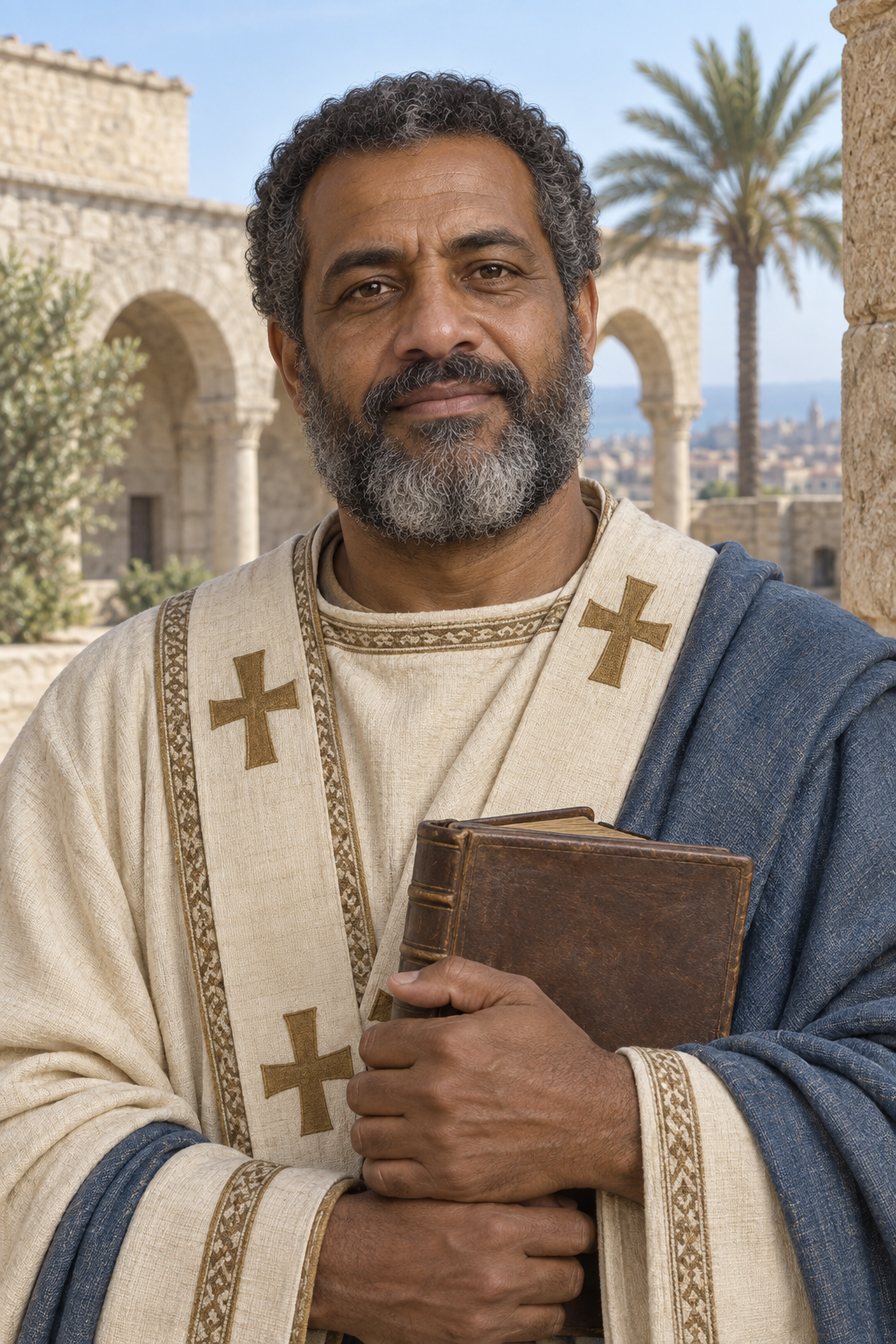
About Optatus of Milevis
Optatus served as bishop of Milevis in Roman North Africa and defended the Catholic communion in a church divided by the Donatist controversy. Jerome included him in his account of Christian writers, identifying six books composed under the emperors Valentinian and Valens. His public identity in that near-contemporary notice is both episcopal and literary: a bishop whose substantial written answer to a rival communion had earned attention beyond his own city.
A birth around 320 is a scholarly estimate, not a surviving birth record. His family background and the circumstances in which he became Christian are not securely known. Attempts to supply him with a particular family or reconstruct his conversion go beyond what the evidence establishes.
The African division he confronted had already drawn emperors into church disputes before his literary career. Letters preserved by Eusebius show Constantine ordering a hearing at Rome after African bishops accused Caecilian, with representatives of both sides summoned to attend. When the quarrel continued, the emperor called another assembly at Arles, seeking a judgment that would restore agreement. Imperial support also had material consequences: Constantine instructed that money be supplied to Caecilian for church expenses and directed him toward officials who could act against opponents. Recognition by the emperor thus affected resources and protection as well as the outcome of a theological argument. These earlier interventions help explain why the conflict Optatus inherited involved courts, official documents and competing episcopal communions, rather than remaining a private disagreement between two theologians.
Optatus answered Parmenian in writing, addressing opponents as brothers despite their refusal of that name. He opposed repeating baptism, arguing that its holiness depended on God rather than the standing of the minister. He protested against refusing burial to Catholic dead, arguing that quarrels among the living should cease at the grave.
His written exchange was not a transcript of a meeting with Parmenian. As Sophie Lunn-Rockliffe observes, its direct address creates the impression of an encounter while leaving the author in control of the presentation. That distinction matters for understanding his activity as a controversialist: the surviving voice answering objections is his, not an independently preserved conversation between equals. Her comparison of polemical settings also shows why such writing could employ accusations that would work differently before an audience containing the accused themselves.
Optatus was a forceful writer, able to move between irony and grave appeal, not simply a collector of arguments. Paul Monceaux's literary assessment finds an unusual combination of clarity, energy and uneven taste: concise formulations could give way to strained imagery or overworked contrasts. His account credits the bishop with making demanding controversy readable, while criticizing repetition and an overly conspicuous plan. The resulting portrait is of an author skilled at guiding readers through an argument, but not always restrained in the means he used to hold their attention.
The theological importance of his baptismal argument reaches beyond the immediate contest over rival bishops. In João Eleutério's comparative reading, Optatus marks a movement toward a more explicitly Christ-centered account of Christian initiation. This is an assessment of his place in developing theology, not a claim that he had already formulated every distinction later associated with Augustine. Eleutério's discussion distinguishes the historical use Augustine made of his predecessor from theological influence that must be traced less directly. Optatus thus belongs within a developing argument about salvation, not merely a sequence of African ecclesiastical quarrels.
His pursuit of unity also had a harsh side: he defended punitive deaths during imperial intervention. An appeal to brotherhood in his work therefore cannot be equated with modern religious toleration.
Scholarly estimates put his death between the later 380s and around 400; an early-390s date remains a reasonable proposal.
Augustine continued to put his predecessor's work before readers engaged in the same controversy. In his answer to Parmenian's letter, he directed those seeking the history of the division to the account of Optatus, whom he named respectfully as a deceased Catholic bishop of Milevis. He also pointed to the documentary evidence associated with that account. This was practical reuse, not simply ceremonial praise: Optatus's writing supplied material to which another bishop could refer disputants when asking them to examine the history behind their inherited accusations.
Augustine also remembered him outside that immediate polemical setting. In On Christian Doctrine he named Optatus alongside Cyprian, Lactantius, Victorinus and Hilary among Christian teachers who had put secular learning to religious use. The discussion argues that useful knowledge need not be abandoned because it is also possessed by non-Christian thinkers. Including Optatus in that company recognized him as more than the adversary of one African bishop. His lasting significance lay in a learned episcopal authorship that later Christians could use both in defending their communion and in considering how education might serve the interpretation and teaching of their faith.
Wondering how to weigh the stories and sources? Learn how to read a saint biography.