Biography
Othmar
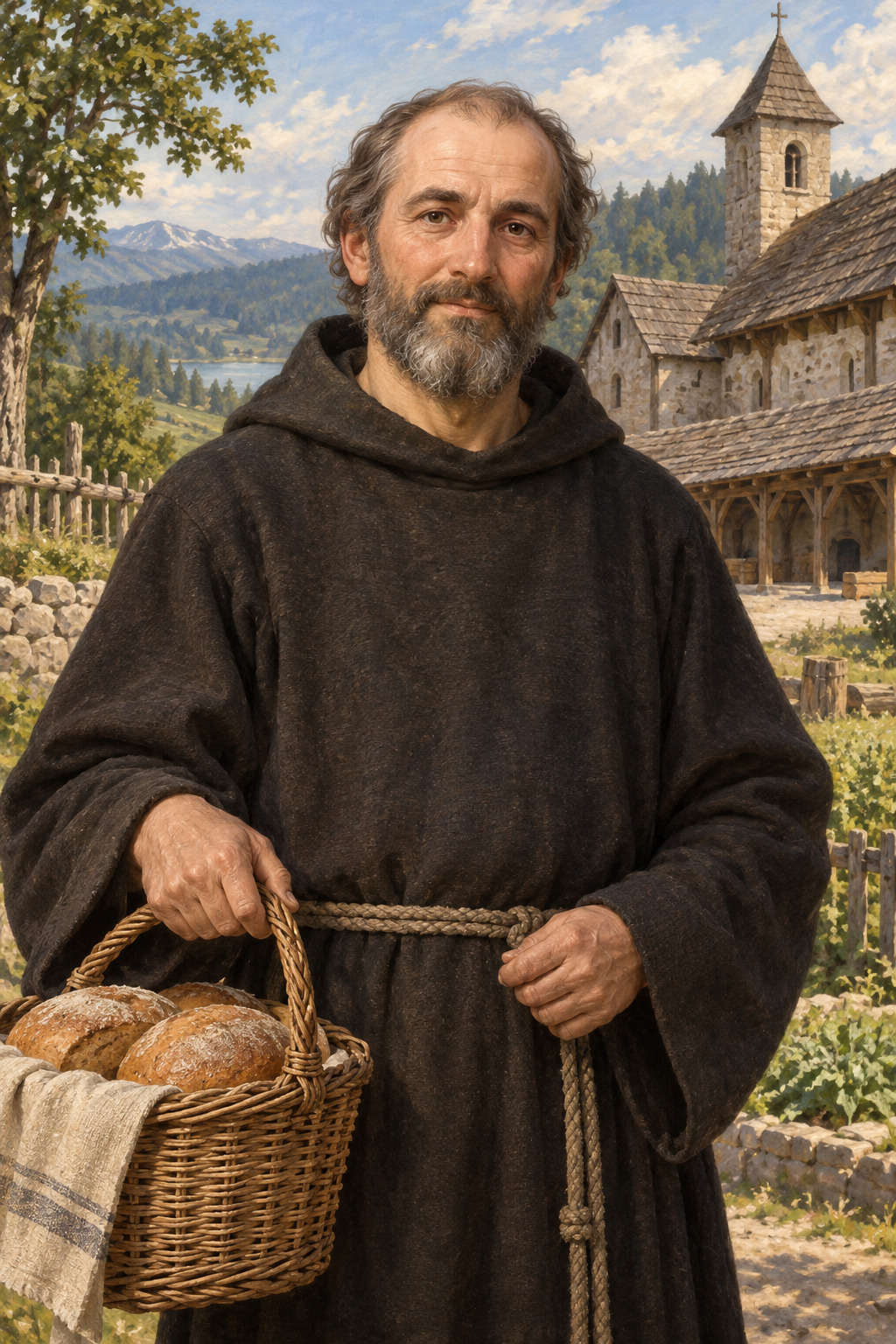
About Othmar
Othmar became the first abbot of the community that grew into the Abbey of St Gall in the eighth century. The region lay within Alemannia, where local families, church leaders, and the expanding Frankish state all had interests. A scholarly Swiss account places his birth around 690 and says he was educated at the episcopal center in Chur. It treats his possible origin in the Arbongau as uncertain. The earliest part of his life is less clearly documented than his work at St Gall, so a precise birthplace or childhood narrative would give a false sense of certainty. His significance rests on the community he organized and the care it offered beyond its walls.The site was already connected with Gallus, the earlier hermit remembered there. In 719 a local leader, Waltram of Arbon, entrusted Othmar with the small religious community near Gallus's grave. The Abbey Library describes this as a renewal of a group whose roots reached back to Gallus's own time. Othmar arrived with monks from the region of Chur and became the community's first abbot. Calling him a founder therefore needs care: he did not create devotion to Gallus, but he gave an existing cell a durable monastic form. The change joined prayer, common discipline, and a growing relationship with the surrounding population.People entered the monastery and gave it land. Tremp's historical article records 53 entrants during Othmar's abbacy, while the institutional history describes gifts reaching across Alemannia. Those gifts helped support a stable house, but they also made the monastery a holder of property that powerful neighbors could contest. This is part of the story of its religious life, not an incidental matter of wealth. The resources sustained monks and made care for outsiders possible. The Abbey Library says the house became a place of refuge for people around Lake Constance, who in turn supported it. The evidence describes a growing institution rather than a solitary figure working apart from society.Othmar directed some of that support toward people in need. The historical dictionary records a house for people with leprosy, and the Abbey Library describes it as one of the earliest documented care stations of its kind in Europe. A separate institutional account also mentions a lodging place for poor travelers outside the monastery. These are concrete acts of organized care, though the sources do not allow a list of individual patients or daily scenes inside the buildings. The later title “father of the poor” reflects this aspect of his memory. It can be understood without repeating unsupported miracle stories or assuming that medieval care followed present-day medical methods.The community's rule also changed during Othmar's leadership. Swiss historical sources date its adoption of the Rule of Benedict to 747, after Othmar had already led the Gallus community for decades. That sequence matters. It avoids presenting the establishment of a Benedictine house in 747 as though nothing had existed at the site before then. The Rule gave common practice a more defined shape while the monastery's people, lands, and public duties were expanding. Othmar's work belonged to that longer process of institutional change. The great ninth-century library, the famous monastery plan, and most buildings now seen at St Gall came later and should not be assigned to his own years.The monastery's land brought Othmar into conflict with Frankish officials during a period when Alemannia was losing independence. The institutional history names counts Warin and Ruthard and connects the dispute to gifts that had passed into the monastery's hands. According to the Swiss biographical account, Othmar was arrested in 759, brought before a court, and initially sentenced to die of hunger at Bodman. The sentence was changed to confinement on Werd Island in the Rhine. The Abbey Library describes the process as political. The precise accusations and motives need to be kept within what the surviving accounts support; no invented courtroom dialogue is needed to show the seriousness of the struggle over the abbey's possessions.Othmar died on Werd Island on November 16, 759. Ten years later his body was taken back to St Gall, beginning a public rehabilitation of his memory. Tremp records that Bishop Salomo I of Constance recognized him as a saint in 864 and that his remains were placed in a church built in his honor in 867. Those later acts show how the community interpreted its former abbot's imprisonment and service. Lives written by Gozbert and Walahfrid Strabo in the ninth century are important witnesses to that memory, but they were composed after Othmar's death. Their devotional aims require the same caution as other medieval saints' lives when an episode cannot be independently checked.An older Roman martyrology commemorates Othmar on November 16 as an abbot. The Abbey of St Gall later became an important European center of learning, as UNESCO recognizes, but its long history should not be collapsed into one founder's lifetime. Othmar's own record is more particular: he organized a community at Gallus's site, supported people in need, guided a change in monastic practice, and defended the house amid political pressure. His birth place remains uncertain, while the date and place of his death are unusually clear for this period. Remembering those limits gives a more faithful account of both the abbot and the institution that kept his memory.
Wondering how to weigh the stories and sources? Learn how to read a saint biography.