Biography
Otto of Bamberg
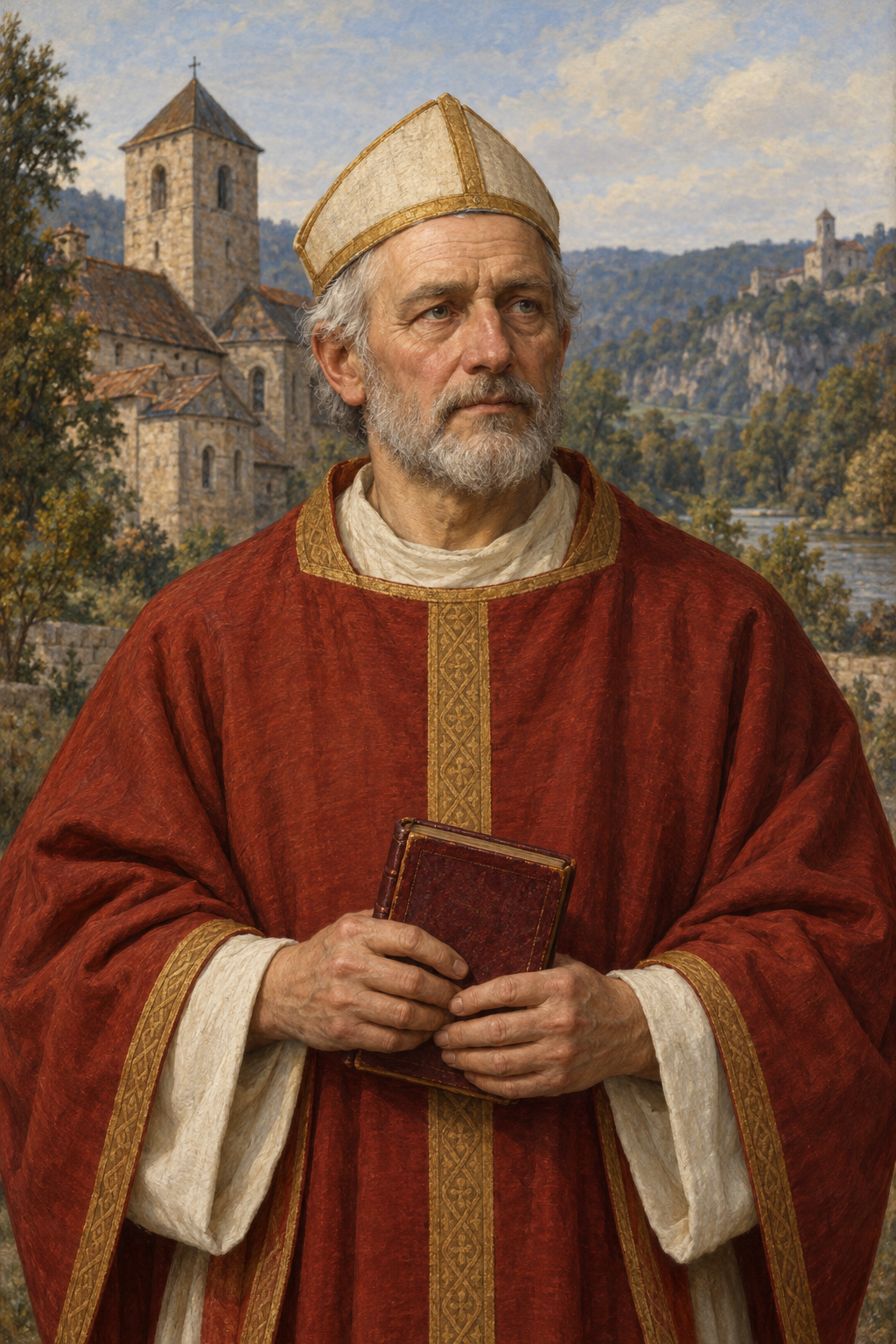
About Otto of Bamberg
Otto of Bamberg was a bishop, royal servant and missionary whose career joined religious leadership with political power. Before becoming bishop, he served as chaplain to Judith at the Polish court and supervised work on Henry IV’s cathedral at Speyer. The emperor invested him as bishop of Bamberg at Christmas 1102. Pope Paschal II later consecrated him at Anagni in 1106. Otto’s position placed him within the long dispute over how rulers and church authorities should participate in appointing bishops.
His efforts at mediation did not leave him untouched by that conflict. The Catholic Encyclopedia records that he transferred his support to Henry V in 1105. He continued serving the ruler when disputes with the papacy resumed and was suspended by the papal party at Fritzlar in 1118. He subsequently worked for reconciliation at Würzburg in 1121, before the settlement reached at Worms the following year. His career therefore included difficult allegiances as well as peacemaking; it cannot be described simply as standing outside political struggle.
Within his diocese, Otto rebuilt the cathedral and the Benedictine church on the Michaelsberg. The archdiocese’s history also credits him with establishing hospitals for poor and sick people, widows and orphans. Monastic foundations served several purposes: they supported religious observance and learning, but also helped consolidate episcopal territory. The same account describes a flourishing manuscript culture at Michaelsberg, where later writers preserved memories of the bishop. His charitable and cultural work belonged to an institution that was also extending its authority over land and communities.
The first Pomeranian journey required preparation. Bamberg’s account describes a party of twenty clergy carrying books, liturgical clothing and vessels. They traveled through Prague and the Polish towns of Wrocław, Kalisz and Poznań toward Gniezno before entering the mission territory. Duke Wartislav became a supporter. The impressive equipment and powerful connections accompanied the preaching: the expedition presented Christianity through the visible resources of an established church, rather than through the words of an isolated traveler.
Otto undertook two missions to Pomerania, in 1124–1125 and 1128, with the support of regional rulers. A 2024 article published by the Archdiocese of Berlin, reporting historian Stefan Fassbinder’s lecture, emphasizes the setting of recent conquest. Otto traveled with clergy and armed soldiers, preached, baptized and ordered the destruction of non-Christian places of worship. The account also notes restrictive rules intended to separate baptized people from those who had not converted. Religious persuasion and political pressure were intertwined. The same article cautions that the actual words of his preaching have not survived.
Historian Wojtek Jezierski examines the different accounts of these encounters in the medieval lives of Otto. At Pyrzyce, the missionary reportedly waited outside the settlement, contacted elders through intermediaries and negotiated a reception. At Wolin, however, the protection offered by Duke Wartislav did not secure the agreement of the inhabitants. The missionaries were expelled and Otto was attacked. These accounts show that a ruler’s welcome did not necessarily represent the wishes of the people whose religious life the visitors intended to change.
Jezierski also draws attention to the pressure applied after the expulsion. While negotiations continued, Otto threatened to call on the Polish duke Bolesław to avenge the insults unless conversion followed quickly. This is evidence from the mission’s Christian narratives, not testimony directly preserved from the people facing the threat. It nevertheless makes a wholly peaceful account of the mission inadequate. The same narratives sought to establish Otto’s holiness, so their dramatic scenes need to be read as religious writing as well as historical evidence.
The work continued after his return to Bamberg. According to the Catholic Encyclopedia, Otto remained in contact with the new communities and sent priests to serve them. Plans for a separate bishopric were delayed by competing claims from the archbishops of Magdeburg and Gniezno. His former companion Adalbert became bishop only after Otto’s death. Conversion thus involved the creation of lasting institutions, with disputes over their authority continuing beyond the missionary journeys themselves.
Otto died in Bamberg on June 30, 1139, and was buried at Michaelsberg. His canonization was carried out by delegation at Würzburg on August 10, 1189. The transfer of his remains followed that September. Bernd Schneidmüller warns that the surviving lives were written by communities preserving the memory of a founder and benefactor; later recognition as a saint further shaped that memory. Such sources preserve valuable evidence while requiring attention to their purposes.
His religious memory continues in several places. The Diocese of Augsburg lists Otto as a patron of Bamberg and a co-patron of Berlin and Szczecin-Kamień, and records traditional invocation concerning fever and rabies. It also describes a custom of passing through the opening beneath his raised tomb in hope of relief from back trouble. These are devotional traditions, not evidence of medical benefit. The diocesan feast listing commemorates him on June 30.
Wondering how to weigh the stories and sources? Learn how to read a saint biography.