Biography
Pachomius
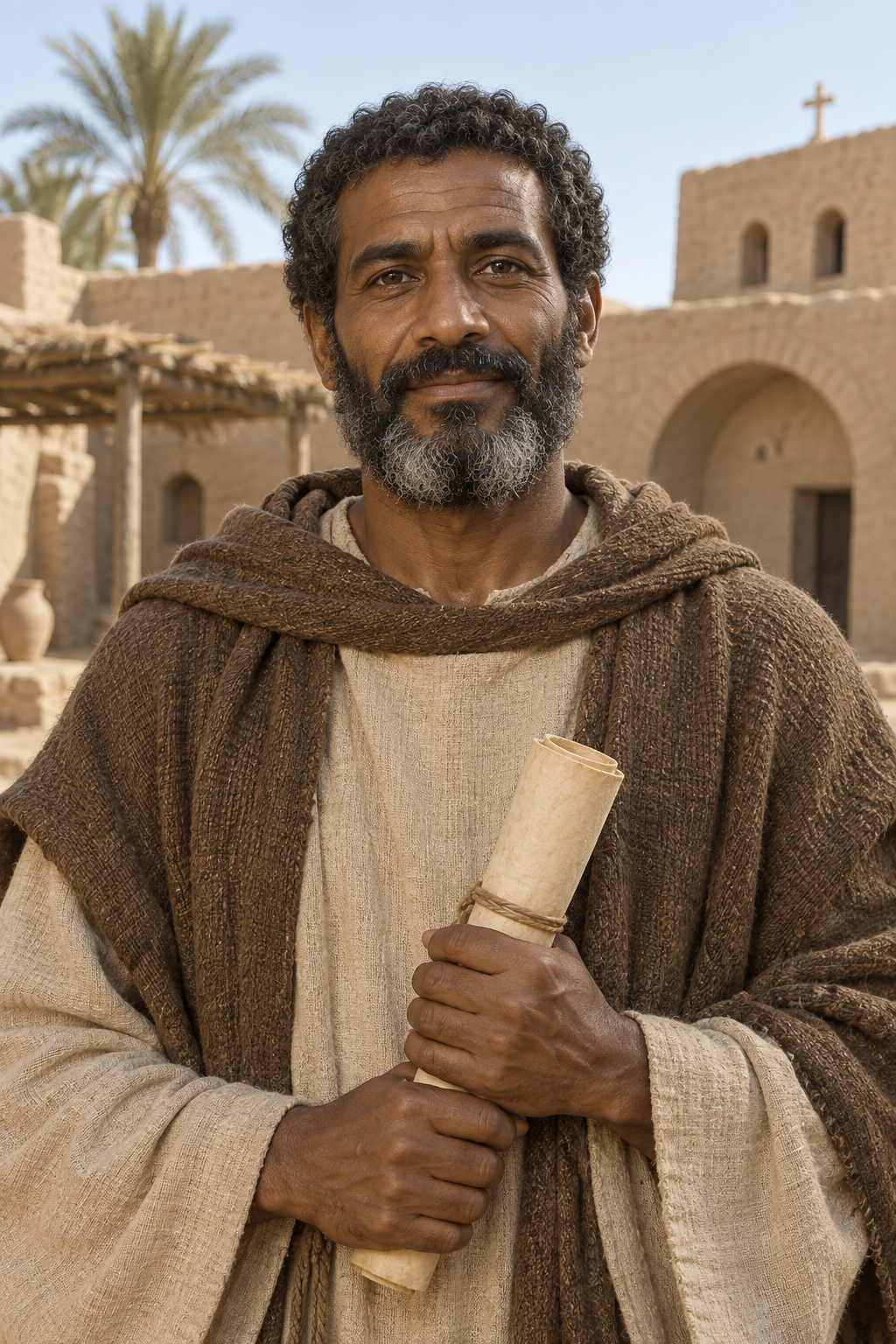
About Pachomius
Pachomius helped make a life of prayer into a life shared with other people. In fourth-century Upper Egypt, he organized a federation of monasteries known as the Koinonia, or fellowship. Its members numbered in the hundreds and perhaps thousands. He is often called the founder of communal monasticism, although that description gives too much credit to one person for a wider development. His distinctive achievement was an organized community with a written rule, rather than simply a gathering of solitary ascetics.
His conversion story begins with help offered to someone who could not repay it. Born to pagan parents, Pachomius encountered Christian generosity while a conscript in the Roman army. After his release, he was baptized at Sheneset, also called Chenoboskion. He spent a period serving others there before becoming a disciple of the ascetic Palamon. Prayer, fasting, night vigils, work and almsgiving formed that apprenticeship. Later, when companions gathered around him at Tabennese, his first arrangement failed: followers resisted the common practices he introduced. A subsequent community required mutual service, rather than leaving its practical burdens to Pachomius alone.
The movement did not begin as a reform program imposed by a council or bishop. Graham Gould places Pachomius among the founders of voluntary religious communities, initially unofficial rather than creations of the Church’s governing machinery. The early life tradition includes resistance from his own brother John to building a communal monastery. Clergy who joined were expected to submit to the same rule as the other monks, rather than enter on privileged terms. The authority of a shared observance thus reached beyond the founder’s own family and beyond distinctions of clerical rank.
Tabennisi was near Denderah in Upper Egypt, on the Nile’s right bank. The community’s physical organization gave daily expression to its shared life. Within its enclosure stood places for worship, cooking, eating, storage and hospitality, as well as a garden and the monks’ dwellings. Men with similar occupations lived in groups under a house superior. Weaving was common, but the community also needed carpenters, metalworkers, shoemakers, gardeners and people who copied books. General duties rotated weekly. This was a working settlement, not simply a collection of people who met for prayer and otherwise lived independently. Pbow eventually became the federation’s principal monastery.
The surviving Pachomian regulations show how carefully a shared life had to be arranged. A newcomer did not choose his own place in the assembly. The signal for prayer required monks to leave their cells promptly, and the rules discouraged watching or distracting a neighbor. After morning prayer, members of a house discussed the instruction they had heard before returning to their cells. Books requested for reading had to be returned for the next group responsible for service. Care for the sick had its own provisions, including clothing, food and designated attendants. These practical instructions make room for bodily need while restricting private privilege. They describe the developing Pachomian tradition, not a securely recoverable list of commands all written personally by its founder.
Pachomius did not require every monk to equal the strongest ascetic. The Catholic Encyclopedia describes a common observance that accommodated less experienced members while leaving room for greater austerity. Its account also preserves his continuing affection for Palamon: founding a community need not be understood as a rejection of his earlier teacher. The frequently repeated story that an angel delivered the rule belongs to the religious tradition surrounding him. Even this older reference work cautions that the angelic rule reported by Palladius differs in important respects from actual Pachomian practice. Monks who did not attend the common meals could receive bread, salt and water in their own cells.
The Orthodox received life remembers a teacher who worked in a garden, advised those seeking guidance and visited sick monks. It says that he relaxed fasting when illness required it and encouraged brothers who had lost heart. These remembered actions give compassion a concrete shape: discipline existed alongside food, reassurance and personal attention. The same account places a women’s community under his sister Maria and describes assistance from the monks. Maria’s beginning was painful: the same life says that her brother refused to meet her and sent his reply through the gatekeeper. These accounts preserve a picture of responsibility extending beyond the founder’s own cell.
In Butler’s account, Pachomius seeks guidance rather than assuming that his first enthusiasm is enough. Palamon warns him about the demands of the ascetic life, and their manual labor supports both themselves and people in need. The narrative later places illness inside the community itself: a pestilence strikes the monasteries and Pachomius dies after a prolonged sickness. Butler pictures him encouraging his monks even in his last moments, while their community was enduring sickness and loss.
The rule continued to develop after him, and its surviving collections cannot all be assigned to his pen. His legacy is therefore both personal and communal: a founder’s initiative carried forward by other monks, through arrangements that changed as the fellowship grew.
Wondering how to weigh the stories and sources? Learn how to read a saint biography.
Explore similar vocations
Prayers for Pachomius
Pachomius — reported prayer excerpt
teach me the true way of pleasing you