Biography
Paisios of Mount Athos
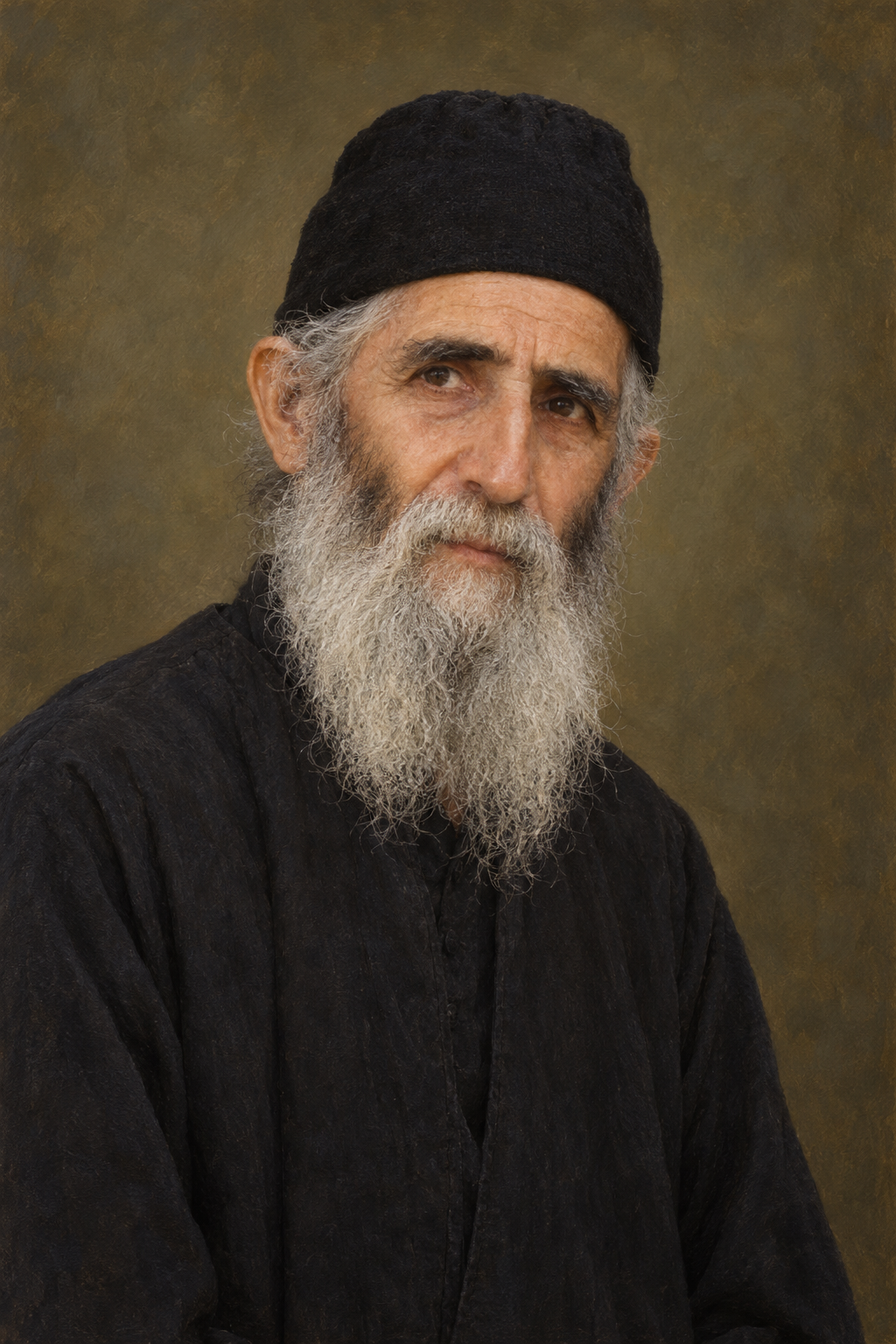
About Paisios of Mount Athos
Paisios of Mount Athos was born in Pharasa, Cappadocia, in 1924. Baptized Arsenios, he grew up in Konitsa after his family moved to Greece. He learned carpentry and served as an army radio operator before entering monastic life. He was tonsured at Esphigmenou and later received the name Paisios at Philotheou.
His life included restoring the monastery at Stomio and a period of solitude near Saint Catherine’s at Sinai. Back on Mount Athos, he became known for receiving people seeking help. Visitors and letters brought him accounts of illness, family troubles, and grief. He continued to offer spiritual counsel despite his own poor health.
At Sinai, his craft supported people beyond the monastery. The monastery’s friends association records that money from his handwork went toward helping local Bedouin families. The monks also remembered his carpentry within the monastery and his work pruning olive trees. A detailed wooden carving of Mount Sinai, including its ascending steps, remained in their keeping. His desire for solitude did not exclude manual labor for others. Archbishop Damianos later recalled that Paisios hoped to return to Sinai; a new cell was being prepared for him before his final illness prevented the move.
Metropolitan Athanasios of Limassol later recalled meeting him as a young student. The first encounter did not impress him: Paisios’s jokes amused his companions, while he left disappointed. Further visits changed that judgment. In September 1977, Paisios invited him to remain for the day and night. They worked in the small church and shared a simple meal outside, using a stone as their table. The remembered details include onions from the garden and a tin opened with a carpenter’s tool because there was no opener.
That evening, according to Athanasios, they prayed with prayer ropes in adjoining rooms. Paisios gave him a sequence of prayers for the living, the departed, and the wider world, then checked at intervals that he remained awake. The account describes hospitality within an austere routine, rather than a separate retreat from it. Athanasios told the story many years later, as his own recollection of a formative visit.
His letters offered another way of guiding people he could not always meet. Six letters written to the sisters at Souroti between 1971 and 1975 were collected as Epistles. In the published extracts, he warns against ignoring small failings simply because no spectacular wrong has been committed. He also cautions against forcing spiritual growth through pride or impatient zeal. One comparison concerns fruit ripening in its proper time; another presents the earth’s generosity as an image of humility. These familiar images make demanding counsel understandable without a technical vocabulary. The letters were addressed to a particular monastic community, although their later readers have extended well beyond it.
Theologian Marcel Tang places his teaching within the continuing influence of Isaac the Syrian on Athonite spirituality. Paisios returned repeatedly to Isaac’s writings, reading slowly and seeking to put their meaning into practice. Tang notes that his comparisons also drew on modern activities, including sport, banking, and communications. The older ascetic tradition was expressed through things his listeners recognized. Humility, attention to thoughts, and prayer recur throughout this teaching. The sisters at Souroti helped preserve it in print, particularly through the work of Abbess Philothei. Tang’s study distinguishes this practical spiritual instruction from an academic theological system.
An Athonite neighbor’s published recollection describes pilgrims gathering in his garden and being directed toward his cell. The writer remembered his humor in difficult conversations and his continued attention to visitors despite fatigue. Paisios also preserved other monks’ lives in writing. He published accounts of Arsenios the Cappadocian and the ascetic Hadji-Georgis, followed by a book about Athonite fathers and matters. Some of the people he described had been his own acquaintances. His writing thus carried memories of earlier monastic generations alongside the counsel he gave to his contemporaries.
He died on July 12, 1994, and was buried at the convent of Saint John the Theologian in Souroti. Archbishop Damianos remained close to him and read the prayer for the departure of his soul during his final hours.
On January 13, 2015, the Holy Synod of the Ecumenical Patriarchate unanimously approved his inclusion in the Orthodox calendar of saints. The official announcement identifies him as a monk of Mount Athos. His earlier military service later received a particular public remembrance. In a letter dated November 7, 2017, the Church of Greece confirmed its decision to name Paisios patron of the military Signals Corps. The letter explained that the request reflected devotion to him and rested on events from his life.
The Hellenic Army celebrated its patron at the Signals School in Haidari in July 2018. A liturgy and procession were followed by a demonstration of communications equipment. The army’s report explicitly linked the patronage to his service as a signaller.
Wondering how to weigh the stories and sources? Learn how to read a saint biography.