Biography
Palatias
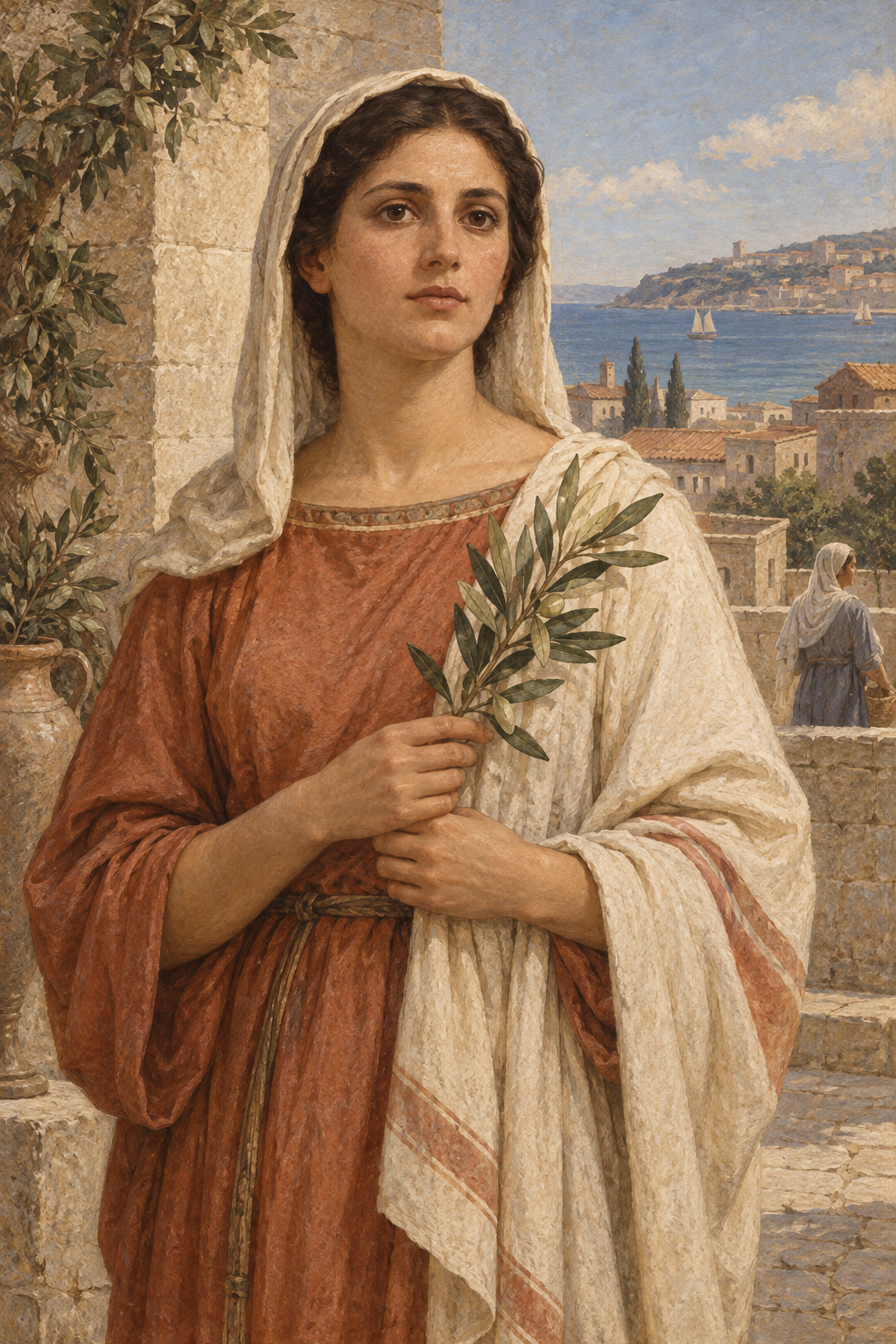
About Palatias
Palatias is named alongside Laurentia in the Christian memory of Ancona, an Adriatic city in Roman Italy. An older Roman martyrology commemorates the two on October 8. Its brief entry says they were sent into exile during the persecution of Diocletian, under a governor it calls Dion, and died from toil and hardship. This is evidence for how the church later remembered them. It is not a surviving court record from their lifetime, and the named governor and manner of death cannot be independently verified from that calendar line. The precise year of Palatias's death is also unknown. The feast belongs to the history of remembrance rather than a proven death anniversary.A critical review of the two saints' tradition draws an important distinction. The acts of their martyrdom were transmitted through an Ancona manuscript now lost and another manuscript kept in Rome. The surviving story contains episodes borrowed from other accounts of virgin martyrs, including stories associated with Christina, Barbara, and Victoria. Modern hagiographic criticism therefore does not accept the detailed narrative as dependable history. That judgment does not erase Palatias from the local record. The reviewer considers it plausible, on the basis of traditions and older liturgical and visual witnesses, that the women came from Ancona, were sent to Fermo, and later had their remains brought back to Ancona. Those points remain probable, not certain.Later devotion to Palatias left more visible traces than her early life did. The critical account notes her name in old liturgical books at Ancona and her image in eleventh-century carved slabs. A church and monastery were later dedicated to her, and local veneration extended into parts of the old Piceno region. Accounts also describe the keeping and later movement of remains associated with the two women. Such evidence shows sustained communal memory; it cannot prove every event in the older passion. Artistic depictions sometimes place Laurentia beside Palatias and describe her as a nurse. Another modern church directory calls Laurentia a slave who converted Palatias. With the early evidence so slight and the descriptions at variance, the catalog should not settle their personal relationship as fact.Palatias remains a saint of a shared story, even though this page bears her name alone. The Roman martyrology gives her and Laurentia a joint remembrance; local evidence places that remembrance in the Adriatic region. The surviving sources do not establish her age, family, occupation, words at trial, or a detailed sequence of suffering. Some later summaries supply the year 302, but the critical review does not confirm a dated contemporary witness for it. Recording no exact birth or death year respects that gap. The strongest account is a modest one: Palatias and Laurentia were remembered together as martyrs, their names were preserved in Ancona's worship and art, and the precise events behind that memory remain uncertain.
Wondering how to weigh the stories and sources? Learn how to read a saint biography.