Biography
Paul Jeong Tae-bong
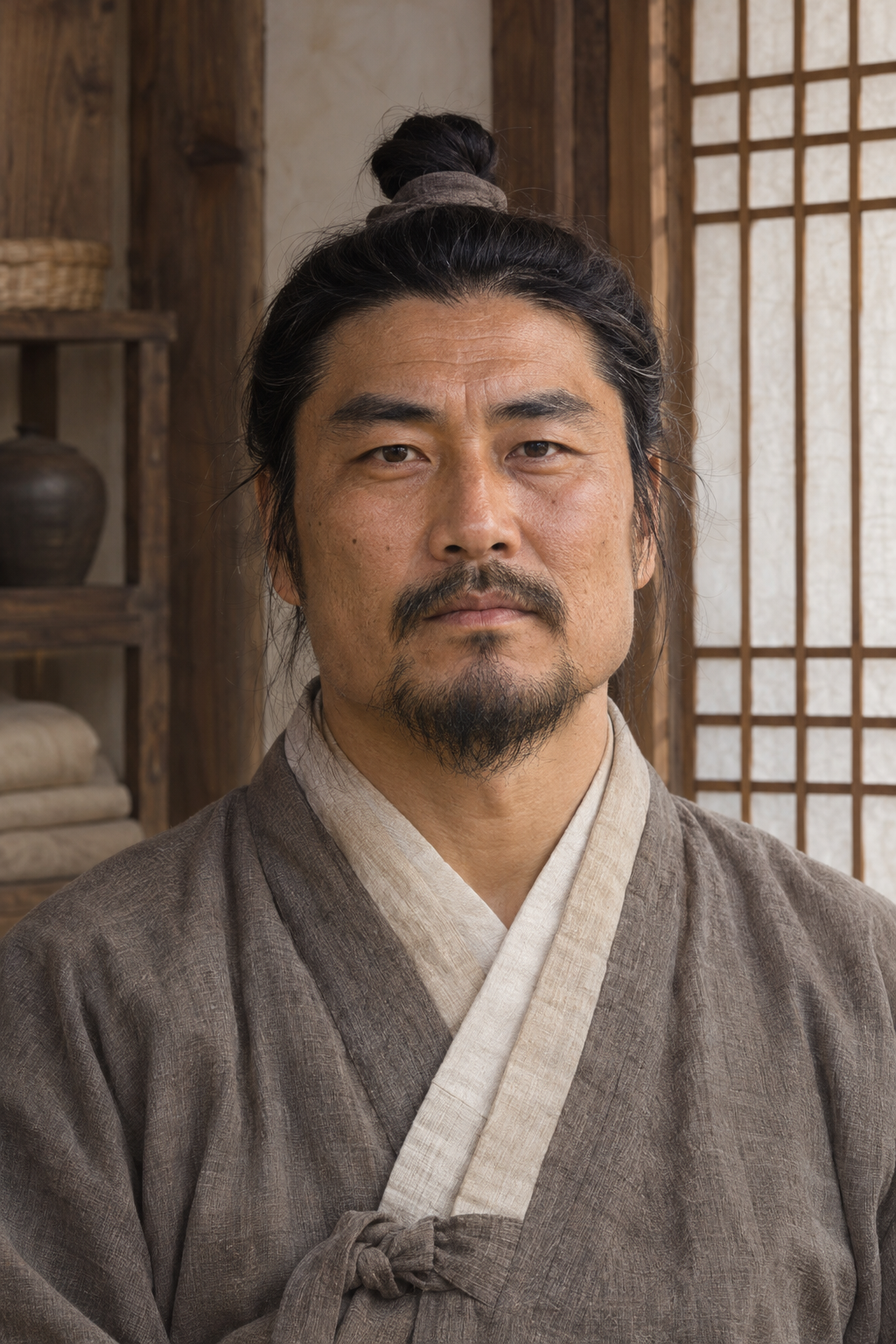
About Paul Jeong Tae-bong
Paul Jeong Tae-bong was born in 1796 in Deoksan, in Chungcheong Province. His adult name was Man-bo, but the people who remembered him continued to use his childhood name, Tae-bong. He lost his parents when he was young. A cousin of his father took him into his household. Seo Jong-tae’s account describes a boy who endured neglect and slights there and who nevertheless came to be known for his gentle treatment of others.
Another relative, Peter Jeong San-pil, served the Catholics of Naepo as a catechist. Father James Zhou Wen-mo had baptized Peter and entrusted him with teaching believers in the region. Peter died in Deoksan around 1799, when Paul was still a small child. Catholic accounts agree that the two men were cousins, though they differ about the closeness of the relationship. By the time Paul had a family of his own, he too had become a Catholic.
Around 1824 Paul left Chungcheong and settled at Yongdam in Jeolla Province. When he took up a book of Christian teaching he would go on reading until he had finished it. Seo also relates an incident in which Paul held a block of wood beneath his chin and imagined the moment of execution. The gestures and words of that story belong to the later account of a man whose relatives already knew what it meant to lose someone in a persecution.
When arrests began in Jeolla in 1827, Paul had lived in Yongdam for about three years. He first went into hiding. He continued visiting his home, however, and someone familiar with his movements reported him. The officers went to the house. The Church preserves an unusual detail about the warrant they carried. It is said to have named someone else. Paul went with the officers to the local magistrate.
In Yongdam he was questioned and beaten before being taken to Jeonju, the provincial capital. The separation from his family lasted for years. Yeo Jin-cheon records that one of Paul’s young children died during his imprisonment. His wife and children had accompanied him when he moved to Jeolla. The family he had been able to bring with him then was the family he could no longer look after at home.
At Jeonju the authorities twice brought him out for interrogation. They wanted him to identify fellow believers and to renounce his faith. He refused to give them names. He was held with other Catholics arrested in the same persecution, including Job Yi Il-eon and Peter Kim Dae-gwon. During the years that followed he signed the record of his death sentence on three occasions. His confinement lasted twelve years.
Historian Bang Sang-geun traced the different outcomes for the prisoners reported to the capital in 1827. Paul appears in the list as a resident of Yongdam. Seven of the prisoners were named for capital proceedings. One died in the prison that year. Five, including Paul, lived to face execution in 1839. What looked like a single group on the ministry’s list came to very different ends.
A letter written by the missionary Jacques Chastan gives a rare glimpse of life during the last of those years. In October 1838 he reported meeting the five condemned men. Their keepers allowed them to live together in a separate building at the prison and to work to earn their living. The visit itself was brief. The prisoners had sent their confessions to the priest in writing. He was able to speak to them and give them absolution in person.
Paul’s case came before the court in May 1839. The Ministry of Punishments submitted a separate entry under his name. It accused him of believing teachings the officials considered false and specifically charged that he had set aside the sacrifices and no longer performed them. The ministry called for punishment under the law.
When the order arrived, Paul asked the jailers for a favor. He did not want his wife and children to come to the execution ground. He feared that seeing them there might make him falter. He was taken with the other prisoners to Supjeongi, the market ground in Jeonju. They were beheaded on May 29, 1839.
The wooded place to which Paul and the others were taken had served as a training ground for the Jeonju garrison. Part of it was used for executions. The river then ran much closer to the ground than it does today. A photograph preserved in the bishops’ account shows a stone raised there in 1935 to mark the place of martyrdom.
The date on which the five died became the memorial of the larger group of 124 Korean blesseds. Oh Se-taek explains why the bishops chose it. The anniversary of Paul Yun Ji-chung, who heads the group, falls on December 8, already the solemnity of the Immaculate Conception. May 29 brought together the largest number of the group who died in Jeonju on the same day. Paul Jeong’s years among his fellow prisoners are remembered in the date on which the Church commemorates them together.
Wondering how to weigh the stories and sources? Learn how to read a saint biography.