Biography
Paul Jones
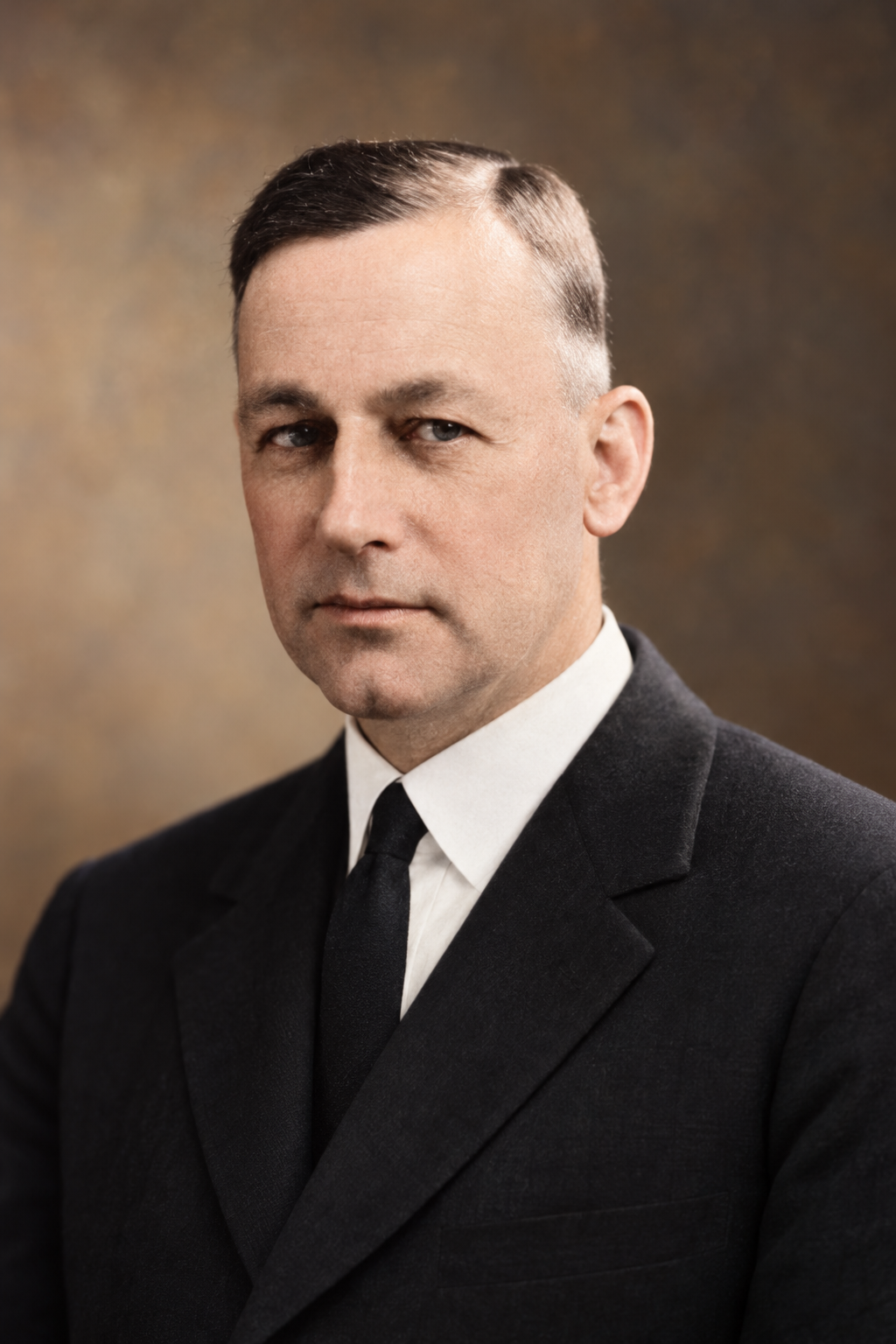
About Paul Jones
Paul Jones was an Episcopal bishop whose refusal to support war cost him his leadership of the church in Utah. He continued serving within the Episcopal Church after leaving that office, carrying his convictions into peace advocacy and work with college students. The church now commemorates him on September 4. His place in its calendar recognizes a Christian witness shaped by conscience and disagreement within his own religious community. He retained his standing as a bishop.
Born in 1880, Jones served as bishop of Utah from 1914 to 1918.
His path west began with a missionary appeal. In 1906, Bishop Franklin Spalding spoke to students at the Episcopal Theological School in Cambridge about the needs of the church in Utah. Jones responded by offering to go. He became archdeacon in 1914 and succeeded Spalding as bishop after Spalding’s death that year. A contemporary account later recalled the enthusiasm that had greeted the young missionary’s appointment.
Jones shared his predecessor’s socialist convictions as well as a commitment to peace. These beliefs brought him into conflict with church members. His obituary described pressure at a meeting of the House of Bishops. In 1918 he resigned his jurisdiction, but his ministry did not end. Bishop Benjamin Brewster of Maine, who had supported him during the meeting, gave him responsibility for a mission parish.
The dispute was not simply a division between Jones and everyone he served. Joseph Wakelee-Lynch’s later account describes a campaign by vestry members from two prominent Utah parishes and the district’s Council of Advice. They argued that his public statements harmed the church and that he should express his opinions as an individual rather than as their bishop. The same account notes that other clergy and laypeople supported his right to speak, even when they supported the war themselves. The argument concerned both the morality of war and the freedom of a church leader to dissent.
Opposition to war did not mean approval of Germany’s actions. Wakelee-Lynch records Jones’s explicit condemnation of German aggression and his willingness to sacrifice personally to oppose it. His objection concerned the means Christians should use against wrongdoing. The distinction mattered because accusations of disloyalty could obscure the religious reasons he gave for his position. Later, he helped establish the Episcopal Pacifist Fellowship and assisted people fleeing Nazi Germany, while also urging greater understanding in relations with Japan.
After his time in Maine, Jones became secretary of the Fellowship of Reconciliation. His obituary remembered years of travel, speaking to audiences across the country about peace. Later he became chaplain and a professor of religion at Antioch College in Yellow Springs, Ohio. His service there gave him another setting in which to bring religious questions into ordinary life.
In March 1929 he offered to leave his Fellowship post at the beginning of the following year, explaining that one person could remain in such a position too long.
Jones explained the foundations of his thought in Hidden from the Prudent, the seventh William Penn Lecture, delivered in Philadelphia on May 8, 1921. He argued that the world belonged to God and that human beings should be understood through their possibilities for goodness. Religion therefore required more than defending abstract ideas. People had a responsibility to help make those possibilities real through the way they treated one another.
Forgiveness, in his account, was an active means of changing relationships, not merely a response to an apology already offered. He extended this approach to conflict between nations and between employers and workers. Yet he did not promise that loving action would keep an individual safe. He acknowledged opposition, persecution, and apparent failure. The work might require the sustained faithfulness of many people before its effects became visible. His pacifism rested on hope in that larger transformation rather than a guarantee of immediate personal success.
He illustrated his argument with an employer who raised wages and shared profits. The example connected his religious teaching with practical economic choices and reciprocal responsibilities in a workplace.
An Antioch newspaper account gives a quieter glimpse of his college life. During the Christmas holiday of 1932, some students went carol-singing at his residence after a Sunday tea. The college’s later archival introduction identifies him as its first College Pastor. Alongside his public advocacy, this small scene records his presence in the social and religious life of the campus.
Peace work also involved practical help. As a trustee of an estate, Jones supported using its funds to bring persecuted refugees from Europe. His obituary recalled this aid. He died at home on September 4, 1941, after an illness lasting several months.
In 1994 the Episcopal General Convention authorized a trial commemoration of Jones as a bishop and peace advocate, with September 4 as its date. This was an Episcopal calendar decision, not a Roman Catholic canonization.
Wondering how to weigh the stories and sources? Learn how to read a saint biography.