Biography
Paul of Thebes
About Paul of Thebes
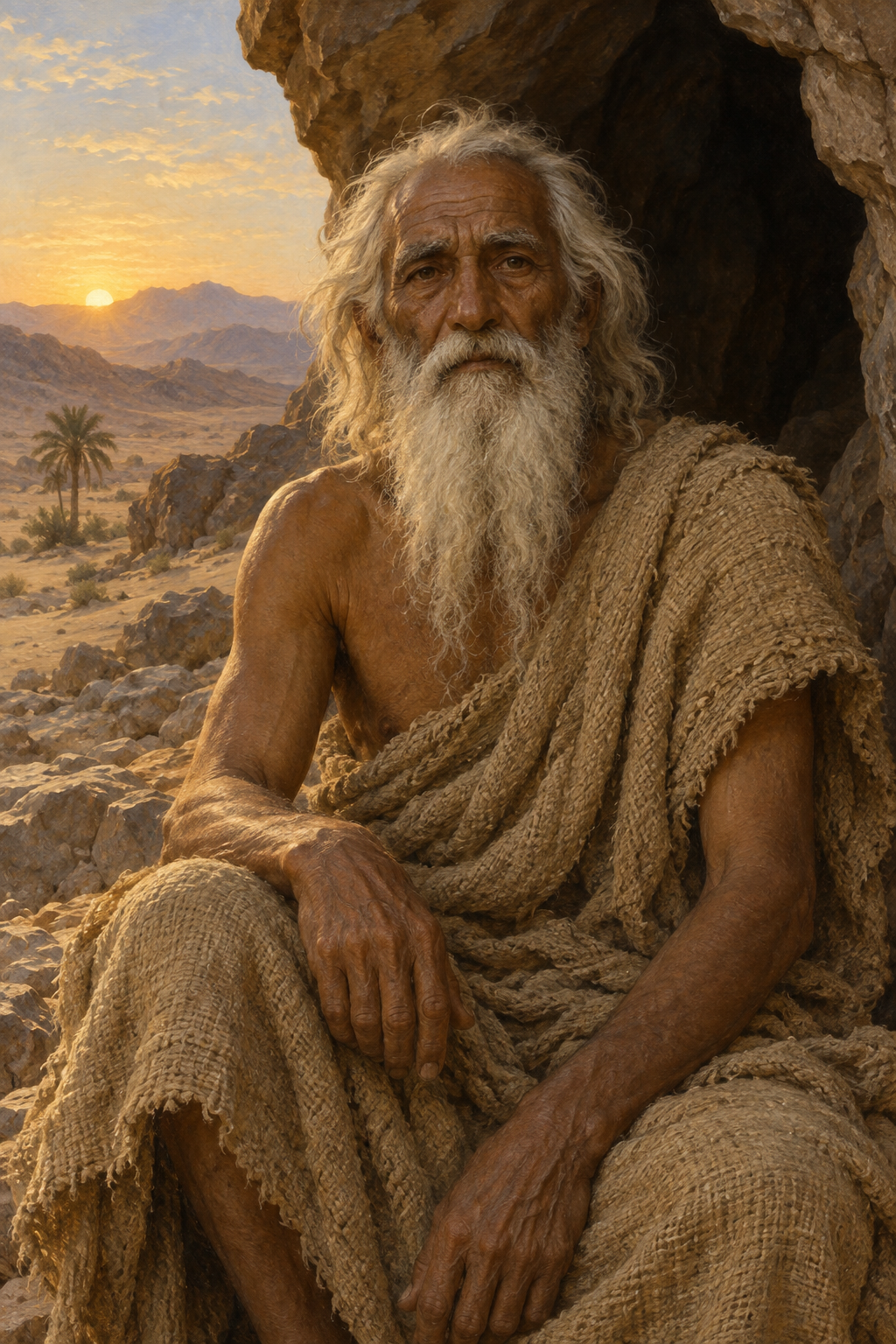
Paul of Thebes occupies a prominent place in the story Christians tell about the beginnings of desert monasticism. The Orthodox Church in America commemorates him on January 15 as a venerable hermit and associates him with the Egyptian Thebaid. The most influential ancient account is Jerome's *Life of Paulus the First Hermit*, written in the late fourth century. At its opening Jerome says that the priority of early hermits was already debated. Many credited Antony with beginning the way of life; Jerome preferred the claim that Paul had preceded him. This is an argument within an early monastic tradition, not a complete contemporary record of Paul's life. It also should not erase other ascetics who lived before or beside Antony.Jerome places Paul's youth during persecution in Egypt and says a relative threatened to betray him. In his narrative the young man fled into the desert, found shelter in a cave, and came to choose solitude and prayer as his lasting life. Jerome then admits that no one knew the details of Paul's intervening years. That admission is significant: the Life moves from a narrated beginning to an extraordinary ending with a long, undocumented middle. The story conveys a Christian ideal of simplicity and perseverance under pressure. It does not give a second, independent witness to the man's birthplace, exact age when he withdrew, the location of the cave, or the length of his solitude. Those details remain part of Jerome's presentation.The best-known scenes take place when Antony, himself famous as an Egyptian ascetic, journeys to find Paul. Jerome's narrative gives them a meeting, shared bread delivered by a raven, and a farewell before Paul dies. It ends with lions digging a grave. Christian readers have long found in the encounter an image of humility between two older men of prayer. The Catholic Encyclopedia discusses the textual versions of the Life and calls these scenes familiar legends. A biography can describe their meaning and reception while avoiding the claim that a raven literally supplied a measured daily ration or that lions performed a documented burial. The image commissioned for this record therefore depicts neither miracle.The historical question is not fully settled by retelling the Life. Scholar Danny Praet notes that Jerome already had to respond to critics who doubted a man said to have lived wholly hidden could be known at all. A Catholic historical reference observes that belief in Paul may have existed apart from Jerome's literary account, but it does not turn the narrated ages or miracles into confirmed facts. The Orthodox life gives the traditional years of about 227 and 341, and a lifespan of 113 years. Those figures reflect the received story and are not suitable as secure historical birth and death fields. No individual contemporary document, epitaph, or securely identified burial is supplied by the reviewed sources.Paul's significance is therefore clearest as a remembered model of withdrawal, prayer, and freedom from wealth. Jerome closes his Life by contrasting Paul's imagined poverty with the possessions of affluent readers; the hermit is an example through whom the author urges a different scale of value. The Orthodox commemoration continues to present him as an early desert dweller and specifically warns readers not to confuse him with Paul the Simple, another Egyptian ascetic. This profile preserves that distinction. It identifies what the churches commemorate, what Jerome wrote, and what remains uncertain. Acknowledging the literary shape of the account does not diminish its influence on Christian imagination; it keeps devotional tradition and historical evidence in their proper places.
Wondering how to weigh the stories and sources? Learn how to read a saint biography.