Biography
Paul Pak Gyeong-hwa
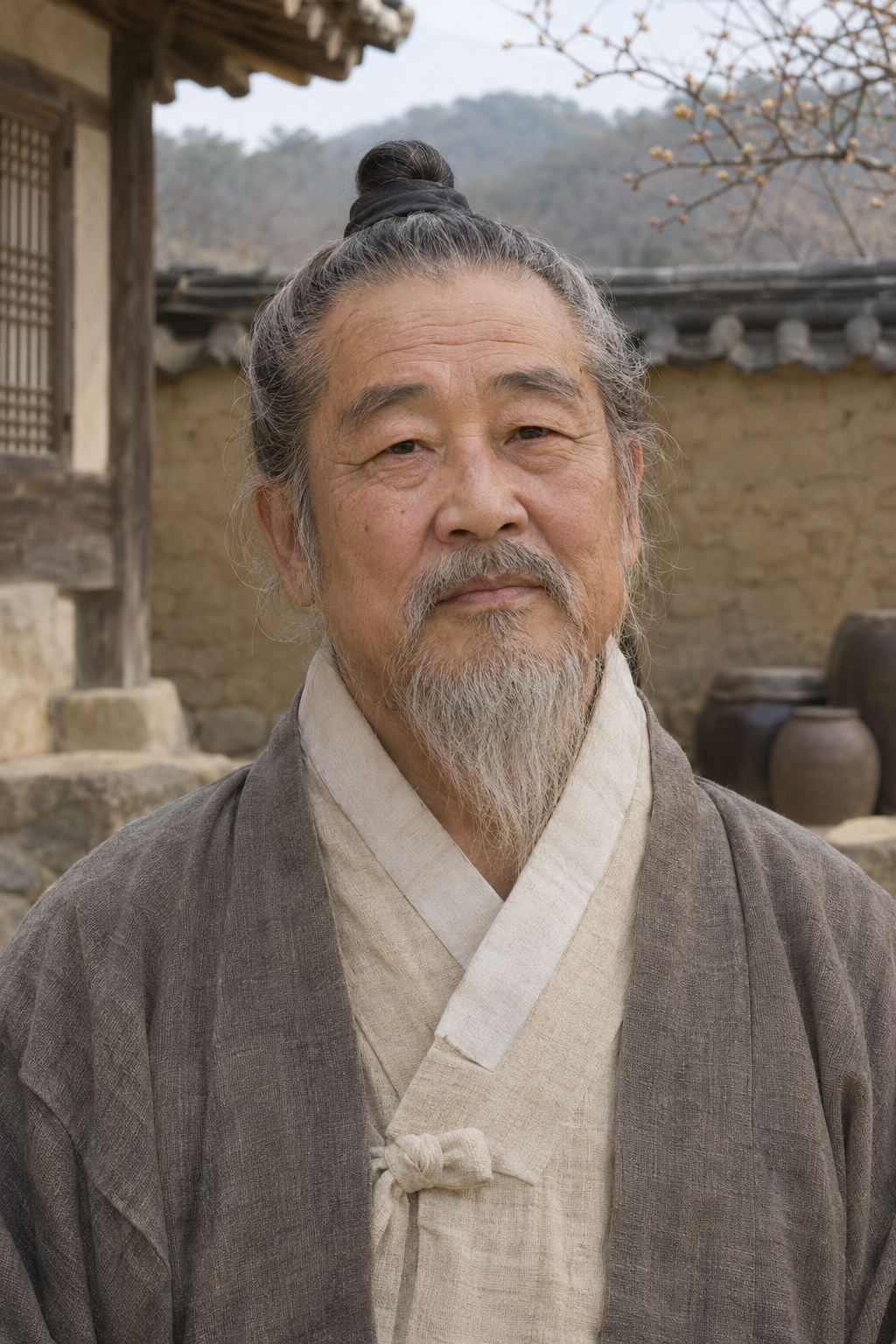
About Paul Pak Gyeong-hwa
Paul Pak Gyeong-hwa was born in 1757 in Hongju, Chungcheong-do, into a yangban family. He was also known by the name Do-hang. He accepted Catholic teaching at about thirty-three. His son Andrew Pak Sa-ui would later share his imprisonment.
The Korean Catholic Encyclopedia places his first arrest in 1794, before his baptism. He yielded to the pressure of punishment, promised to abandon Catholicism and was released. He regretted that decision and resumed religious practice. The encyclopedia describes his move away from his earlier home as an effort to escape attachments that distracted him from that practice. It identifies the mountain destination as Gamagi in Danyang and says that his son accompanied him. He subsequently received baptism from Father James Zhou Wen-mo.
Baek Gyeong-ok’s account describes the first mountain settlement without naming it. Paul devoted time there to prayer and meditation, religious instruction within his family, and teaching neighbours. Baek treats the renunciation as a turning point rather than the end of his conversion. He had survived his first arrest by abandoning his faith; afterwards he tried to put his daily life in accordance with the teaching he had accepted.
The Daegu beatification commission reads Paul’s life through love of God and neighbour. Its meditation asks how professed love for God can coexist with difficulty loving one’s own family and neighbours.
The current bishops’ account places his named move to Gamagi after sixty and describes nine years there. The encyclopedia instead associates Gamagi with his departure following the first arrest. Their chronologies are not identical.
The Andong diocesan history of Geonhak places the family’s next refuge at Meongemok, a neighbouring village. Its account connects this small settlement with the route of refugees from Gamagi in Danyang. Paul’s final arrest therefore followed another attempt to keep his household together away from the searches. Geonhak lay amid steep mountains, close to the borders of neighbouring districts, with Meongemok identified as its neighbouring settlement. It identifies Meongemok with present-day Mungyeong. Kim Jeong-suk disputes the Chungcheong identification. Cheongju’s Meongemok shrine is at Boeun.
Arrested with his son at an Ascension gathering in 1827, Paul encouraged fellow prisoners at Sangju. Officials punished him before transferring him to Daegu.
A contemporary government record provides another view of that captivity. The Ministry of Punishments reviewed the provincial case on the seventh day of the sixth lunar month in 1827. The governor, Yi Hak-su, named Pak Bo-rok, Andrew Pak Sa-ui, Kim Sa-geon and An Sa-heung as four prisoners who would not recant even under threat of death. His language treated their persistence as criminal obstinacy. The ministry directed the governor to obtain formal statements confirming their capital cases and report again before a further royal decision. The king approved that procedure. This was a stage of review and renewed reporting, rather than a record of an execution already carried out. Paul appears under the name Bo-rok, while the same report identifies his son separately as Pak Sa-ui.
During that confinement an official ordered Paul to discuss religious doctrine with a Buddhist monk. The Catholic account remembers his answers as fluent and the listening officers as impressed by his knowledge. It presents this encounter as another way in which he explained his religion while imprisoned.
After a new governor arrived, Paul was taken out again for punishment. Knowing that he could no longer endure much more, he called his son and fellow Catholics to him. The Church remembers his final advice as an encouragement to remain faithful despite concern for their families outside. He had continued to encourage and care for fellow prisoners despite his own age and injuries. He died in the Daegu prison. Five months later Catholics opened the grave to move his remains. The tradition recalls his appearance as peaceful.
Paul had been sentenced to die, but his death came before an execution could be arranged. Repeated punishment left him gravely weakened, and he did not recover in prison. The encyclopedia gives the date as the twenty-seventh day of the ninth lunar month in 1827. The current bishops’ biography gives November 15, 1827, and explicitly supplies that same lunar date.
Andrew remained imprisoned after his father’s death. He was finally beheaded in Daegu in 1839, after twelve years in custody. The Andong account commemorates father and son together: both were beatified by Pope Francis on August 16, 2014. Their common arrest had led to different endings, Paul’s death in prison and Andrew’s execution years later.
Paul’s descendants continued to belong to the mountain Catholic communities. At the blessing of Yeoumok in 2017, the Daegu archdiocesan homily identified members of Paul and Andrew’s family among the Catholics already living there when John Yi Yun-il arrived. John came from Galgol after his father’s death and joined his wife’s relatives at Yeoumok. The homily commemorated the connection between the earlier imprisoned Paks and the later community in which John taught as a Catholic leader.
Wondering how to weigh the stories and sources? Learn how to read a saint biography.