Biography
Paul the Simple
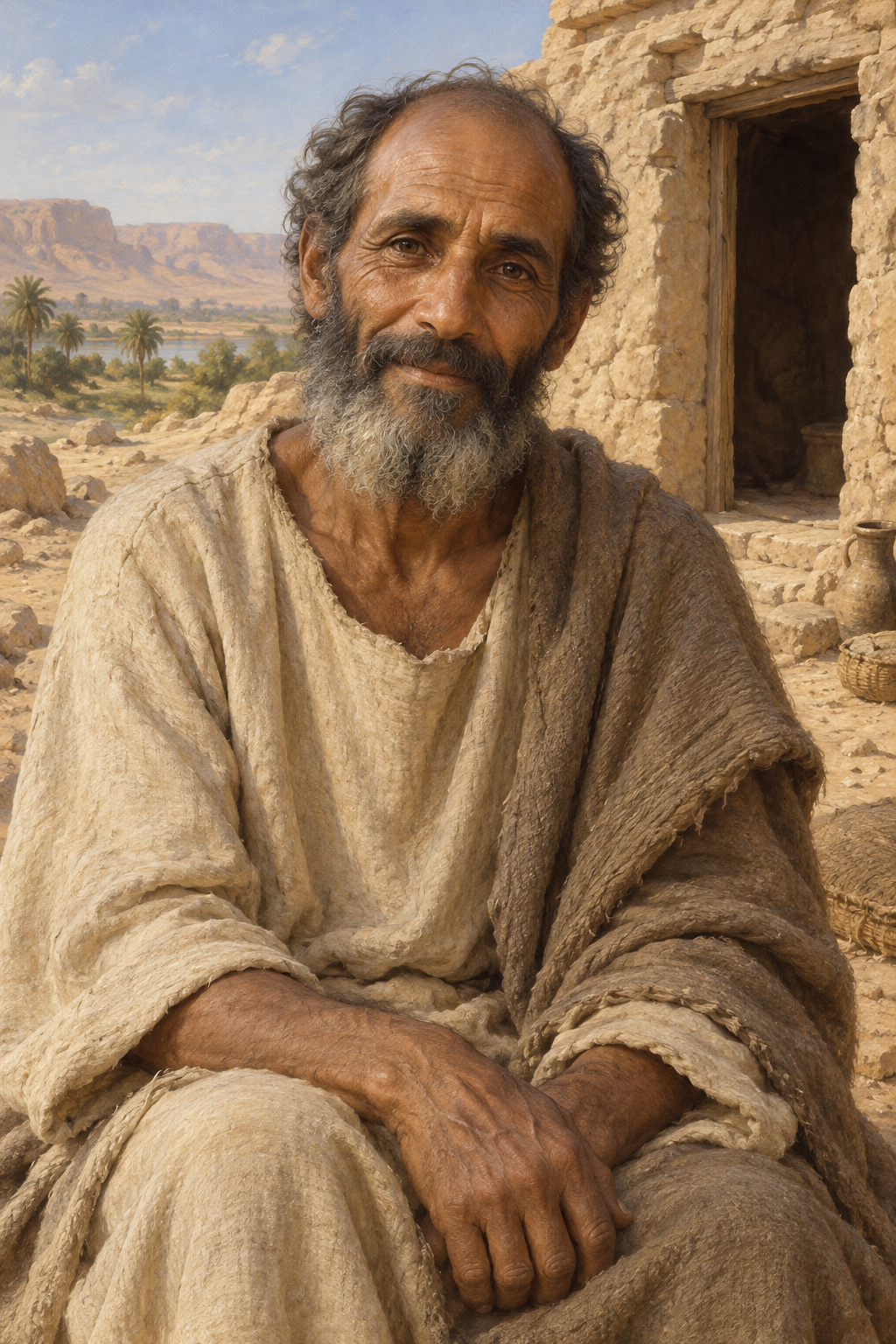
About Paul the Simple
Paul the Simple is a figure of the fourth-century Egyptian desert tradition, remembered for an unpretentious willingness to learn. The fullest early narrative is chapter XXII of Palladius's *Lausiac History*. Palladius does not present himself as a witness to Paul's life; he says Cronius, Hierax, and others told him the tale. This matters when the account is used as biography. It is a received monastic story, valuable evidence for how early monks remembered Paul, but its dialogue and precise incidents cannot be checked against Paul's own words or documents. The name “Simple” in this tradition praises guilelessness and sincerity; it should not be read as a claim that Paul lacked intelligence or dignity.Palladius describes Paul as an older rural worker whose domestic life broke down, leading him to seek the desert monk Antony. The story says Antony initially doubted that someone about sixty could bear solitary discipline and urged him to return to ordinary work or join a community. Paul stayed near Antony's cell, and Antony eventually received him. The narrative then dwells on patient tasks: working with palm leaves, accepting correction, joining in prayer, and taking food without insisting on preference. These scenes convey the kind of persistence Palladius wanted his readers to admire. They also show that the text is carefully shaped as instruction; no independent record establishes the exact age, words, or number of days.After a period of training, Palladius says Antony gave Paul a separate cell a few miles away. In the story, Paul continued the life of prayer and gained a reputation for spiritual discernment. A dramatic exorcism follows, with Antony directing a troubled visitor to Paul. The miracle is part of Palladius's account and of later church memory, but its details cannot be treated as a documented medical or historical event. The emphasis of the chapter is Paul's humble trust rather than a claim to rank over Antony. A Catholic historical reference compares this narrative with the *Historia monachorum* and notes differences in how Antony first responds to Paul, a reminder that ancient retellings do not agree on every scene.The Orthodox Church in America celebrates Paul the Simple on March 7 and adds that he is also commemorated on October 4. Neither date is a secure statement of when he died. The earlier import had put January 15 in the Eastern Orthodox feast field because its cited January 15 page mentions his name. That page is actually devoted to Paul of Thebes and ends by saying the two saints should not be confused. The inherited date therefore needs correction to March 7, while the second OCA observance remains recorded in this prose pending a separate structured feast entry. Paul the Simple also should not be conflated with the apostle Paul, who lived centuries earlier.The sources do not provide a secure birth year, death year, birthplace, or burial place for Paul the Simple. The account's remembered path from rural labor to desert prayer is substantial enough to explain why churches honor him, but it does not justify filling those fields with guesses. The Catholic Encyclopedia's comparison of early versions also cautions against treating one arrangement of the story as a diary of his actions. This profile therefore keeps Palladius's named witnesses and instructional narrative visible while stating their limits. Its portrait is likewise an imaginative image of a desert monk, not a reconstructed likeness of a man for whom no physical description survives.
Wondering how to weigh the stories and sources? Learn how to read a saint biography.