Biography
Paul Yi Do-gi
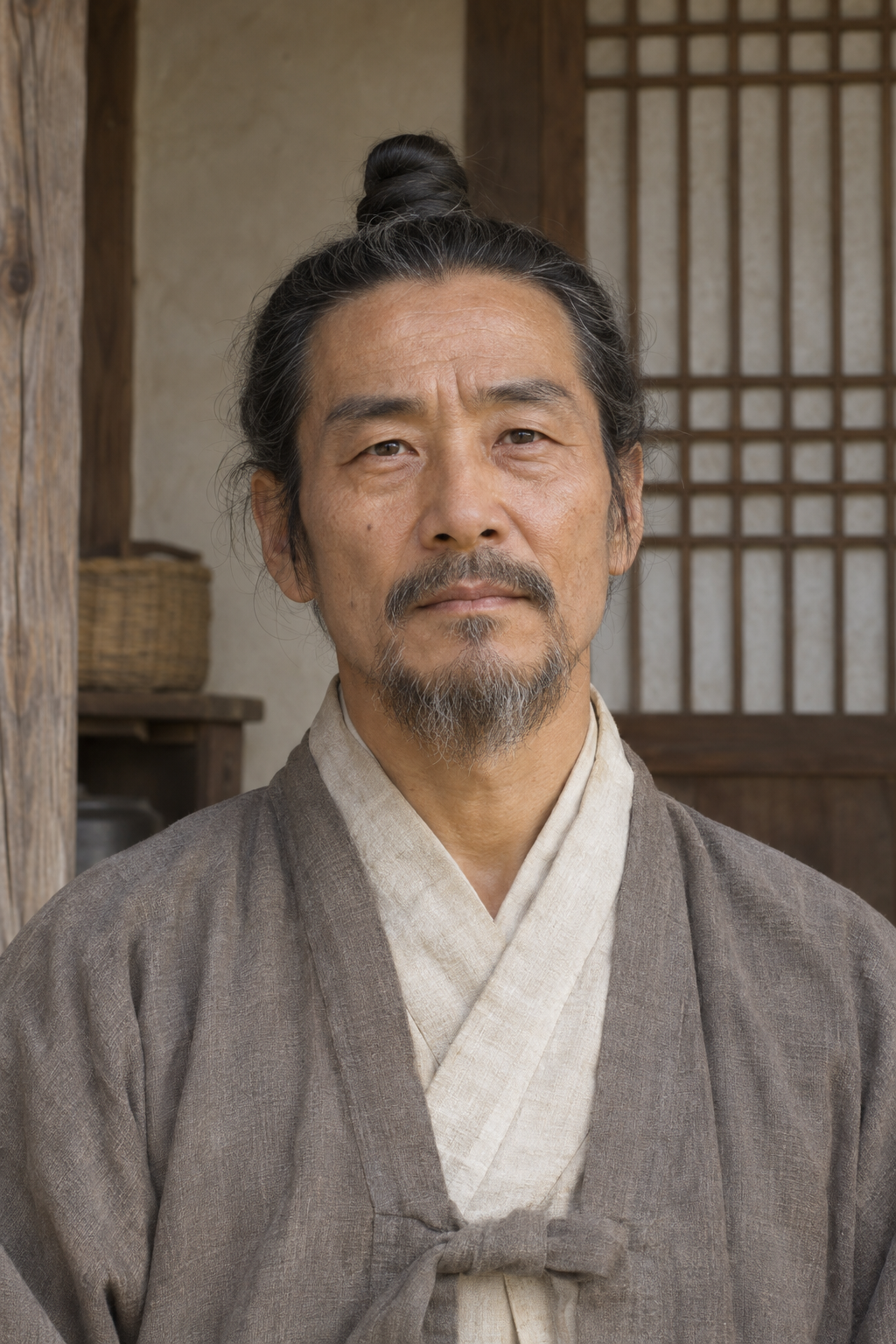
About Paul Yi Do-gi
Paul Yi Do-gi came from Cheongyang in Chungcheong-do. He had not learned to read, but Catholic instruction gave a new direction to his use of what property he possessed. He spent it in bringing other people into the faith, becoming poorer as his work continued. His activity extended beyond Cheongyang into Hongju, Gongju and Eunjin. He moved repeatedly as he taught in different communities.
Historian Cha Gi-jin’s examination of local records places him in the Catholic community around Sudan-ri and suggests a conversion around 1786. Neither the precise birthplace nor the person who first instructed him is securely identified in the surviving biography. Cha’s reconstruction links his movements with communities whose members were related through marriage as well as religious teaching. The distinction between a documented connection and a probable location remains important: Sudan-ri is a reasoned historical identification, rather than an address supplied by Yi himself.
A hostile government source preserves names that the devotional account does not supply. In Noh Sang-chu’s diary for 1801, the prisoner Kim Seong-ok stated that he had learned Catholic teaching from Yi Do-gi, who had died under beating at Jeongsan. He also named Yi Heung-il and Go Gop-geum as people taught by Yi. His testimony connected Yi’s daughter by marriage with Yi Won-gyeong’s household. These are statements recorded during an investigation of Catholics, with the pressures and accusations that setting involved.
Yi eventually crossed the mountain into Jeongsan and settled among pottery workers. His preaching brought people of that village into the Church. In 1797 a neighbour threatened to denounce him as a Catholic leader. His wife urged flight, but he was reluctant to leave the new believers who had come to rely on him.
Jeongsan Ilgi, the narrative preserving his imprisonment, pictures him and his wife carrying earthenware vessels to sell in other villages. Its account of the arrest begins at home while he was making straw sandals. A visitor first pretended to need a calendar to help search for a missing servant. When Yi said he could not read it, the questioning turned to his Catholic learning and officers seized him. A crucifix and religious books were found in the house. Most of those arrested with him yielded to the magistrate’s demands, while one fellow believer initially stood firm alongside him. The two were taken into custody together before Yi’s later interrogations and public punishments.
Taken to the Jeongsan authorities, he faced repeated questioning about fellow Christians. Punishment was made public in the marketplace, where humiliation accompanied the beatings. He nevertheless continued trying to explain Catholic teaching to the magistrate. The magistrate offered him a position called pungheon, a local administrative responsibility usually held by upper commoners, if he would renounce his religion. Historian Cho Gwang identifies this as a financially advantageous office. He refused the bargain. At other points he refused visits from his wife and fellow believers because he feared they might weaken his resolve. Jailers sympathetic to him also suggested that he escape, but he declined to leave.
His prison life also retained practices more ordinary than the dramatic confrontations with officials. In a study presented for the anniversary of his death, Father Kim Jeong-hwan emphasized his use of prayers and meditation, and his observance of feasts and fasting according to the religious calendar. Kim interpreted these habits as a sustained effort to remain before God in changing circumstances. On that reading, Yi’s endurance involved repeated acts of religious attention through confinement, rather than courage appearing only when he was summoned for questioning.
The diary describes hunger, worn clothing and winter cold. His wife obtained food and brought it to him; when he initially refused, she pressed him until he ate. The same narrative records a magistrate challenging the absence of his four sons from the prison. Yi explained that he himself had told them to stay away. Such encounters preserve the strain imprisonment placed on family relationships, alongside the account’s insistence that he remained determined in his faith.
The final punishments left him severely injured, with broken legs. After another interval in confinement, the magistrate ordered the officers to kill him if he was still alive. He died under further violence on July 24, 1798. His body was buried on the magistrate’s orders. Several days later Catholics recovered it and carried it away for another burial. The official life remembers both his refusal to renounce belief and the community’s effort to reclaim his remains.
Cha distinguishes the marketplace where Yi was repeatedly punished from the place outside the jail where he finally died. He also traces the later survival of the narrative: Daveluy obtained a Korean copy in 1854 and translated it into a letter the following year; another manuscript reached Bishop Blanc in 1882. These were related witnesses with differences, not a diary written by Yi’s own hand. The account that made his prison life known was preserved and copied by other Catholics.
Wondering how to weigh the stories and sources? Learn how to read a saint biography.