Biography
Paul Yi Guk-seung
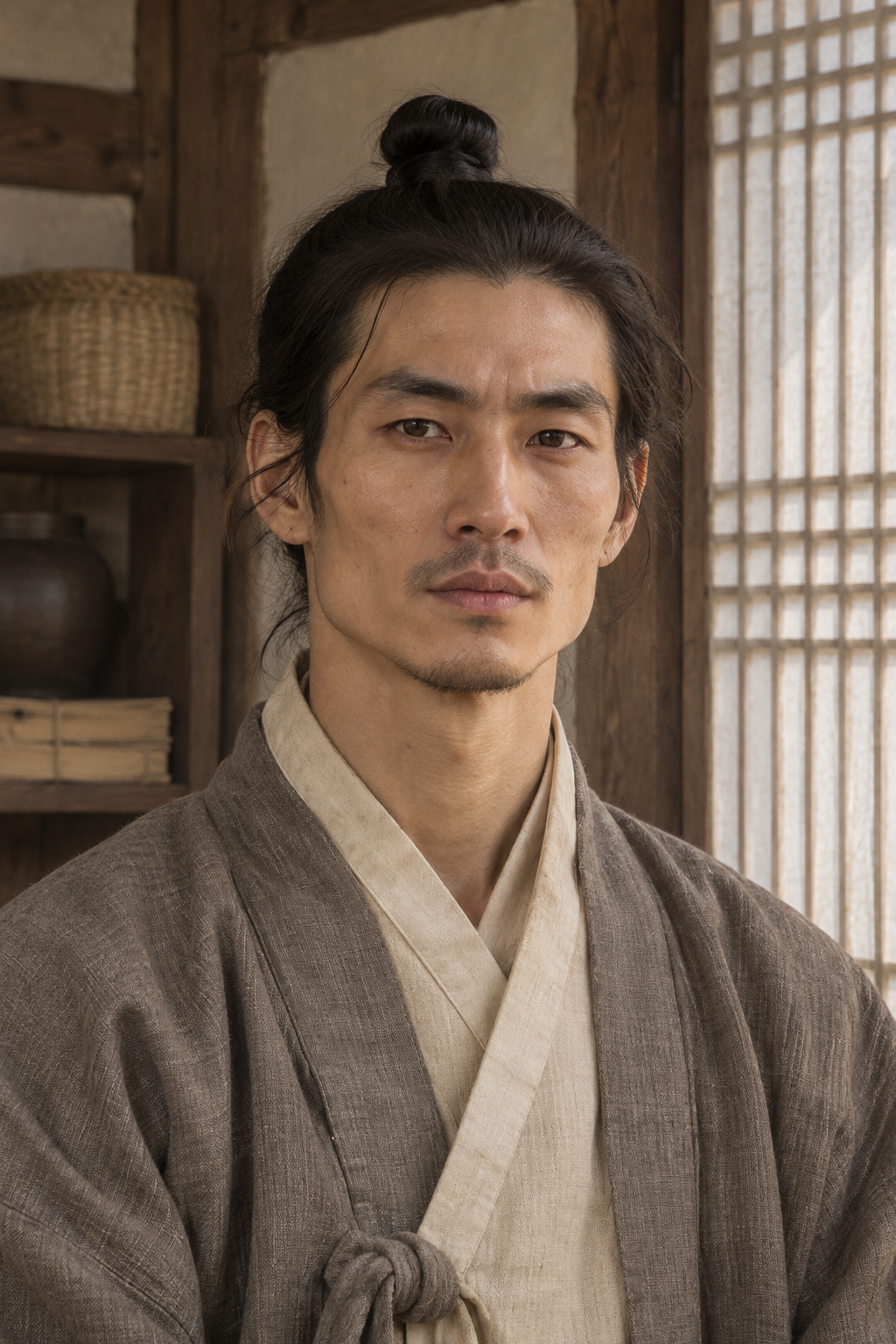
About Paul Yi Guk-seung
Paul Yi Guk-seung came from a yangban family in Eumseong, Chungcheong Province, and grew up in Chungju. He was also called Seong-gyeom and used the literary name Miam. Having heard about Catholic teaching, he travelled to Yanggeun to learn from Francis Xavier Kwon Il-sin. On returning home he resisted the efforts of his former teacher to draw him away from the religion.
His commitment did not remain unbroken. The Catholic Encyclopedia records his arrest in Chungju during the persecution of 1795, his recantation and release. He afterwards regretted that answer and undertook penance. When his parents arranged for him to marry, he refused, believing that family obligations would interfere with the religious life he intended to follow. He left for Seoul rather than give way to their continuing pressure.
In Seoul he worked as a teacher and shared Catholic teaching with others. He studied alongside John Choe Chang-hyeon and Augustine Jeong Yak-jong and received the sacraments from Father James Zhou Wen-mo. His name became known to other Catholics. In 1801, after hearing it from prisoners, the police searched for him and brought him into custody. The bishops’ account remembers him continuing to pray while he was taken to the police bureau.
The encyclopedia dates his move to Seoul to 1797 and places him in the Myeongdohoe, studying under Alexis Hwang Sa-yeong. It also recounts his encounter in prison with Go Gwang-seong, a Catholic from Hwanghae who was about to leave after abandoning his faith. Paul urged him to return and withdraw his recantation. Go did so and was subsequently executed.
The teaching association gave his studies a practical purpose. Historian Bang Sang-geun describes the Myeongdohoe as an organization for studying doctrine, spreading the faith and preparing leaders. Its activity helped organize the community after Zhou’s arrival, alongside the introduction of lay catechists and more regular access to the sacraments. Paul’s membership thus belonged to a movement that connected instruction with the work of passing the faith to others. Bang places the association’s formation around 1797–1798; this is an estimate for the organization, rather than a dated record of Paul’s own admission.
Ri Gil-jae’s 2026 account identifies Hwang’s house in Ahyeon as Paul’s place of residence after his return to Seoul. He names Florus Hyeon Gye-heum, Protase Hong Jae-yeong and other Catholics among Paul’s fellow students.
His early visits to Seoul are less certain. Ri argues that Paul had already travelled there by about 1790, citing reported book borrowing from Matthias Choe In-gil. He proposes that Paul stayed with Choe and attended Zhou’s first Easter Mass. Those further details are presented as reconstruction, rather than eyewitness testimony establishing Paul’s presence at that celebration.
Under interrogation Paul himself repeatedly yielded and then withdrew his recantation. Eventually he maintained his profession of faith and received a death sentence on July 2, 1801. The bishops’ narrative says he was taken to Gongju and killed a few days afterwards; the sentencing day therefore cannot safely serve as the exact execution date. His nephews are said to have recovered his body and buried it near Gongju.
The government’s hostile account accused Paul of honoring Zhou as a priest and refusing ancestral rites. It described ten years of adherence that punishment would not change. The royal disposition ordered his execution in his home jurisdiction.
Historian Cha Gi-jin places his sentence beside that of Barbara Jeong Sun-mae and Go Gwang-seong. He explains the order to execute prisoners in their home districts as a public warning intended to discourage others from following them. The three were consequently separated for transport: Barbara went to Yeoju, Go to Pyeongsan and Paul to Gongju, where the provincial governor was based. Cha also names another prisoner whom Paul encountered, known only as Hwang the gunner, from Bongsan. The account does not preserve Hwang’s baptismal name. This fellow prisoner’s distinct journey ended in execution after transfer to his own district.
Paul also remained in the memory of his fellow student Hwang Sa-yeong. Ri reports that, while hiding at Baeron during the persecution, Hwang remembered him in a poem entitled “Remembering Miam on an Autumn Night.”
Paul is remembered at Hwangsaebawi in Gongju, where the shrine’s account specifically places his execution in July 1801. Its present memorial landscape includes a martyrs’ tower and a tomb chapel. The same account distinguishes the modern shrine from the reconstruction of the older execution ground: it places the location associated with Louis Yi Jon-chang farther along the lower Jemin stream. It bases that discussion on later travel testimony and an official’s diary. This distinction matters when locating Paul’s death. The shrine commemorates him, but the account does not establish the exact patch of ground where he was killed or identify his nephews’ burial place. Its historical discussion concerns a landscape of executions, rather than a securely identified surviving grave of Paul himself.
Wondering how to weigh the stories and sources? Learn how to read a saint biography.