Biography
Paul Yi Gyeong-eon
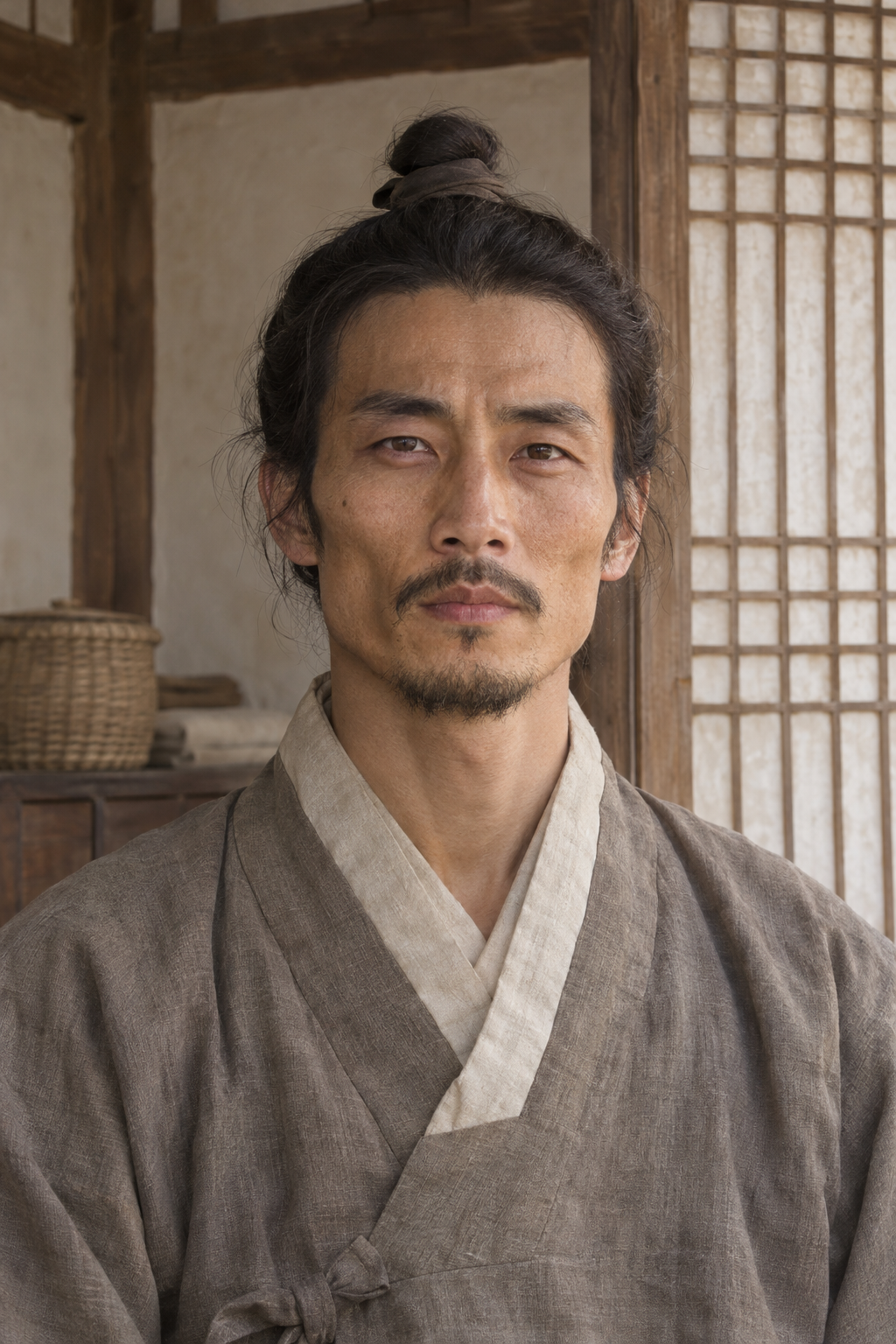
About Paul Yi Gyeong-eon
Paul Yi Gyeong-eon earned his living by copying books and making devotional images, work that also helped Catholics maintain their faith without a resident priest. He belonged to the Myeongdohoe, an association devoted to Christian instruction, and helped prepare catechists. His modest resources also supported the journeys of Paul Jeong Ha-sang and other Catholics seeking clergy through Beijing. Books and images helped transmit Catholic teaching between households. He suffered recurring intestinal illness, but continued reading Scripture, encouraging Catholics who had stopped practicing, and explaining his faith to people outside the community. Peter Jo Suk helped guide his religious life before his own martyrdom in 1819, giving Paul a personal connection to another Catholic teacher.
Born in Seoul in 1792, Paul belonged to a family already marked by persecution. His brother Charles Yi Gyeong-do and sister Lutgarda Yi Sun-i were killed in 1802. A recent account of his youth describes a household whose inherited standing provided little protection from poverty. After marrying, he remained in Seoul when his mother and sister-in-law moved to Yeonpung. Religious study and copying were therefore part of the ordinary work of supporting his family, alongside his obligations to the Catholic community. He had a son and a daughter. His later prison correspondence makes clear that these obligations remained painfully immediate when he faced death. His father, Matthew Yi Yun-ha, belonged to a scholarly family, and his mother was the sister of Francis Xavier Kwon Il-sin, a leader of the early Catholic community. His grandfather had served as magistrate of Yeongi.
His teaching included preparation of men and women to instruct others. A study of Korean Catholic catechists draws attention to the meetings he held on the first Sunday of each month, providing material for meditation and encouraging religious practice. Historian Bang Sang-geun distinguishes these trainees from the heads responsible for particular local congregations: their principal work appears to have been instruction and evangelization. That distinction helps explain why Paul’s membership in the Myeongdohoe mattered. He was helping form other lay teachers, sustaining a network of instruction during the years before missionaries returned. Paul also asked friends to point out his faults and valued their correction, making self-examination part of his religious practice. His teaching sometimes continued through the night despite his recurring physical illness.
Kim Gil-su’s account of Paul’s religious service preserves an episode involving a wealthy widow. She first approached him through an older woman, asking to become his concubine. The account says he rejected the proposal but later used the meetings to explain Catholic teaching. The widow learned prayers, and when she became seriously ill, he instructed and baptized her. She died shortly afterward. Gifts she had offered him had remained with the intermediary; Paul arranged for their value to reach her heirs rather than keeping them. The account presents his conduct as an example of chastity and poverty.
The books and images circulated by Paul exposed him. Materials seized in Jeolla were traced to him, and officials arrested him in Seoul in 1827 before sending him to Jeonju. His account describes weeping on the road, then interpreting the journey through Christ’s Passion. He admitted making religious pictures and defended the teaching held in his heart when officials questioned him about books.
Before the judges, Paul defended religious truth against distinctions of social rank. He also admitted fear. After punishment, a young Christian, the jailer, and other prisoners helped dress his wounds. He described their assistance as a gift for which he could scarcely give thanks. Companionship helped steady him after another appearance in court.
A later diocesan study identifies the young attendant as Yun Yeong-deuk, a boy from the Gosan area who was himself imprisoned for his faith. Yun cared for Paul after punishment had left him unable to manage alone. Paul entrusted writings to him and asked that they reach his family if he died. According to this account, the boy kept the promise. The story places the preservation of Paul’s words within an act of personal responsibility: a younger prisoner looked after an injured man, then carried his messages beyond the prison. It also gives a name to someone whom the translated account describes chiefly through the help he provided.
His family letters apologized to relatives and asked them to care for his dependants. To his wife he wrote about debts, unfinished commissions, and belongings to recover for their son when persecution eased. The practical requests stood alongside hope of reunion with God. He regretted failures as a husband and father and acknowledged the burdens other people would inherit.
Paul died in Jeonju prison on June 27, 1827, from the effects of his injuries. His work had joined religious instruction with practical support for other Catholics. His correspondence, written as that work came to an end, continued to concern people beyond the prison: his wife and children, and relatives.
Wondering how to weigh the stories and sources? Learn how to read a saint biography.