Biography
Paul Yun Ji-chung
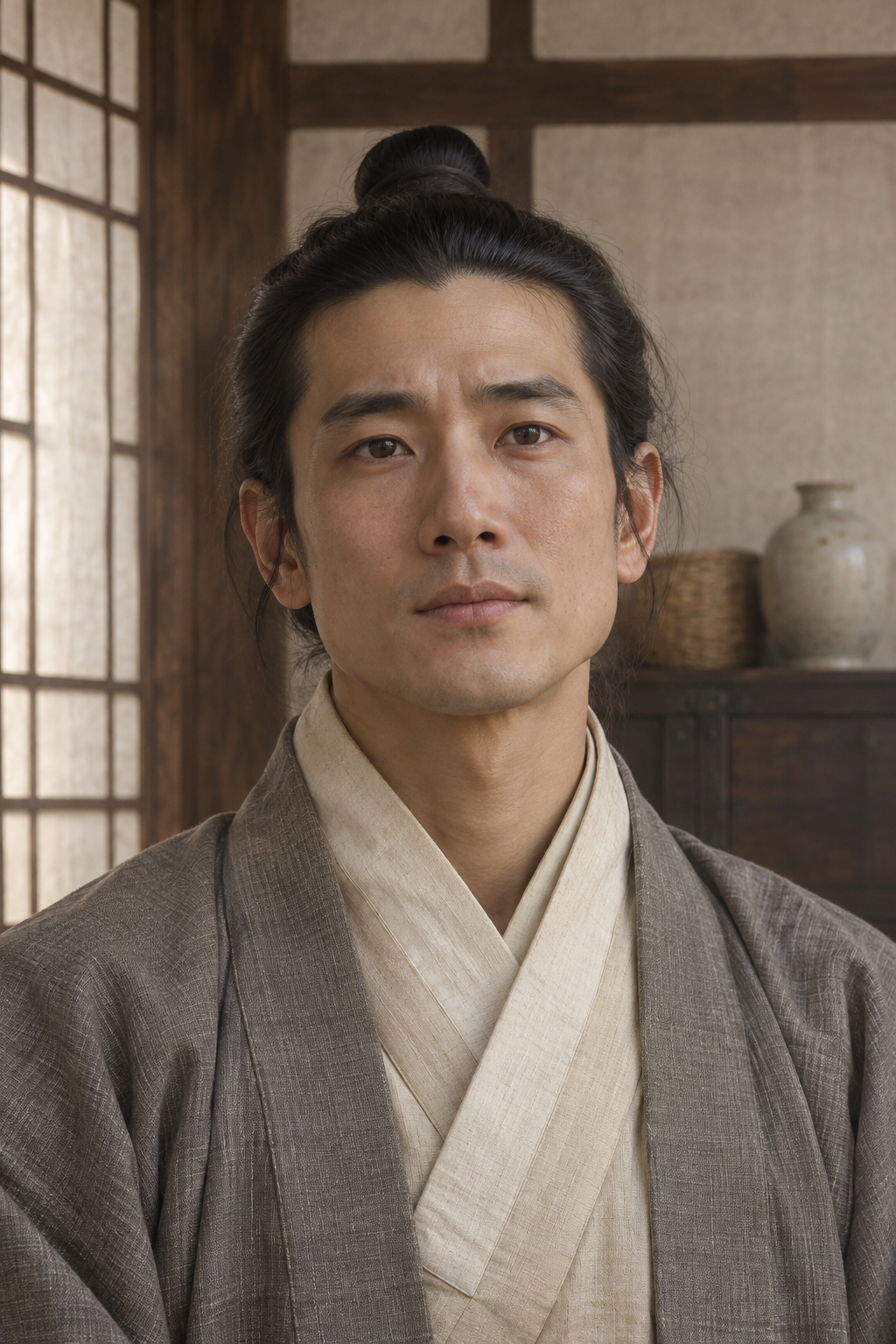
About Paul Yun Ji-chung
Paul Yun Ji-chung belonged to the scholarly world of Jinsan, in Jeolla-do. His great-grandfather was the painter Yun Du-seo, and his courtesy name was Uyong. Born in 1759, he was related to the Jeong brothers whose studies helped connect several early Catholic readers. He passed a preliminary state examination in 1783. The following winter, while visiting Seoul, he encountered Catholic books at the house of Thomas Kim Beom-u. Reading therefore preceded his formal entry into the Church: his early learning included written arguments that he could take home and examine.
The books were Tianzhu shiyi and Qike, works on God and the moral life. He borrowed and copied them, but discarded the copies during the danger surrounding the exposure of Catholics in 1785. His interest nevertheless continued. The Korean Catholic Encyclopedia identifies Jeong Yak-jeon as a later instructor and godfather, and Peter Yi Seung-hun as the person who baptized him in 1787. Yun subsequently taught his mother, his younger brother Francis Yun Ji-heon and his cousin James Kwon Sang-yeon.
The dispute that ended his life arose from the consequences of that commitment within his family. Bishop Alexandre de Gouvea’s prohibition of ancestral rites reached Korea in 1790. Yun followed it. When his mother died the following year, he declined the sacrificial observances expected of a son of his standing. The official Catholic life says that her wishes agreed with his decision. His cousin Kwon supported him. What the two considered obedience to God became, for their accusers, an assault on duties binding children to their parents.
Historian Kim Jin-u’s study of the funeral distinguishes the care Yun actually gave his mother’s burial from the requirements he did not fulfil. The disagreement extended beyond a single offering of food. Mourning dress, condolence visits, sacrificial arrangements and the ancestral tablet all belonged to an ordered system through which a lineage gathered around its senior descendant. Kim argues that Yun’s incomplete observance challenged both the identity of the scholarly elite and the bonds through which that group maintained itself.
Kim identifies a telling difference in the mourning clothes: Yun wore the head covering but not the complete prescribed outfit. He also failed to respond to condolence callers with the expected crying. His conduct thus combined retained practices with conspicuous omissions; it was neither the full customary observance nor the abandonment of every obligation toward his mother.
As accusations spread, officials ordered his arrest. Yun initially took refuge away from Jinsan, but returned after learning that his uncle had been detained in his place. He presented himself to the authorities rather than leaving the older man imprisoned for him. The magistrate attempted persuasion and threats, but Yun continued defending his religious position. He and Kwon were then sent to the provincial authorities at Jeonju, where their conduct would receive a more searching examination.
A first-person account preserved through later copies gives unusual detail about those hearings. It attributes Yun’s surrender to his concern for his uncle and describes his reluctance to identify the lender of his Catholic books: he feared that naming someone who had lent them before the prohibition would expose an innocent person to punishment. Eventually he named Kim Beom-u. The account is a transmitted record of his defence, not a surviving autograph or a verbatim official transcript.
The royal chronicle also preserves his rejection of an accusation that he had abandoned his mother’s corpse. In the recorded testimony, he described preparing her body, a coffin, mourning clothes and a grave. The report connected the restricted attendance and delayed funeral with illness in the household. These details matter because rejection of ancestral sacrifice did not, in his own defence, mean refusal to bury or mourn his mother.
His statements about the tablets developed during the questioning. The copied written defence initially denied burning them, but the account’s later exchange records his admission that he had burned and then buried them. He argued that the wooden objects did not contain his parents and distinguished their destruction from harm to the parents themselves. The narrative ends incompletely amid further punishment; its detailed dialogue survives through translation and copying, with the limitations that transmission entails.
The proceedings ended in a death sentence approved at court. Yun and Kwon were taken outside Jeonju’s South Gate and beheaded on December 8, 1791. The Catholic account remembers Yun continuing to speak about his faith on the way. Their families waited nine days for permission to recover the bodies for burial. The deaths made the two men the first martyrs of the Korean Catholic Church.
In 2021 the Jeonju diocese announced the identification of their remains at Bawubaegi. Inscribed bowls, archaeological examination, anatomical investigation and genetic comparison contributed to that identification. The discovery gave material evidence a place alongside the written accounts through which Yun’s life and death had long been known.
Wondering how to weigh the stories and sources? Learn how to read a saint biography.