Biography
Paul Yun Yu-il
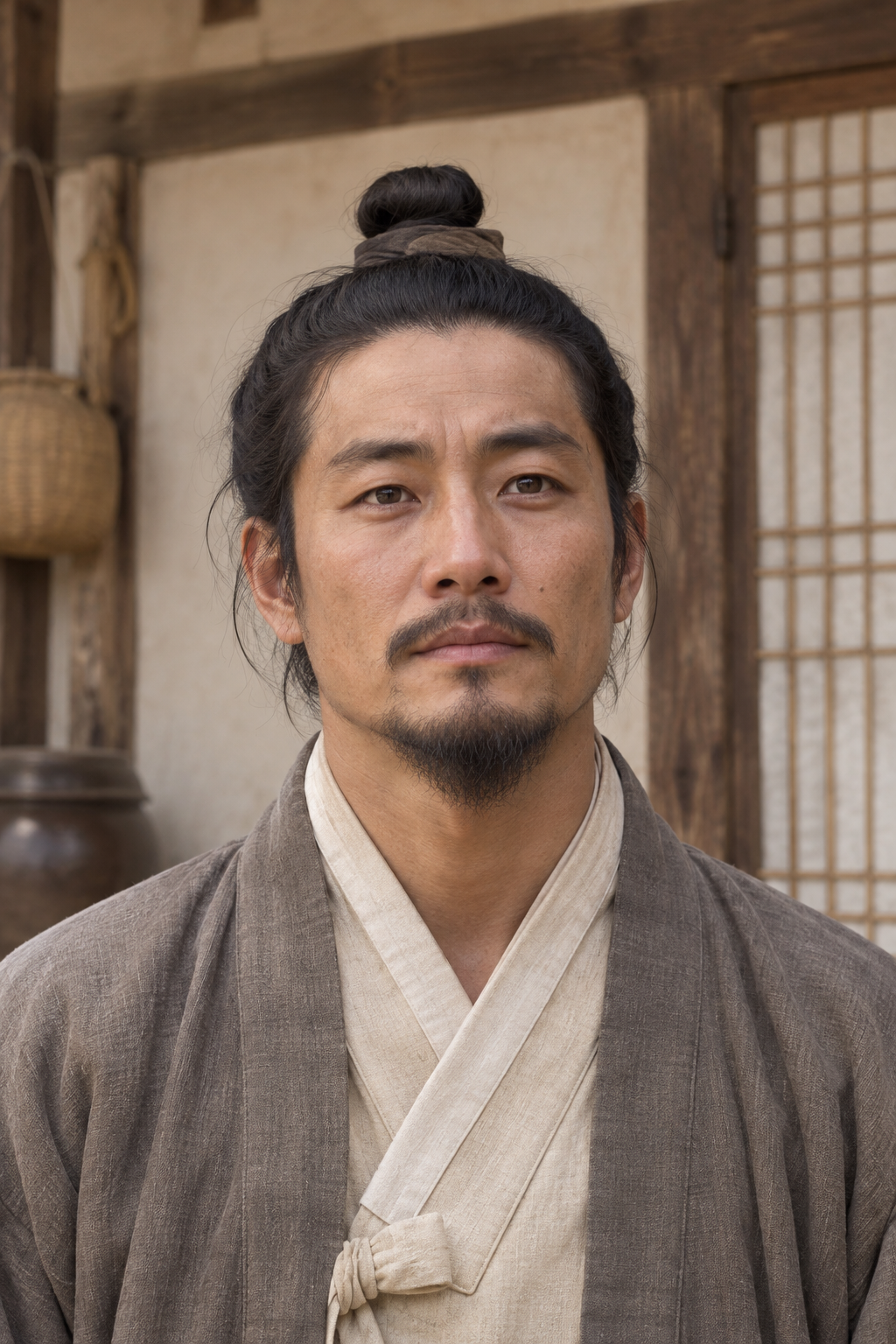
About Paul Yun Yu-il
Paul Yun Yu-il was born in 1760 at Jeomdeul in Yeoju, Gyeonggi-do, and later lived at Hangamgae in Yanggeun. He was also known as Inbak. His introduction to Catholicism began with books encountered while studying under Kwon Cheol-sin. He then learned the catechism from his teacher’s younger brother, Kwon Il-sin. After accepting the faith, he taught it within his own family. His younger brother James Yun Yu-o and cousins Agatha Yun Jeom-hye and Lucy Yun Un-hye would also become Catholic martyrs.
The community that selected him as an envoy had a particular problem to resolve. Its leaders had assumed priestly functions in a country without a resident priest. They needed an authoritative answer from the bishop in Beijing about whether they could continue. Yun was entrusted with their inquiry in 1789. The mission called for someone who understood the teaching and could carry a confidential message across the border, then bring back instructions to people who had begun practising the religion without direct missionary guidance.
A farewell poem attributed to Kwon Il-sin preserves his teacher’s concern for that journey. It pictures snow, cold penetrating clothing and a long route across unfamiliar mountains and plains. Its prayer is that the traveller should avoid illness and return with words of religious instruction from the missionaries. The poem places a personal relationship between teacher and pupil behind Yun’s public task.
Father Nicolas Joseph Raux described the arrival in a letter written in Beijing in 1790. Yun had bought a subordinate position in the diplomatic party to make the journey. At their first meeting, he opened his clothing and produced letters written in Chinese on pieces of white silk, hidden among similar pieces sewn into his garments. The questions concerned religion. Raux informed the bishop, whose answers and instructions were sewn back into Yun’s clothes for the return journey. The missionary dated his administration of baptism to Yun to February 5, describing it as an occasion of gratitude and tears.
Brother Joseph Panzi, an artist attached to the French mission, identified himself as Yun’s godfather. His letter calls the baptism conditional: Yun had already been baptized within the Korean community. Panzi also remembered the religious manuscripts concealed in his clothing when he returned home. Yun had looked for Father Grammont, but the missionary had already left Beijing for Canton.
Yun travelled to Beijing again in 1790 to seek a priest. The Korean Catholic Encyclopedia places him with a delegation celebrating the Qianlong emperor’s eightieth birthday. He obtained the bishop’s promise of a missionary and returned with a missal, a chalice and vestments, as well as instruction in making wine. Those objects had a practical purpose: the community was preparing to receive a priest who could celebrate Mass.
A newly baptized companion had a royal purchasing commission. Raux reported that religious books, images and equipment for Mass could return in boxes destined for the king, which escaped Chinese customs inspection.
In 1791, Yun went to the border to meet Father dos Remedios, but the rendezvous failed and he returned without him. The effort resumed after the persecution of 1791. By 1793 Yun’s activities were too well known for him to serve again as the traveller to Beijing, according to Ri Gil-jae’s account. Ji Hwang took that task, carrying a letter from Yun, while Yun’s part was to escort the priest from Uiju into the country. Matthias Choe In-gil helped prepare a place to stay, and Columba Kang Wan-suk supplied funds. The work now depended on several people with different responsibilities, rather than Yun making every stage of the journey himself.
Father Zhou Wen-mo finally crossed into Korea near the end of 1794. Yun went to Uiju to meet him, then helped guide him to Seoul with Ji Hwang and Choe In-gil. The encyclopedia dates their arrival in the capital to January 4, 1795. The priest stayed at Choe’s house. Yun’s repeated journeys and correspondence had helped turn an appeal for instruction into the arrival of a resident missionary.
That arrangement survived only a few months before the priest’s presence was denounced. Ri Gil-jae’s modern account names Han Yeong-ik as the informer and describes a warning reaching the Catholics through Jeong Yak-yong. Zhou escaped to Kang Wan-suk’s house. Choe, Yun and Ji were arrested. Police wanted the priest’s whereabouts, but the three men would not disclose them. Yun’s responsibility for bringing the missionary into the country was followed by an interrogation aimed at finding and seizing that same man.
The official biography records severe punishment at the police headquarters and the refusal to betray Zhou’s activities. Yun was beaten to death with his two companions on June 28, 1795. Their bodies were thrown into the Han River.
Bishop Gouvea later distinguished what he had witnessed from what he had learned about the deaths. He had personally seen Yun’s devotion during his visits to Beijing. The martyrdom itself reached him through later messengers.
Wondering how to weigh the stories and sources? Learn how to read a saint biography.