Biography
Paulinus II of Aquileia
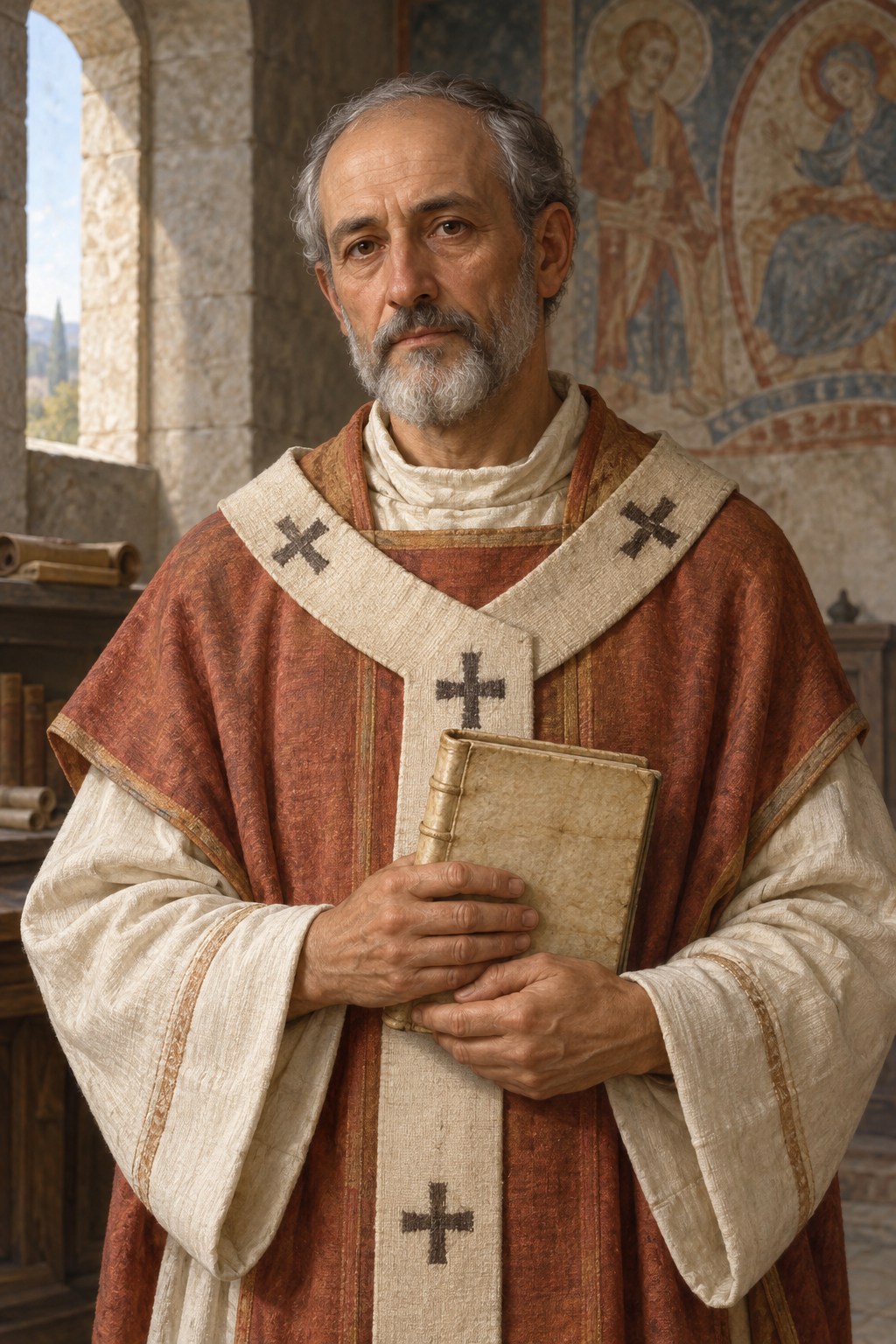
About Paulinus II of Aquileia
Paulinus II of Aquileia was a teacher, poet and bishop whose career linked Italian learning with Charlemagne’s court. His early life is uncertain. Historian Paolo Chiesa finds no secure evidence for his life before 776, including the claim that he came from the region around Aquileia. A royal charter dated June 17, 776 names him as a grammar teacher and grants him property at Lavariano. The land had belonged to Waldando, who died in an unsuccessful revolt against Frankish rule. Paulinus’s first clear appearance in the record therefore already places him among the beneficiaries of Charlemagne’s conquest.
At court he formed lasting friendships with Alcuin and Arn, later archbishop of Salzburg, and taught Angilbert. When Paulinus became patriarch of Aquileia in 787, he remained closely associated with the king’s religious and educational policies. Rudolf Schieffer describes him as an important transmitter of Italian learning into the Carolingian cultural revival. His episcopal work and his scholarly activity continued together, supported by the same royal connection.
That connection also had political consequences. Harald Krahwinkler contrasts Paulinus with his predecessor Siguald, who had resisted Frankish interference in his church. Paulinus instead worked in support of the new rulers. His friendship with Duke Eric of Friuli belonged to this setting. When Eric was killed during a military campaign near Tarsatica in 799, Paulinus composed a poem mourning him. Krahwinkler places the campaign within the rivalry between Frankish power and territories claimed by Constantinople. The patriarch’s writing thus commemorated a friend who was also an agent of imperial expansion.
Aquileia’s patriarch then resided at Cividale. The ecclesiastical landscape also included the separate patriarchate of Grado, whose claims in Istria intersected with Frankish and Byzantine interests. Church leadership operated within these disputed regional boundaries.
Paulinus took part in the theological disputes of the period. He attended the council at Regensburg in 792 and the council at Frankfurt in 794, opposing Spanish Adoptionism. At Frankfurt he prepared the Sacrosyllabus, a statement against that teaching. He subsequently presided over a provincial synod at Cividale in 796 or 797, where the bishops also supported the addition of the Filioque to the creed. The New Catholic Encyclopedia records his insistence that clergy learn the creed he distributed, making a doctrinal decision part of their practical formation. He also wrote a substantial work against Felix of Urgel at Charlemagne’s request.
Missionary work among the Avars raised another question: how should people be prepared for baptism? By the autumn of 796, Paulinus had organized a council on the banks of the Danube to discuss that work. Scholar Owen Phelan traces its approach to Alcuin’s advice and, through him, to Jerome’s interpretation of the closing commission in Matthew’s Gospel. The sequence mattered. People were first to receive teaching in the faith, then baptism, and afterward instruction in Christian conduct.
In the surviving council record, Paulinus explained that those seeking baptism should understand the forgiveness and new life Christians believed it offered. Teaching did not end with the ceremony; it continued in guidance about living mercifully and justly. Phelan reads the document as an example of biblical interpretation shaping missionary practice. It shows Paulinus addressing the preparation of converts through instruction, rather than treating the performance of the rite as sufficient in itself.
Phelan emphasizes that the council gave institutional authority to a teaching strategy already circulating through Alcuin’s letters. Scholarly correspondence had become guidance for the people carrying out the mission.
His concern with Christian conduct also reached lay society. The Liber exhortatorius, addressed to Eric of Friuli, drew on earlier Christian authors to provide moral instruction for a lay reader. Schieffer identifies it as an early example of the medieval tradition of such guides. Letters and poems also survive, including the Regula fidei, which presents Christian teaching in verse. These works extended his educational activity beyond the classroom and the gatherings of bishops.
Chiesa distinguishes the surviving poetic collection from works whose attribution remains disputed, including a lament for the destruction of Aquileia. Paulinus’s rhythmic verse offered forms suitable for a wider audience than learned Latin prose. His reputation as a poet and theologian remained strong during the following century. He died in 802, and a local cult developed at Cividale, where tradition locates his remains in the cathedral crypt.
Charlemagne also employed him as a royal representative in a delicate dispute concerning an abbey at Pistoia, though the date of that assignment is not securely known.
Vatican News gives his death as January 11, 802, at Cividale and commemorates him on January 11.
A parish at Poggio Terza Armata honors him as its patron. Its church was dedicated to Paulinus of Aquileia in 1914, replacing the small and distant church of Saint Valentine for a growing community. The new building suffered damage during the First World War but was repaired. Its dedication preserves a local connection with the early medieval patriarch.
Wondering how to weigh the stories and sources? Learn how to read a saint biography.