Biography
Perpetua
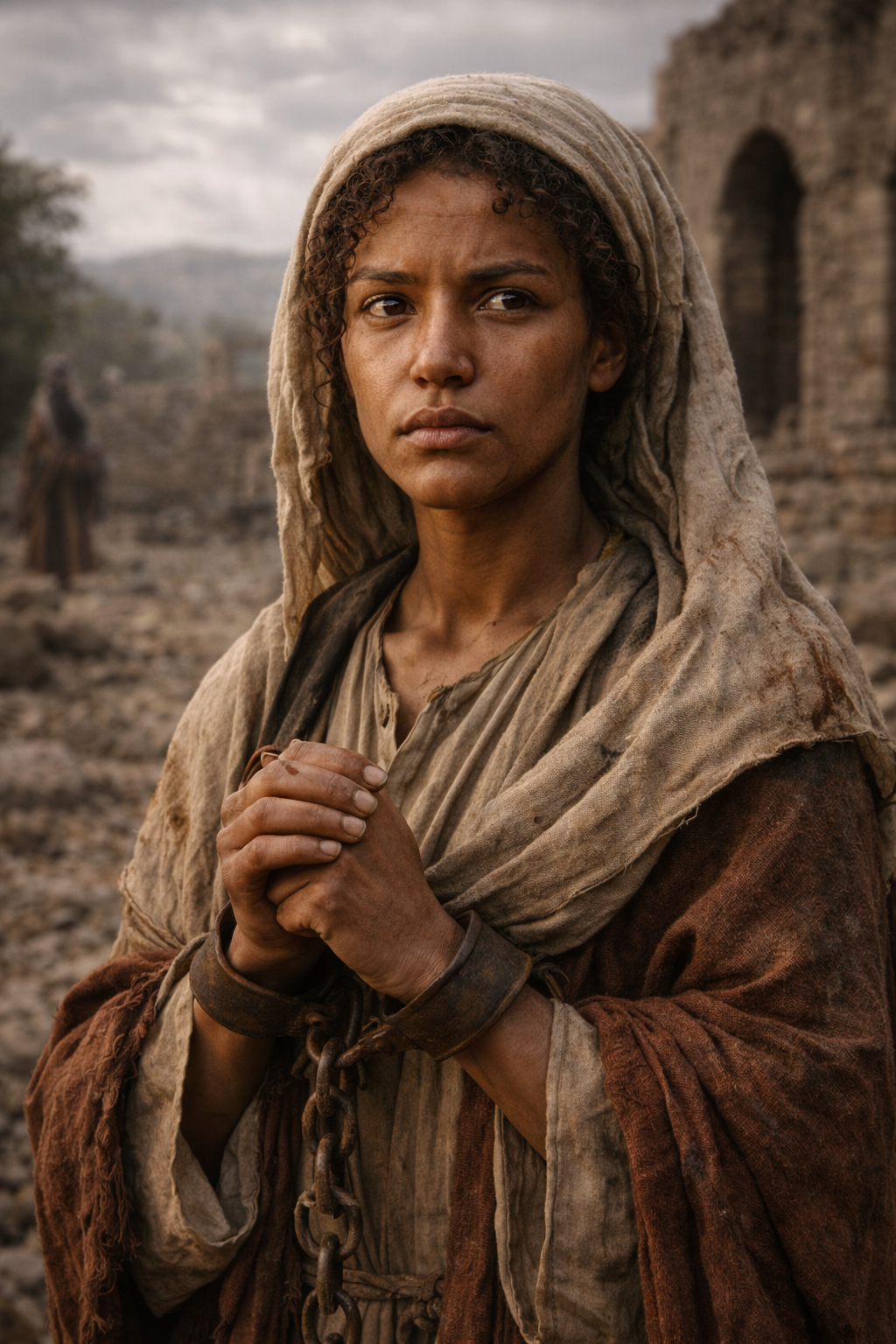
About Perpetua
Vibia Perpetua lived in Roman North Africa at the beginning of the third century. Nearly everything known about her comes from the Passion of Perpetua and Felicity, an early Christian martyr narrative associated with Carthage. Its editor introduces Perpetua as about twenty-two years old, well educated, honorably born, married, and nursing an infant. Her parents were living, and she had brothers. Those details are early testimony rather than a complete civic record. The text gives no secure birth date, no husband's name, and little account of her life before arrest. Its unusual importance lies in a substantial first-person section presented as Perpetua's own prison record, followed by an editor's narrative of the group's deaths.
Perpetua was arrested with Revocatus, Felicity, Saturninus, and Secundulus while they were catechumens; Saturus later joined them. The Passion says that they received baptism during the first stage of confinement. Perpetua then prayed that she would have endurance. Prison was frightening, crowded, and hot, and she was distressed about her nursing child. Two deacons, Tertius and Pomponius, paid for the prisoners to receive better treatment for a time. Perpetua's mother and brother brought the infant, whom she was allowed to keep and nurse. Her account does not hide bodily dependence or family attachment. It places Christian commitment within the practical labor of feeding a child and surviving detention.
Perpetua's father repeatedly tried to persuade her to renounce Christianity. In their first recorded exchange, she pointed to a vessel and argued that it could not truthfully be called by another name. In the same way, she said she could not call herself anything except Christian. Later, her father appealed to his age, her mother, her brothers, and her child. The account portrays both people in pain; it does not make the father a simple villain. His pressure represented family fear and the social consequences of her refusal. Perpetua recorded grief at his suffering even as she maintained her confession. Her courage therefore involved a costly conflict with someone she loved, not indifference to family bonds.
The governor Hilarianus questioned the prisoners in a public hearing. According to Perpetua's account, her father appeared carrying her child and begged her to sacrifice for the emperors. Hilarianus also urged her to pity her father's gray hair and her infant. She refused the sacrifice and answered that she was Christian. The group was condemned to the beasts and returned to prison. This trial scene is one of the narrative's clearest pivotal moments. Its exact dialogue reaches readers through Perpetua's text and subsequent transmission, so attribution matters. The evidence supports a Roman judicial demand and her refusal; it does not permit modern certainty about every word or gesture in the courtroom.
Perpetua's first-person record includes several visions. A narrow bronze ladder led toward heaven, with weapons fixed along its sides and a serpent below; she climbed after stepping on the serpent's head. In another vision she saw her deceased brother Dinocrates suffering and later refreshed. Before the arena she dreamed of fighting and defeating an Egyptian opponent. The text presents these experiences as answers to prayer and preparation for martyrdom. They are documented as what Perpetua reported, not independently verifiable descriptions of another world. Her prison narrative also records practical advocacy: after a harsh official was appointed, she challenged his treatment of condemned prisoners, and he allowed visitors to enter.
Felicity's pregnancy created another crisis. Roman practice, as described by the Passion, prevented a pregnant woman from being sent into the arena. Felicity feared separation from her companions. The group prayed together, and she gave birth to a daughter shortly before the games; another Christian woman raised the child. The editor reports that a guard mocked Felicity's labor pains and that she distinguished childbirth suffering from the suffering she expected to face with divine help. This scene belongs to the editor's portion, not Perpetua's first-person diary. It reveals companionship among prisoners divided by legal and social status, while the surviving text still gives much less of Felicity's own voice than Perpetua's.
The editor dates the public execution to the birthday games for Geta Caesar, conventionally identified as March 7, 203. Perpetua and Felicity entered the arena together. The account says officials first clothed them in garments associated with pagan ritual, but the women protested and the tribune allowed ordinary clothing. A wild cow attacked them. Perpetua was thrown down, then rose, covered her exposed body, and helped Felicity stand. The prisoners exchanged a sign of peace before gladiators killed them. The narrative adds that an inexperienced executioner wounded Perpetua and that she guided the blade to her throat. These details are early testimony shaped as a martyr conclusion, not neutral spectacle reporting.
Perpetua's historical significance is inseparable from the form in which her memory survives. The Passion preserves one of antiquity's rare extended first-person texts attributed to a Christian woman, yet an anonymous editor frames, interprets, and completes it. Scholars continue to examine how much of the wording is Perpetua's and how the work was transmitted. Churches nevertheless remembered Perpetua and Felicity together from early centuries. Roman Catholic communities observe them on March 7, while the Orthodox Church in America commemorates the group on February 1. Their story endures not as an isolated tale of private heroism, but as a record of baptism, family conflict, mutual care, and shared resistance within a diverse imprisoned community.
Wondering how to weigh the stories and sources? Learn how to read a saint biography.