Biography
Peter Kim Dae-gwon
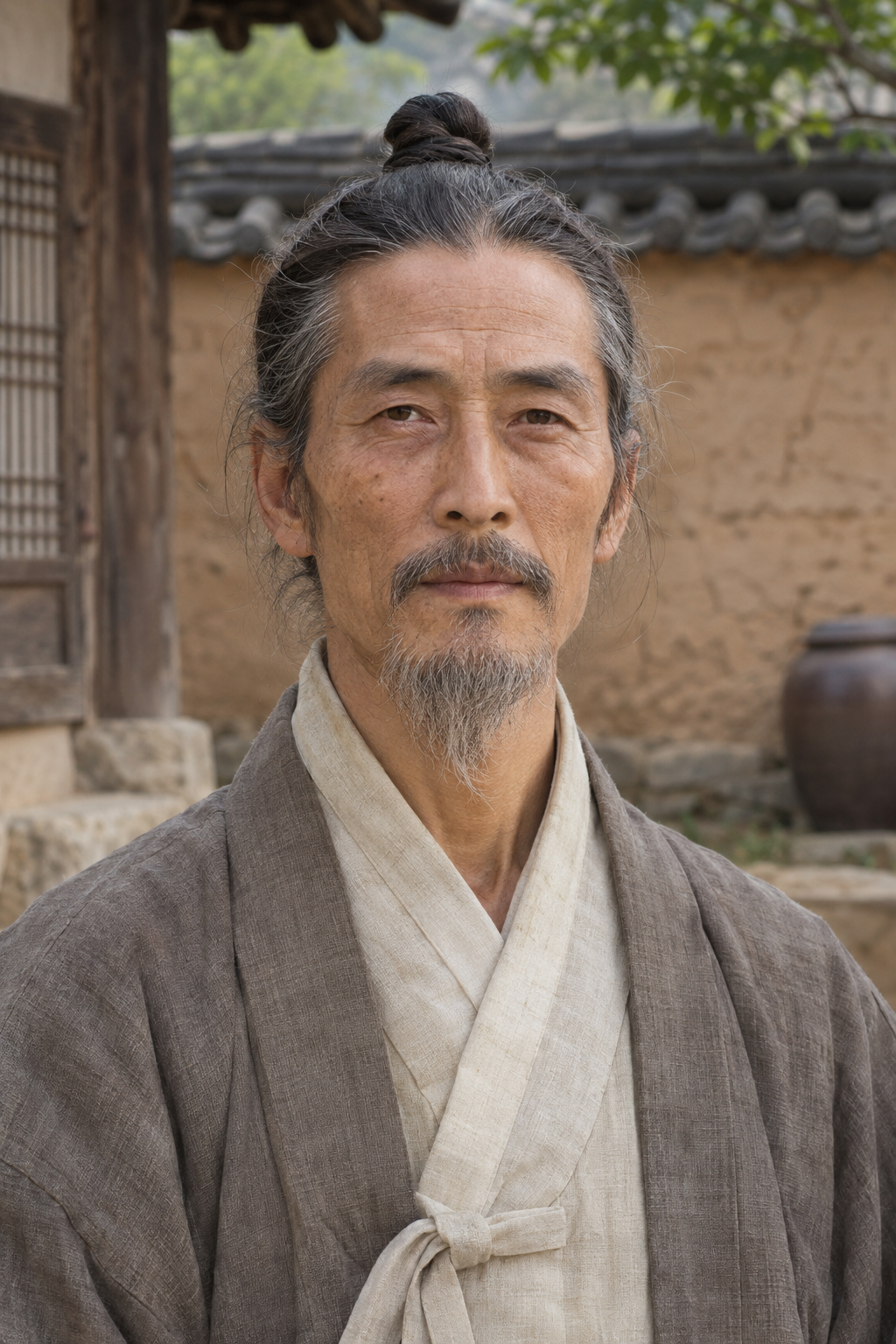
About Peter Kim Dae-gwon
Peter Kim Dae-gwon grew up in Sudani, a village in Cheongyang in Chungcheong Province. His younger brother James Kim Hwa-chun also became a Catholic. As a child Peter knew the teachings of the Church, but learning them and trying to live by them were separate events in his life. It was after his parents died that he began to practise the religion in earnest. He lived at Cheongna-dong in Boryeong and later earned his living at an earthenware workshop in Gongju.
Peter and his wife were unhappy together at Gongju. A Catholic story links their reconciliation to a frightening encounter with a tiger. The Korean bishops’ account describes a narrow escape for his wife; the English version introduces a dream. Both versions remember the couple talking about the faults that had divided them and beginning to live on better terms. The details of the encounter are harder to establish than the change in their marriage.
Kim Gil-su describes what this change came to mean on an ordinary Sunday. Peter taught the members of his own household and then shared the teaching with his neighbors. Christmas took him away from the workshop and up a mountain to spend the night in prayer. In this account he took time to read Scripture and devotional writings as well as to meditate. He seems to have found room for religious study in the working year long before the authorities questioned him about it.
During Lent he cut down his food to one meal a day. Kim Jin-so, a priest who studied the history of the Church in the region, describes his simple meal of rice, water and salt. For Kim, gratitude explains the practice better than admiration for physical endurance. Peter was trying to learn how to give thanks even when his circumstances were hard. The same author tells of a wooden block associated with the execution of his brother James in Daegu in 1816. In that tradition Peter sometimes rested his chin on the block as he prayed. The story preserves how closely his preparation for his own death was linked in Catholic memory to what had happened to James.
Peter was living in Gosan in Jeolla Province when word reached him of the persecution in 1827. He warned the Catholics around him to find places of refuge. He stayed behind, and the officers took him to the local government office. From there he went to Jeonju for further questioning. The authorities also threatened his son, who was eventually sentenced to exile. Peter continued to explain Catholic teaching even to the officers who guarded him.
Kim Gil-su’s account names a particular book in connection with the questioning. He says that Peter explained teachings from Chilgeuk, or The Seven Victories. For the neighbors who heard him on Sundays, instruction had been something they could receive freely. At Jeonju he was speaking to officials who regarded the religion itself as an offense.
Chilgeuk was a work of practical ethics written in Chinese by the Spanish Jesuit Diego de Pantoja and published in 1614. It asked how a person could overcome habits such as anger, greed and envy by practising contrary virtues. Its seven parts gave readers a way to examine their own conduct. The Academy of Korean Studies traces its early circulation among Korean readers and its translation into Korean. It helps explain the sort of teaching a man employed in a pottery workshop could pass on to others.
In Jeonju Peter refused to hand over religious books or identify fellow Catholics. He spent twelve years in prison. The Korean biography records that he signed his death sentence three times during those years. Each signature marked a renewed refusal to save his life by giving up the faith.
A letter written before the end of Peter’s imprisonment gives a rare glimpse of the long interval between sentence and execution. Writing to his directors in Paris in December 1836, Father Pierre Maubant reported that two of seven prisoners who had held to their faith had died. Five were still in custody. Maubant gave their number without naming them individually. The modern editors identify them as the prisoners from Jeonju. Maubant placed the prolonged imprisonment within his report of the arrests that had swept through Jeolla in 1827.
On May 29, 1839, Peter was beheaded at Supjeongi in Jeonju alongside Peter Sin Tae-bo, Peter Yi Tae-gwon, Job Yi Il-eon and Paul Jeong Tae-bong. The wooded ground was used for military exercises, with an area at one side reserved for executions. The shrine at the former execution ground preserves a photograph taken after the installation of a commemorative stone in 1935. Its inscription names Jeonju as a place of martyrdom. The five men who had once appeared in a missionary’s letter simply as a number are remembered there by their individual names.
Wondering how to weigh the stories and sources? Learn how to read a saint biography.