Biography
Peter Ko Seong-dae
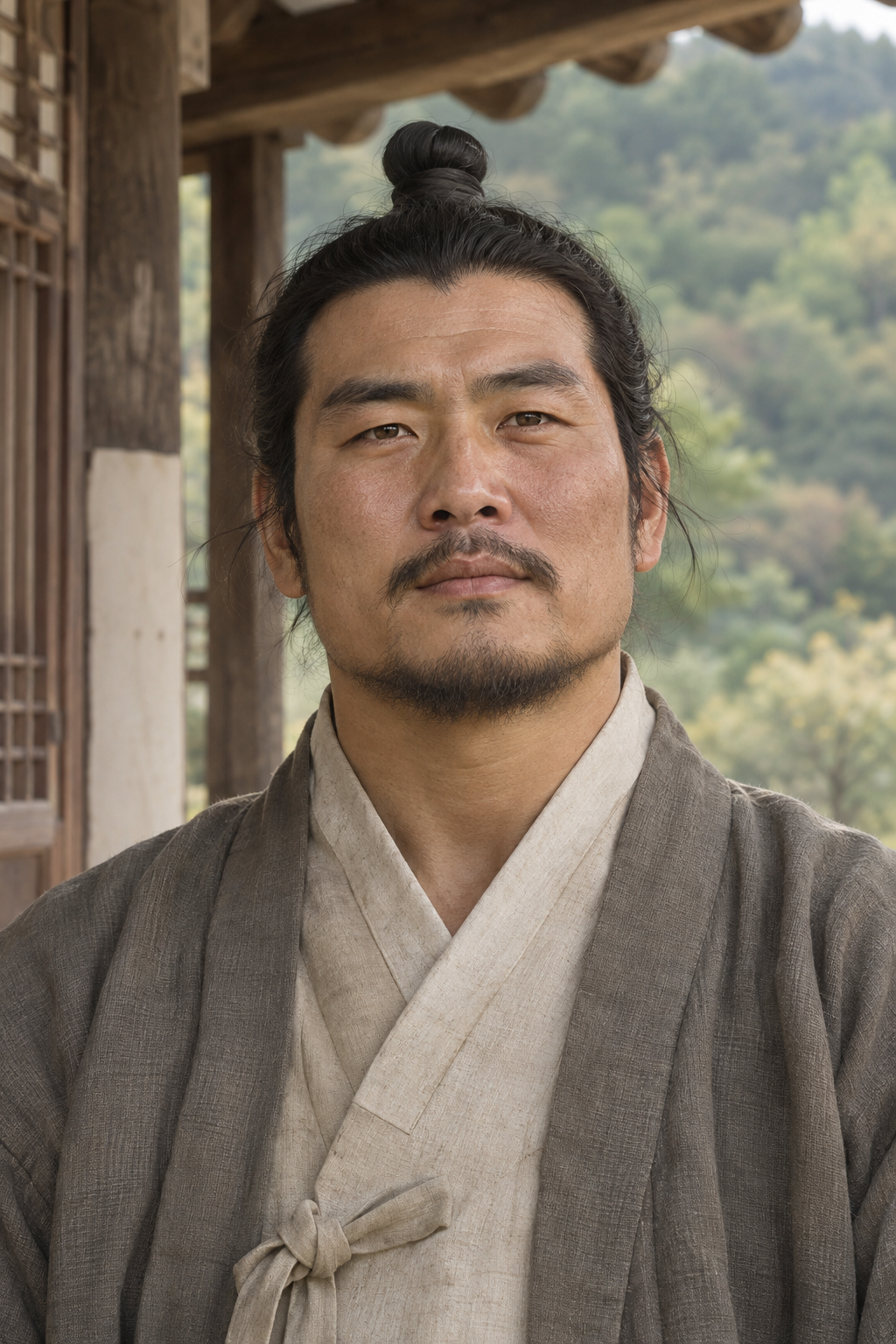
About Peter Ko Seong-dae
Peter Ko Seong-dae was born at Byeoram in Deoksan, Chungcheong-do. His parents taught him Catholic doctrine when he was young. Catholics also knew him as Yeo-bin. His birth date is unknown. The received account describes a difficult temper that made neighbours reluctant to approach him, followed by a change as he practised his religion.
Peter’s story is closely connected with that of his brother Joseph Ko Seong-un. Older records disagree about which brother was the elder, and they also confuse the alternative names Seong-il and Yeo-bin. The current bishops’ account identifies Peter as the elder. The encyclopedia cites Daveluy for the order Joseph first, and Dallet for the order Peter first, while court records list Peter before Joseph.
Both sons were remembered for their devotion to their parents. When their father lay ill for eight months, Peter and Joseph prayed for him every day. They also read religious books together and encouraged other Catholics. Their life in the Church was therefore shared within the family before the two men became fellow prisoners.
Peter moved to Jeogurigol in Gosan, Jeolla-do, where he continued his Catholic life. The persecution of 1801 brought officers from Jeonju to arrest him. Taken to the provincial headquarters, he at first maintained his religious convictions under questioning. Further pressure changed his decision: he promised to renounce Catholicism and was released. Hong Yeon-ju’s historical dictionary places this release between his first imprisonment and the later move to Gyeongsang-do.
Hong places Peter’s first arrest under the prohibition enforced in 1801 by Queen Jeongsun, who was governing for the young King Sunjo. His release after renunciation preceded the later prosecution in another province.
Once home, Peter regretted the renunciation. He returned to the practice of his faith with his brother. The bishops’ biography does not hide the failure that preceded his later perseverance; it recalls the remorse with which he spoke about what he had done. He eventually left Jeolla-do with Joseph and joined the Catholics living at Noraesan in Cheongsong.
Ma Baek-rak describes the life the brothers joined at Noraesan. Catholic refugees cultivated the broad mountain ground, clearing fields and sowing crops. They depended largely on one another rather than on regular contact with the surrounding settlements. Travelling vendors sometimes came to sell fish or meat, and people interested in learning Catholic doctrine also visited. The village combined a livelihood with a place where the brothers could practise their religion together.
That settlement became vulnerable during the famine preceding the arrests of 1815. Ma recounts that the villagers shared their limited supplies, while Jeon Ji-su, who had visited the community as a trader and beggar, repeatedly sought alms. When these were no longer enough for him, he informed against the Catholics. Peter’s second arrest thus came in the village where he had sought a more settled Catholic life after his release from Jeonju.
Officers raided Noraesan while the Catholics were gathered for Easter in 1815. Peter and Joseph were taken to Gyeongju. Both refused to renounce their faith during the ensuing interrogations and punishment. Cha Ki-jin also recalls the brothers encouraging fellow prisoners whose resolve was weakening. They remained together through the questioning and the transfer to Daegu.
Yeo Jin-cheon follows the brothers into the Daegu prison. Hunger accompanied the repeated examinations and punishment. The Catholics made straw sandals during the day to obtain food, then gathered around a lamp at night to read and pray. Yeo interprets this disciplined common life as a continuation of the religious community they had formed outside prison.
Oh Se-taek describes how the arrangement commonly worked in prisons where the authorities gave prisoners little to eat. Inmates obtained straw through the jailers, made sandals, and had the jailers sell them. Part of the proceeds went to the jailers; the remainder bought more straw and food. Peter’s long imprisonment therefore included the ordinary labour required to stay alive, alongside the demands to abandon his religion.
Ma also recounts that jailers and people from Daegu came to see the prisoners’ way of life. They noticed the absence of quarrelling and abusive speech among the Catholics. In Ma’s interpretation, the community’s conduct made its religion visible to people who had initially despised the prisoners.
The provincial proceedings ended with his being condemned to death in 1815, followed by a further wait for execution. Peter was beheaded at the Gwan-deokjeong execution ground in Daegu in 1816. His body was buried near the execution ground, then recovered with those of other Catholics by relatives and believers. The historical dictionary records their later division among four graves, while acknowledging that the precise burial location is unknown.
The current bishops’ biography gives December 19, 1816, as his execution date. Peter died with Joseph and their companions. He had remained unmarried. The brothers who had prayed together through their father’s illness were remembered together again at the end of their imprisonment.
Wondering how to weigh the stories and sources? Learn how to read a saint biography.