Biography
Peter Nolasco
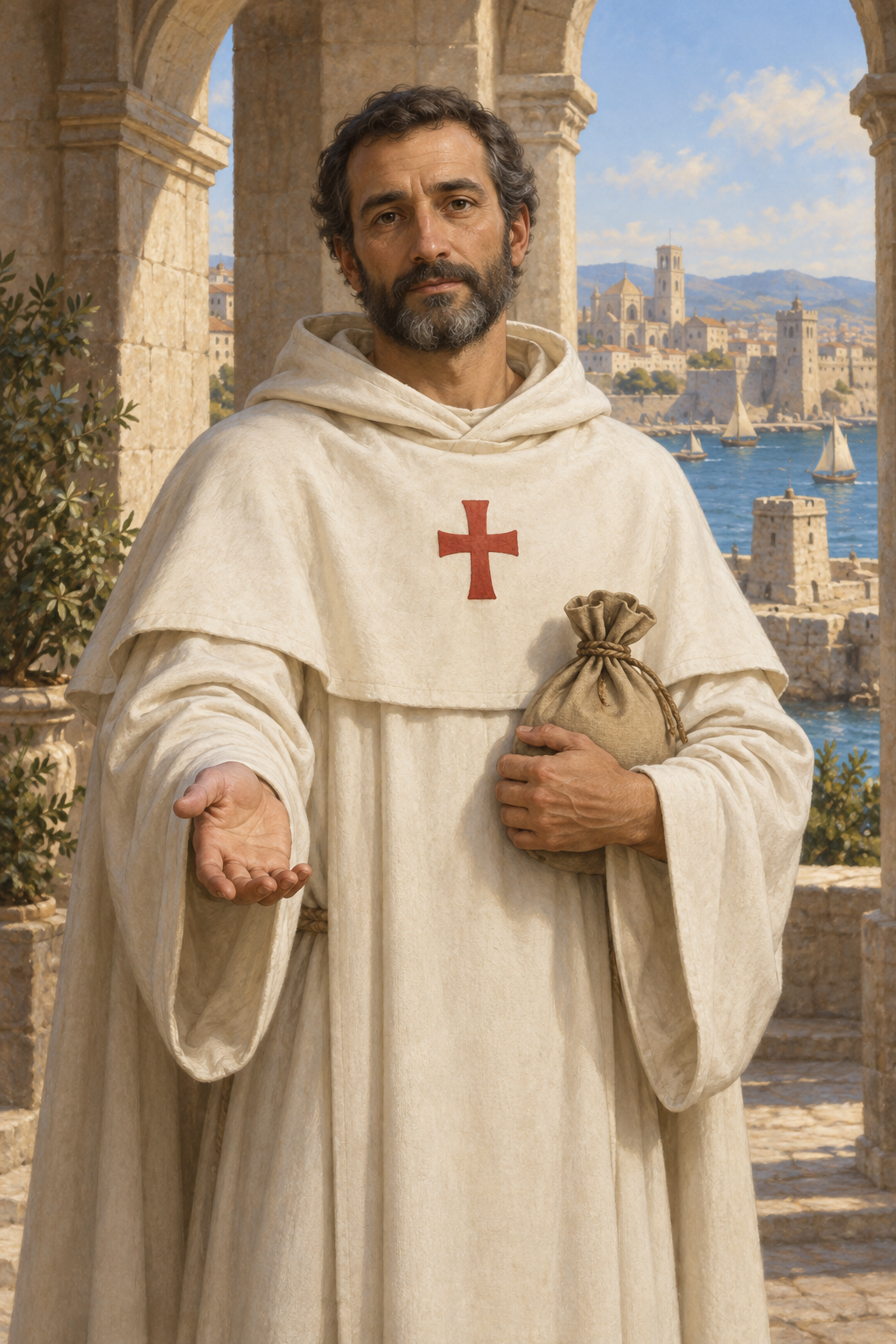
About Peter Nolasco
Peter Nolasco lived in the world of medieval Barcelona, a Mediterranean port where trade and war both shaped lives. Vatican News identifies him as a merchant who founded the Mercedarian order for the redemption of Christian captives. The Order's own account says he worked as a merchant while raising money to help people held in captivity. His community grew from that concrete task: companions gathered resources, traveled, and negotiated for release. These sources describe a religious response to a particular problem of his time. They do not supply a secure childhood narrative or a single agreed birth year. The older Catholic Encyclopedia offers competing dates and places of birth, so this record leaves that structured fact open.The Mercedarians place their foundation in Barcelona in 1218. Their historical account says that a small group of brothers developed into a religious order dedicated to people who could not obtain release by their own means. It describes the precise August foundation day as tradition; the year and city are the safer shared details. The Order records a papal confirmation under Gregory IX in 1235. Its members later established houses across parts of the western Mediterranean. The historical reports of rescues describe the community's purpose, but they should not be turned into an exact personal tally for Nolasco. The people held captive remain people in this account, rather than scenery for a heroic portrait of the founder.Nolasco's later life is harder to date precisely. The Order says he died at its Barcelona house on May 6, 1245. An older Roman martyrology instead associates his death with Christmas, and the Catholic Encyclopedia gives still later death years, 1256 or 1259. These accounts cannot all describe the same date. Barcelona is shared and can be recorded as his death city without choosing a disputed day or year. This profile therefore leaves the structured death date empty and states the conflict directly. It also avoids presenting a visionary foundation scene as established history, although the Order recounts Marian inspiration as part of its tradition. Such narratives matter to the Order's memory without resolving the surviving chronology.The Order celebrates Peter Nolasco on May 6 as a solemnity of its founder. The older January 31 Roman listing documents another stage of calendar practice, and is retained here as a historical observance rather than presented as the Order's present feast. Later recognition of his cult also appears in the Order's history. The dates and labels of those acts need not be expanded into a claim that his whole biography is equally certain. The strongest common account is of a Barcelona merchant, a community organized to free captives, and a lasting religious institution. Vatican News reports that the Mercedarians continue educational, charitable, and social work today. That ongoing service, joined to the Order's founding purpose, explains why Nolasco remains remembered even where particulars of his life remain unsettled.
Wondering how to weigh the stories and sources? Learn how to read a saint biography.