Biography
Peter of Anagni
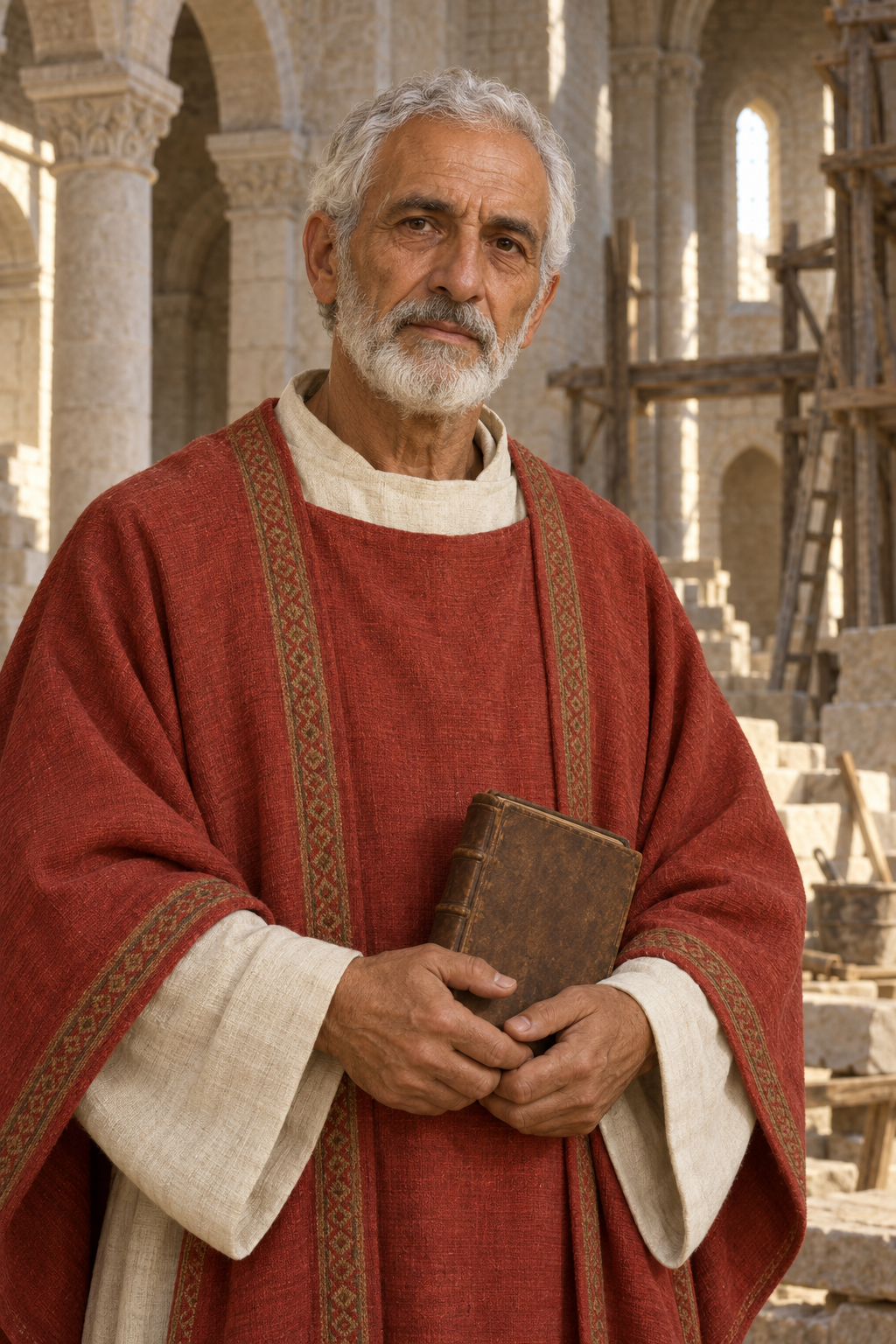
About Peter of Anagni
Peter of Anagni, also known as Pietro da Salerno, was a Benedictine monk who became bishop of Anagni in 1062. The cathedral’s chronology credits him with rebuilding its church and records his death on August 3, 1105, after forty-three years as bishop. His memory remains closely associated with that building.
He came from Salerno and entered the monastery of San Benedetto as a child after becoming an orphan. Amalia Galdi’s critical biography describes his formation in ecclesiastical affairs and his later service in Rome before his episcopal appointment. She rejects the claim that he had been abbot of his monastery, finding its documentary basis inadequate.
The bishop’s responsibilities included restoring ecclesiastical discipline, recovering church property and renewing the cult of Magnus. Vincenzo Fenicchia presents these activities as central to the surviving account of his episcopate. The cathedral reconstruction accompanied that wider program of religious and material restoration.
Much of the detailed narrative is less secure. Galdi notes that the surviving Life reached its present form around 1325. Claims that Peter undertook diplomatic missions to Constantinople or accompanied the First Crusade depend on that problematic tradition. She also identifies chronological difficulties in its royal encounters. The expense of cathedral construction provoked local opposition, a complication obscured by an uncomplicated image of a universally admired builder.
The cathedral’s historical timeline places construction between 1071 and 1104. It also records Urban II’s 1088 confirmation of the incorporation of Trevi into Anagni’s diocese. Such entries situate Peter’s episcopate within changes to both the city’s principal church and the territory administered by its bishop.
A canonization document attributed to Paschal II is dated 1109 or 1110, but Galdi notes doubts about its authenticity. A precise formal recognition date therefore remains uncertain.
Fenicchia explains that an earlier account by Bruno of Segni has been lost. A later author drew on that work, reports concerning relic translations and local oral tradition. The text was subsequently divided into readings for worship. Its survival reflects the uses of a saint’s story in a cathedral community, as well as the difficulties of reconstructing his life.
The same scholar records the renewal of Peter’s altar in 1324 and a painted image of the bishop seated between Aurelia and Neomisia. He identifies Peter as a secondary patron of Anagni and its diocese, with an August 3 feast.
The Diocese of Anagni-Alatri’s 2025 program continued to name Peter and Magnus as the city’s patrons. It announced a presentation of Peter’s life for August 3 and joint patronal worship later that month. The cathedral and the local calendar preserve his remembrance even where the medieval narrative leaves historians with unresolved questions.
Wondering how to weigh the stories and sources? Learn how to read a saint biography.