Biography
Peter of Avranches
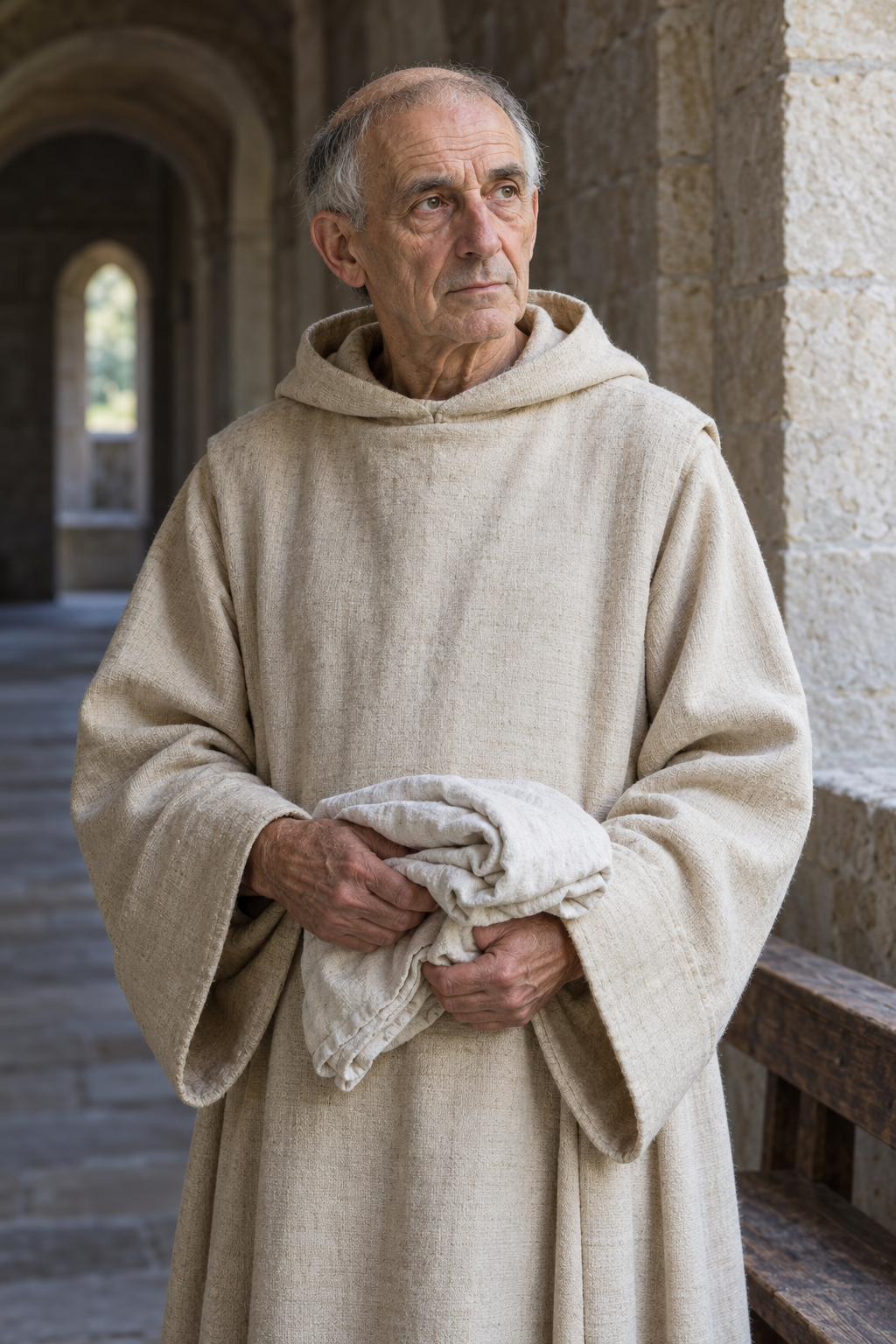
About Peter of Avranches
Peter of Avranches was a monk of Savigny remembered for a quiet, demanding life of prayer. Hugh Feiss places his birth in Avranches around 1095 and describes an education in letters and music before his entry into the monastery. The surviving Life presents his conversion as a decisive change of direction. Its Peter is solemn and withdrawn, attentive to his conscience and eager to undertake humble work. He was particularly close to another monk, Hamo, whose character was quite different. Feiss cautions that this text was written chiefly to teach, rather than to provide a continuous biography.
The Life gives that portrait concrete form. Peter sought silence while observing the monastery’s rules, obedience and obligations to his brothers. He preferred to remain within the community rather than accept offices or journeys outside it. One episode describes Hamo returning from court with greetings from King Henry. Peter dismisses the importance of royal approval and rebukes his friend’s closeness to powerful people. Yet the author does not make this disagreement a victory for Peter. He presents their different temperaments as gifts that could lead toward the same spiritual end. Another passage describes Peter asking to wash the cloths used by sick monks. These are stories of service and discipline, told to instruct other religious.
Peter’s death is usually placed around 1172. The editor of his medieval Life explicitly judged both the year and the day uncertain; December 24 was associated with his commemoration. The precise date given in some later accounts therefore exceeds what this edition establishes.
Peter’s memory became part of the shared cult of Savigny’s holy monks. Richard Allen’s study of the abbey places his relics among those transferred to the chapel of Saint Catherine with the remains of Vitalis, Godfrey, Hamo and William Niobé. The date of that transfer has often been repeated too confidently. Allen finds that it probably followed the chapel’s dedication in 1181 and occurred before the end of Abbot Simon’s tenure in 1184 or 1185. In 1243, the relics were moved again, this time into the main abbey church. Peter’s Life also locates a vision reported by Hamo in Saint Catherine’s chapel. Allen uses that reference as evidence for the building’s early existence, while acknowledging uncertainty about its original dedication. The vision remains a religious narrative, not an independently established encounter with Peter after death.
The later promotion of Peter and his companions involved more than the preservation of their remains. Georgina Fitzgibbon examines the abbey’s miracle collection and its efforts to secure papal recognition for its saints. She observes that the publicity surrounding the 1243 translation did not turn Savigny into an international pilgrimage center: the recorded beneficiaries were largely local people. Abbot Stephen of Lexington supported the effort, but wider Cistercian attention shifted toward the canonization of Edmund of Abingdon. The Savigny campaign was not sustained. This history helps distinguish Peter’s enduring local veneration from formal papal canonization.
Wondering how to weigh the stories and sources? Learn how to read a saint biography.