Biography
Peter of Tarentaise
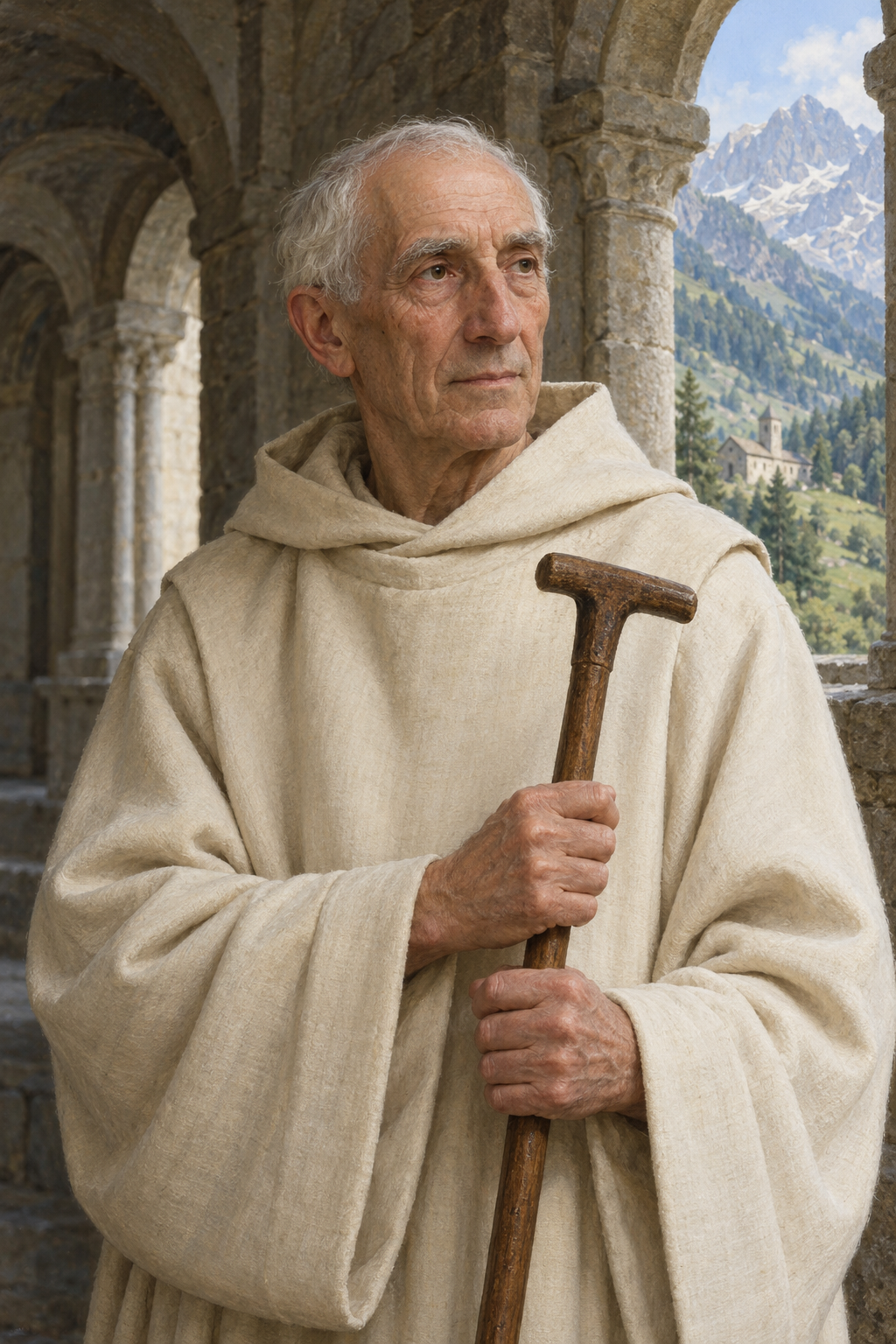
About Peter of Tarentaise
Peter of Tarentaise was a Cistercian monk who became the first abbot of Tamié and later archbishop of Tarentaise. Born near Vienne in the early twelfth century, he entered Bonnevaux Abbey. Louis J. Lekai’s account dates his appointment at Tamié to 1132 and his election as archbishop to 1141. His episcopate combined diocesan reform, care for people in need and diplomatic work for the papacy.
He is usually called Peter II to distinguish him from an earlier archbishop of the same name. Per Einar Odden’s biography places his birth around 1102 at Saint-Maurice-l’Exil and describes a farming family. Other members of the family also entered religious communities. Peter’s own monastic life began at Bonnevaux, before he was entrusted with the new foundation at Tamié in the Alpine region of Savoy.
Alban Butler’s older devotional account remembers him as reluctant to leave monastic life for episcopal office. It describes pressure from Bernard of Clairvaux and the Cistercian general chapter before he accepted. As bishop, he retained plain clothing and simple food, visited the parishes and sought suitable clergy to serve them. The account also records efforts to recover church revenues from powerful lay holders and to support education and relief for poor people.
His wish for solitude became part of the story told about him. Butler recounts that Peter secretly withdrew to a distant Cistercian monastery, where he hoped to remain unrecognized. A young man who had known him identified him, and he was brought back to his diocese. The episode presents the tension between his desire for a monk’s quiet life and the public responsibilities he had accepted.
Odden describes practical measures for people travelling through the Alps, including work on accommodation at the Little Saint Bernard pass. He also recounts food distributions during the difficult months before harvest, when mountain households could run short of supplies. Such assistance connected the bishop’s resources with seasonal and geographical needs. The later tradition of “May bread” preserved his association with feeding poor people.
Peter supported Alexander III during the conflict with Emperor Frederick Barbarossa. Lekai identifies that allegiance and diplomatic service as important parts of his episcopate. His work therefore involved contested questions of church authority as well as the ordinary administration of a mountain diocese.
A local record gives a more specific view of that administration. The Savoie heritage account of Cléry’s Romanesque church notes Peter’s support for its regular canons. In his testament of 1170, he insisted that Cléry depended directly on the archbishop rather than the cathedral chapter. This was a concrete jurisdictional distinction within his own church, involving the relationship between an episcopal office and another body of clergy.
His diplomatic work did not always succeed. Odden describes his 1174 attempt, at Alexander’s request, to reconcile Louis VII of France and Henry II of England. Although both kings received him respectfully, the mission did not achieve the intended reconciliation.
Peter died at Bellevaux on September 14, 1174. Celestine III canonized him on May 10, 1191.
The diocesan notice reproduced by Nominis describes competition over the custody of his body even before the canonization. The monks of Bellevaux retained it, and pilgrimage developed at Cirey-les-Bellevaux. Relics also reached other churches. These reports concern the history of devotion to Peter: the miracles associated with the shrine are claims of that devotional tradition, rather than independently established medical events.
A medieval life of Peter was written by Geoffrey of Auxerre, also known through his abbacy at Hautecombe. Auguste Molinier’s bibliographical catalogue lists that work alongside Geoffrey’s writings about Bernard of Clairvaux and his theological compositions. The biography thus belongs to a wider body of Cistercian religious writing.
An object in the cathedral treasury at Moûtiers preserves another association with him. The French heritage inventory describes a twelfth-century ivory tau, the T-shaped head of a pastoral staff, carved with opposed dragons and vine foliage. It attributes the staff to Peter through a tradition transmitted by the monks of Tamié before the French Revolution. That traditional ownership should be distinguished from the object’s artistic dating. The inventory does not make the surviving staff a securely documented personal possession.
The inventory distinguishes the carved ivory head from the rest of the staff, describing its wooden shaft, iron point and red silk-velvet covering. Its record concerns both the object and the tradition attached to it; the surviving materials should not all be assumed to date from Peter’s lifetime.
His name remains attached to local worship. The Diocese of Grenoble-Vienne identifies him as Lieudieu’s patron.
A church at Saint-Maurice-l’Exil is dedicated to him, although the heritage account also records other names used for the building.
Brocard’s inventory records the Saint-Pierre de Tarentaise dedication at Bonneval-Tarentaise and a later record of relics attributed to Peter II. These local dedications give his remembrance a particular place in the communities of the region.
Wondering how to weigh the stories and sources? Learn how to read a saint biography.