Biography
Petroc of Cornwall
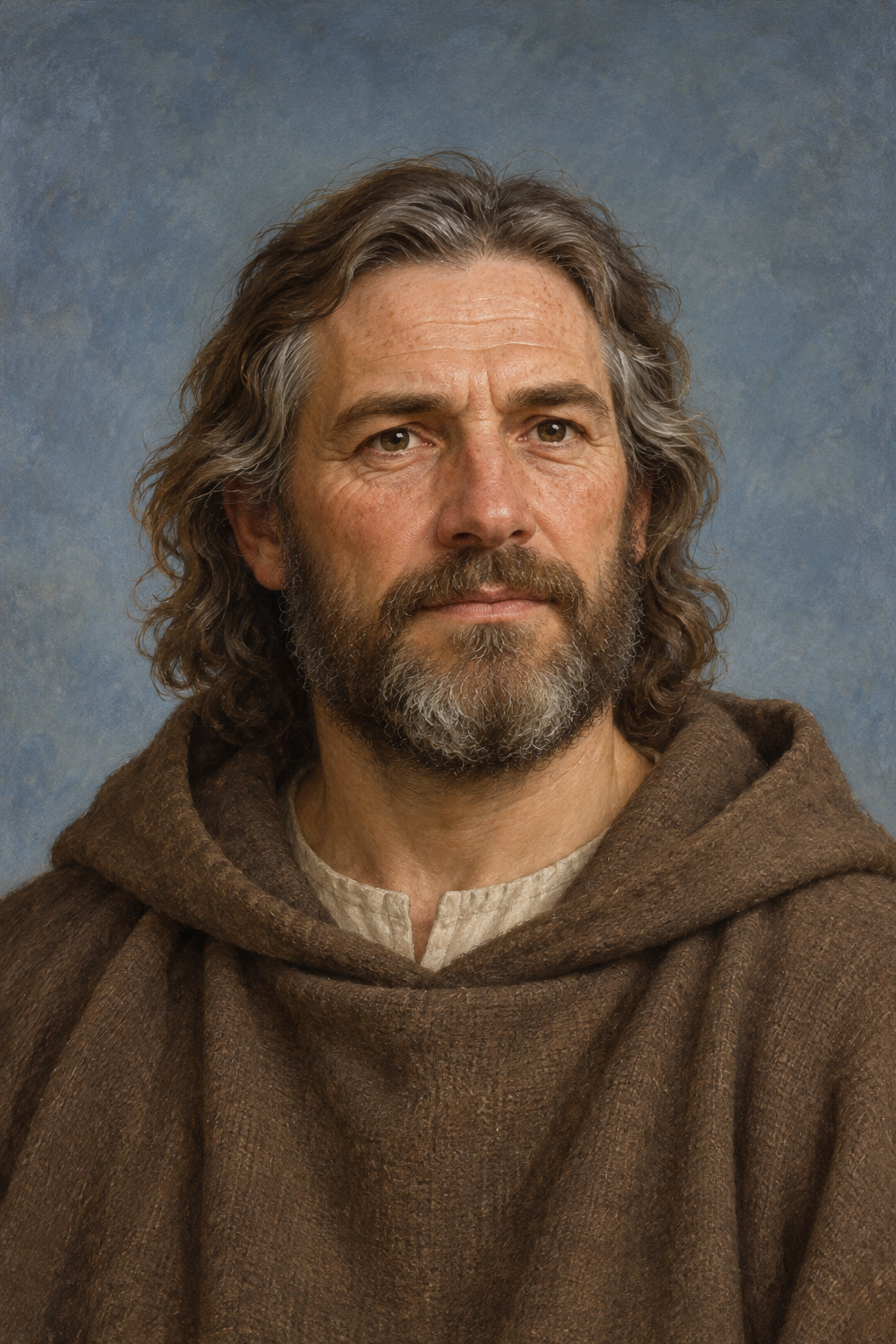
About Petroc of Cornwall
Petroc, also called Pedrog, belongs to the early monastic history of southwestern Britain. The traditions about his beginnings do not agree: some make him a son of Glywys, while another genealogy names Clement, a Cornish prince. Accounts describe him leaving royal prospects for monastic life and visiting Ireland before settling in Cornwall. These stories preserve his religious reputation without providing a secure chronology of his childhood.
At Padstow, Petroc and Wethenoc were both associated with the church by the eleventh century. The surviving building is largely medieval, with much of its fabric dating from the fifteenth century. Its dedication carries Petroc’s memory, but the present church should not be mistaken for a building from his lifetime.
Later evidence gives a clearer view of the community that honored him. Records entered in a Gospel book describe enslaved people receiving freedom at his altar. O. J. Padel cautions that the earlier ceremonies probably occurred at Padstow, before the community moved to Bodmin. The timing of that move and the transfer of the relics remains uncertain; Bodmin is securely attested as their home only in the twelfth century. These records concern Petroc’s later community, not personal acts by the saint.
In 1177 a canon took relics attributed to Petroc from Bodmin to Saint-Méen in Brittany. Henry II’s intervention secured their return. The episode shows how strongly medieval communities valued possession of a saint’s remains. Bodmin church preserves the twelfth-century Sicilian ivory casket that housed the relics.
His patronage also extends to Llanbedrog, St Petrox and Verwick in Wales. The Church of England commemorates Petroc as abbot of Padstow on June 4.
Wondering how to weigh the stories and sources? Learn how to read a saint biography.