Biography
Petronax of Monte Cassino
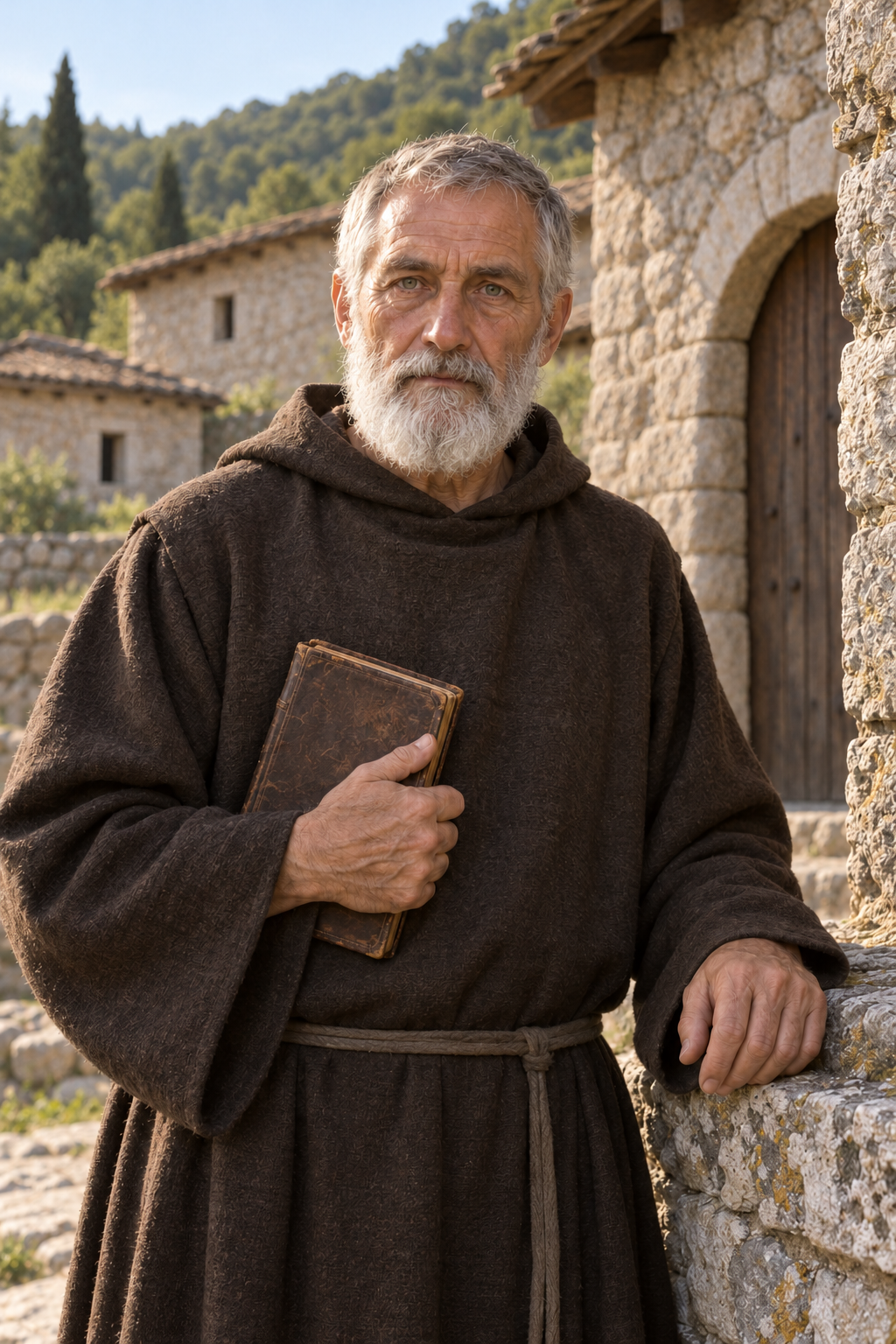
About Petronax of Monte Cassino
Petronax, known in Italian as Petronace, came from Brescia and became the abbot who restored monastic life at Monte Cassino in the eighth century. The community remembers him as its second founder.
Paul the Deacon describes the beginning of that work in his History of the Lombards. Petronax traveled to Rome, then went to Cassinum at Pope Gregory’s encouragement. There he settled beside the place associated with Benedict’s remains, joining men who already lived on the mountain. They chose him as their superior.
The renewed monastery gradually attracted monks of different social backgrounds. Paul records the repair of their dwellings and their common life under Benedict’s rule. His account also describes practical papal help: Zachary supplied biblical books and other necessities for the monastery. Paul says that the pope gave Petronax the rule written by Benedict’s own hand.
The abbey’s modern history places the reconstitution around 718 and recognizes assistance from San Vincenzo al Volturno. It presents the revival as a collaboration between the papacy and the duchy of Benevento. In 744, Duke Gisulf II gave the monastery surrounding mountains and plains, helping provide the material basis for the growing community.
Rebuilding the community also involved its religious observance. Willibald, later bishop of Eichstätt, arrived in 729 and remained for about ten years. The New Catholic Encyclopedia notes that Willibald’s biographer credits him especially with restoring Benedictine practice. Petronax’s leadership therefore belonged to a renewal sustained by several people, rather than an undertaking he carried out alone.
Amalia Galdi’s study identifies another aspect of Petronax’s work: restoration of Benedict’s oratory of John the Baptist and the addition of an altar dedicated to Benedict. She also examines how later writers used accounts of the monastery and its holy places in the long dispute between Monte Cassino and Fleury over Benedict’s relics.
The chronology is not fully settled. The Norwegian Catholic account preserves 750 and 747 as alternative death years, while the New Catholic Encyclopedia gives 6 May 750. His commemoration is 6 May. Norway’s Catholic notice calls him a saint; the Diocese of Brescia’s own liturgical proper styles him Blessed Petronace and gives an optional memorial.
Wondering how to weigh the stories and sources? Learn how to read a saint biography.