Biography
Petronilla
About Petronilla
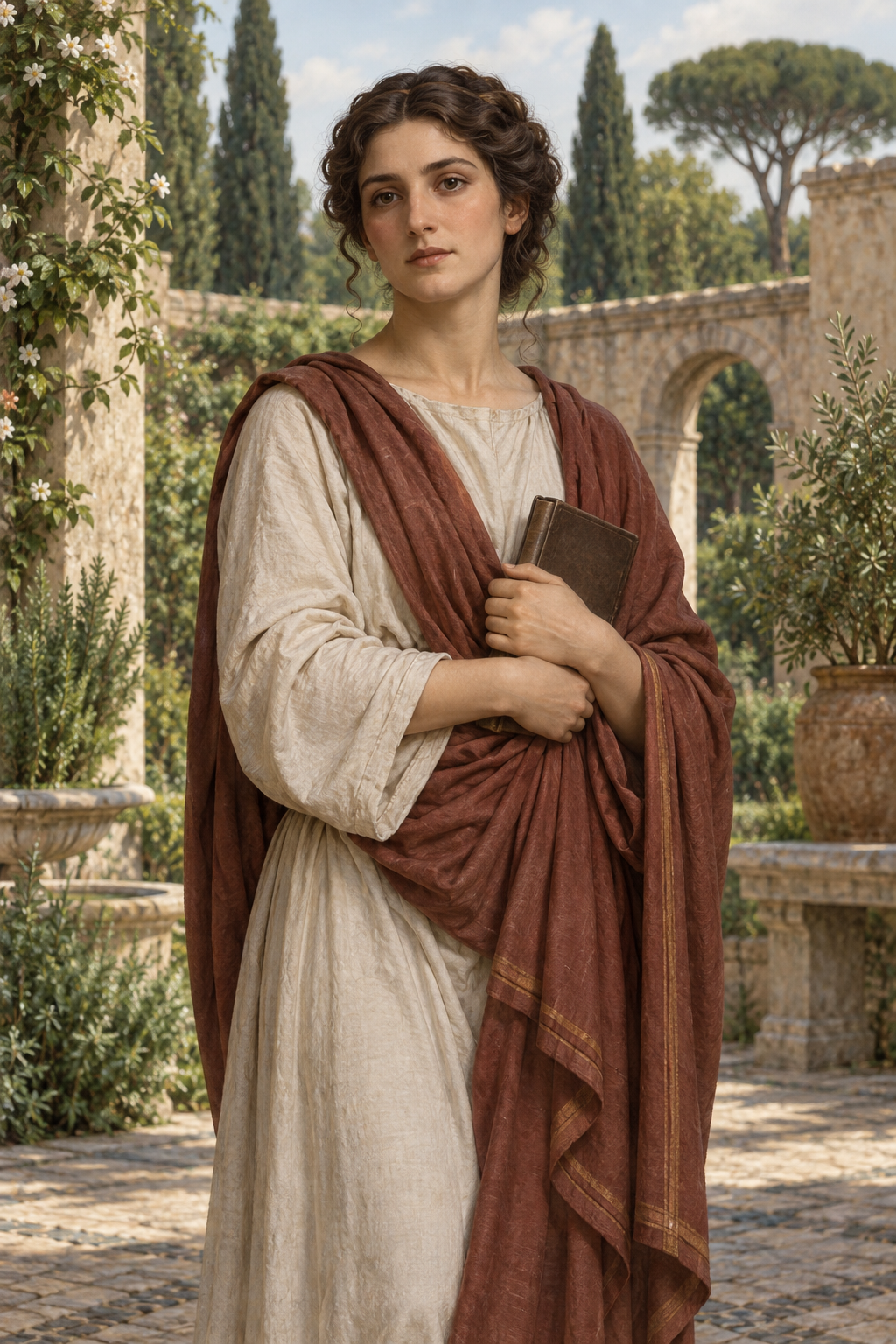
Petronilla's personal life is difficult to recover, but her name and cult are rooted in Roman material evidence. The Domitilla catacomb on the Via Ardeatina preserves a fourth-century painting associated with her. As the Catholic historian J. P. Kirsch describes it, the image shows Petronilla receiving a woman named Veneranda into heaven and labels Petronilla as a martyr. This is evidence that she was honored at Rome by that time; it is not a portrait from her lifetime or a record of her birth. The official Appia Antica archaeological site also preserves her name in an old designation of the cemetery. These independent traces anchor a profile in a place and a community of memory without supplying an invented family history.The burial place was known to pilgrims in later centuries. Kirsch reports that sixth- and seventh-century lists of Roman martyrs' tombs put Petronilla near Nereus and Achilleus, and that excavations confirmed a place of veneration in the Domitilla complex. He also discusses a sarcophagus inscription transmitted in later accounts, giving the name Aurelia Petronilla. Because the original stone is no longer available, that form of the name can be mentioned as reported evidence rather than treated as a fully secure birth record. The same writer suggests possible family connections from the name, but those connections remain hypotheses. The secure public story is narrower: a woman named Petronilla was venerated as a martyr at a Roman burial site, and later visitors remembered her there.A later legend made Petronilla a daughter of the Apostle Peter. The older Roman martyrology repeats that description and tells a story in which she refuses the nobleman Flaccus, prays, and dies. Kirsch traces the daughter identification through apocryphal writings and later martyr Acts, while emphasizing that the fourth-century evidence instead identifies a Roman martyr. The similarity between Petronilla's name and Peter's probably helped the story spread, but it does not prove a family relationship. Nor does the story establish a date or manner of death. A historical profile can describe the tradition respectfully while declining to turn its scenes into structured facts. No paternal relationship, marriage proposal, or exact death date is entered from these late narratives.The sources also differ in the labels they emphasize. The martyrology calls Petronilla a virgin and describes a peaceful death after prayer, while the older Domitilla painting calls her a martyr. These are reports from different periods, not an invitation to invent a compromise scene. This profile uses martyr as the class supported by the early painting while leaving the cause of death unexplained. Her structured life dates remain empty because the first- or second-century estimates in historical writing are not securely established from a contemporary record. Rome is recorded as the place associated with her death and burial cult, not as a claim about her exact birthplace. The May 31 observance is directly documented in the Roman tradition.Kirsch records a transfer of her remains to a chapel near Saint Peter's during the eighth century, followed by later devotion at the Vatican basilica. That history explains why her name remained familiar beyond the original catacomb. It does not strengthen the claim that she was the Apostle's child; a chapel near Saint Peter's is a later setting for her cult, not proof of kinship. The present portrait likewise imagines a Roman woman without copying the ancient fresco or staging the marriage legend. Petronilla remains significant because a woman's name and martyr title survived in a visible early Christian image and were carried forward by centuries of commemoration. The record can share that history plainly while preserving the substantial uncertainty about her personal life.
Wondering how to weigh the stories and sources? Learn how to read a saint biography.