Biography
Philaret of Seminara
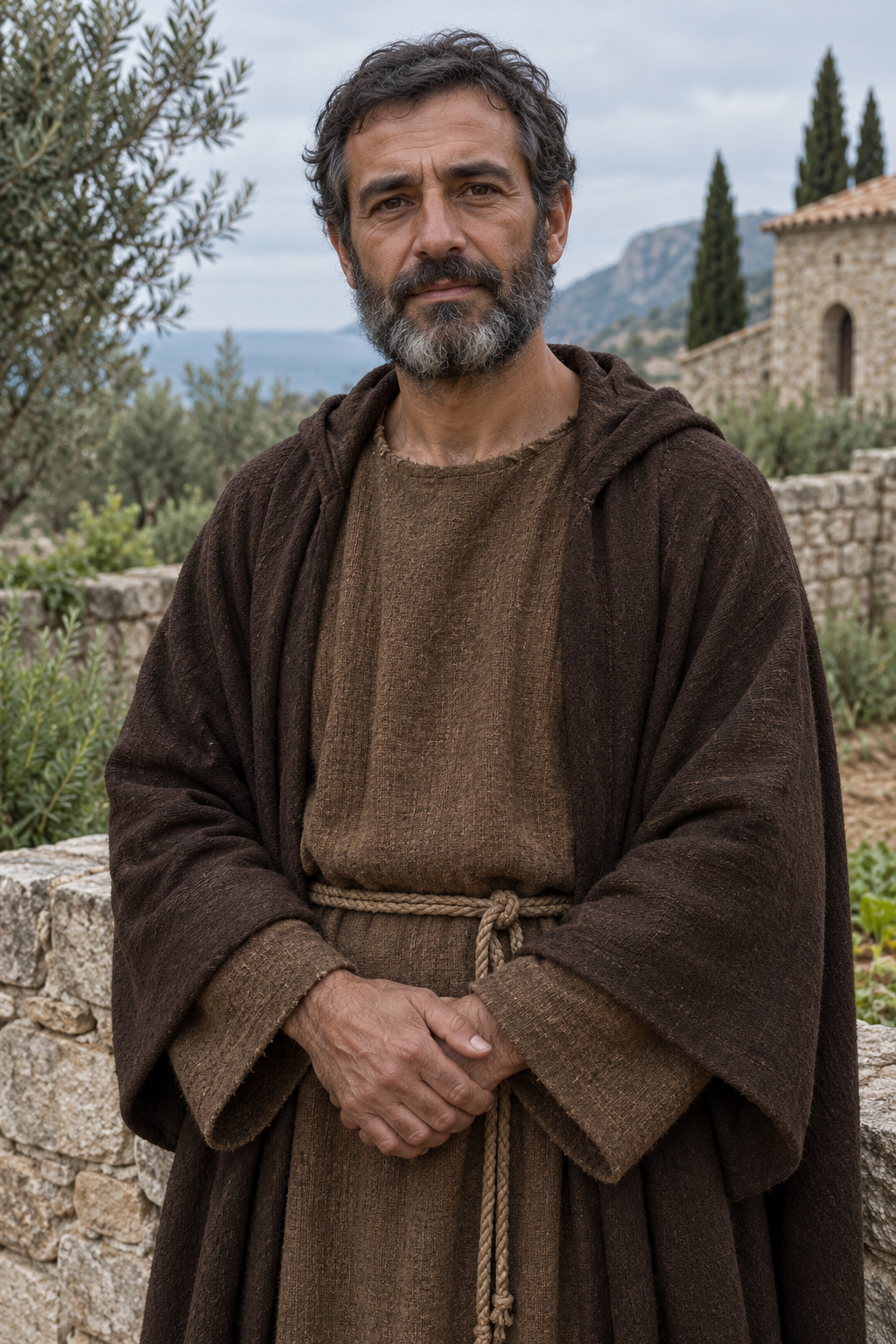
About Philaret of Seminara
Philaret was a Sicilian monk whose community in southern Calabria came to honor him alongside its founder, Elias the Younger. His life is preserved in a Greek narrative by Neilos. Historian Eleni Tounta places its composition around the end of the eleventh or beginning of the twelfth century, after Norman rule had replaced Byzantine government in the region.
The character of that source limits what can be said about Philaret. Mario Re describes the Life as a mixture of biography and formal praise, with relatively little narrative beneath its elaborate rhetoric. Even the author’s identification with the theologian Neilos Doxapatres remains disputed.
According to the Life, he was called Philip before entering the monastery. His parents arranged for a Christian priest to teach him, and the author describes him helping with household work while cultivating prayer and restraint. The family later crossed from Sicily to Calabria, passing through Reggio and settling at Sinopoli. There his father worked as a farmer, with Philip helping him.
The Life gives particular attention to Philip’s desire to become a monk. It portrays him reflecting on his migration, his earlier experiences and the changing circumstances of life. His decision is presented through an extended inward address to himself.
Francesco Russo’s account describes Philaret entering the community of Saint Elias under Abbot Orestes. His formation involved demanding obedience and ordinary manual work, including responsibility for the monastery’s animals.
Tounta observes that Philaret himself had no recorded dealings with Byzantine emperors or officials. Instead, the author introduces the Byzantine past through the Sicilian campaign of George Maniakes and connects the family’s departure with that military setting. She interprets this arrangement as a way of maintaining local memory and solidarity under changed rulers.
The dates require caution. Russo gives his death as 6 April 1070, whereas Tounta follows scholarship placing it in 1076.
A much later record shows how his memory became part of Seminara’s civic devotion. A notarial volume from 1693, described by the State Archives of Reggio Calabria, calls him the city’s protector. It records the discovery of remains believed to be his and subsequent testimonies of miracles. The surviving notes also describe an examination comparing those remains with arm relics already held by the town. These documents attest to a historical local patronage and to beliefs surrounding the relics; they do not independently authenticate the remains or the reported miracles.
The Orthodox Archdiocese of Italy maintains a monastery at Seminara dedicated jointly to Elias the Younger and Philaret the Gardener. Its account records the church’s refoundation in 2001 under Patriarch Bartholomew. The community now celebrates worship in Italian and other languages and offers teaching about Byzantine Calabria.
Wondering how to weigh the stories and sources? Learn how to read a saint biography.