Biography
Philip Hong Pil-ju
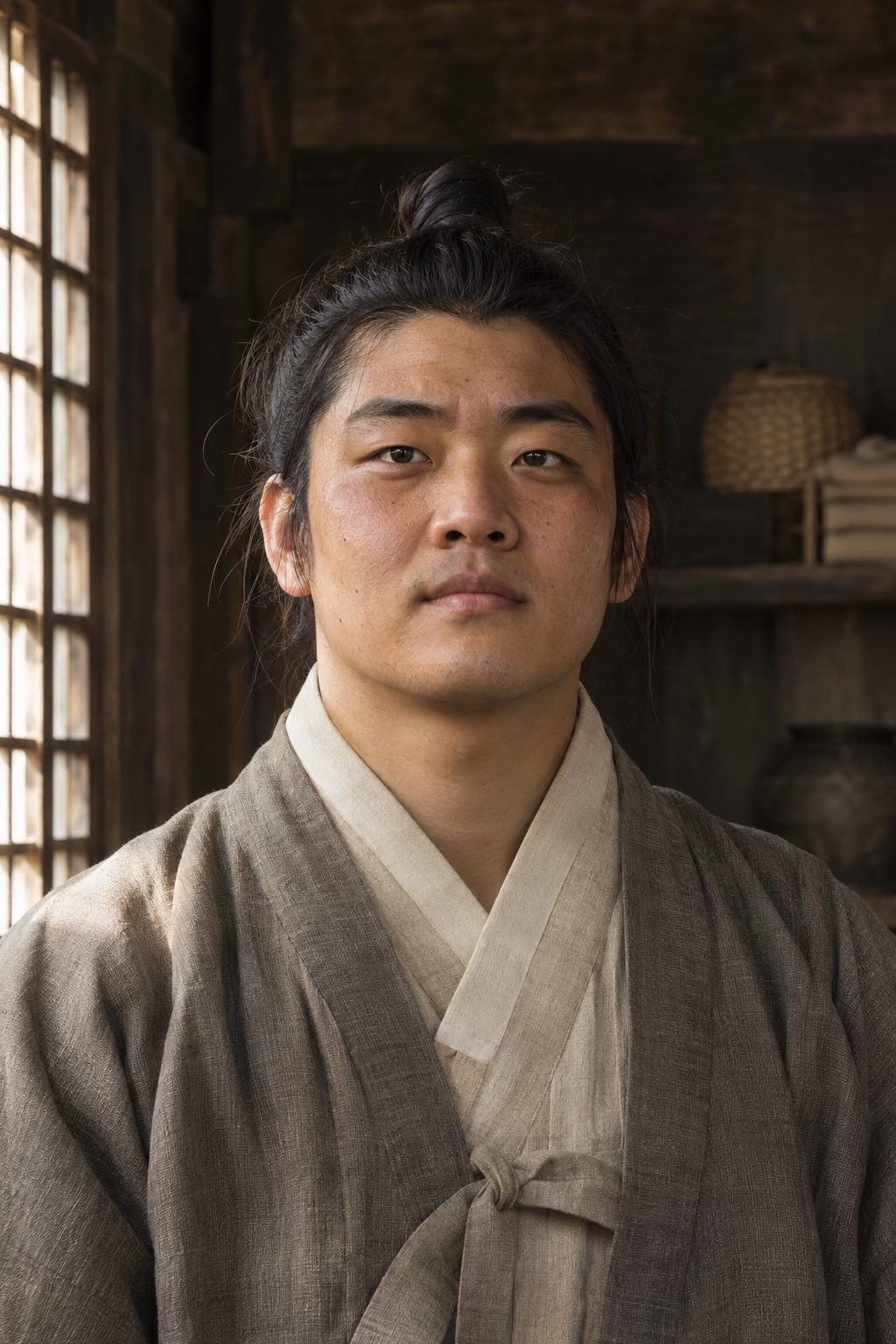
About Philip Hong Pil-ju
Philip Hong Pil-ju was born in 1774 at Deoksan in Korea. He learned Catholic doctrine from Louis Gonzaga Yi Jon-chang around 1790. His stepmother, Columba Kang Wan-suk, had already accepted the faith and continued teaching him.
Philip was born into the Pungsan Hong family. Studying its genealogy, historian Jeong Min traced his father Hong Ji-yeong’s kinship with the senior statesman Hong Nak-seong and with Lady Hyegyeong, the mother of King Jeongjo. These connections reached much further than the provincial village in which Philip grew up. His move to Seoul, however, came through the women of his immediate family.
As a child Philip was known as Mun-gap. Kang was his stepmother, and he kept close to her after his own introduction to Christianity. Later he married into another Hong family, the Namyang clan. His wife and her father shared the religion that had divided his childhood home.
According to Cha Ki-jin, Philip’s father came to oppose the religion practised at home. After the persecution of 1791, Philip left for Seoul with his grandmother and Kang. The encyclopedia places his move within this family division. In the capital he helped Kang with Church work, and he married a daughter of Anthony Hong Ik-man. Their household became both a family home and a gathering place for Catholics.
Ri Gil-jae gives a more complicated account of the division in Deoksan. Philip’s father had himself studied with Yi Jon-chang, Ri writes, and once received Christians in the house at Byeollasan. He did not accompany the rest of the family when they left. Ri identifies Philip’s grandmother as Agnes Yu and his younger sister as Hong Sun-hui. The grandmother, stepmother and children settled together in the capital.
In 1795 James Zhou Wen-mo, the Chinese priest secretly serving Korea, took refuge in their home. Philip became his assistant, helping at Mass and accompanying him on journeys to Catholic communities outside Seoul. The household sheltered the priest and supported a community of widows and unmarried women. Philip and Kang moved between houses to protect Zhou and those who gathered around him.
Philip’s marriage gave another household access to the priest. His father-in-law, Anthony Hong Ik-man, came to his house for instruction from Zhou. In time Anthony’s own house served as a place where believers could meet the priest and where the Myeongdohoe, an association for religious instruction, could gather. Another daughter married Anthony Yi Hyeon, making the two men brothers-in-law.
Juliana Kim Yeon-i was one of the people who found her way to Zhou through Philip’s house. The encyclopedia entry for Juliana recalls her visits there and her baptism by the priest. She later helped other believers find shelter. For a woman from outside these families, going to the house could open the way to the sacraments and to fellow Catholics who needed her help.
In Seoul Philip came to know Augustine Jeong Yak-jong and Hwang Sa-yeong, both leaders in the growing Catholic community. Lee Seung-hun notes how young Philip had been on first arriving in the city. Still a teenager, he had followed his stepmother there. By the time the police came looking for Zhou, they knew him as someone who could tell them where the priest was staying.
From late 1800, Philip spent about three months away from home on the stated pretext of treatment for tuberculosis. Ri reports that he was actually attending the priest as Zhou moved between hiding places. The same feature describes a crowded household that included Philip’s wife, her sister and a niece, as well as his grandmother and younger sister.
When persecution began in 1801, the authorities soon targeted their household. Officers arrested Philip, Kang and others staying there. He was interrogated in an attempt to discover Zhou’s whereabouts. The official biography remembers him refusing to reveal the priest’s movements, then weakening under continued punishment. Kang encountered him while being taken for questioning and urged him to hold to his faith. The received account says her intervention brought him back from his intention to renounce it.
Kang was executed first, on July 2. Philip remained in prison for several more months. The encyclopedia records his continued imprisonment and final sentence, followed by beheading outside Seoul’s Small West Gate on October 4, 1801. He was twenty-seven.
Philip’s name also travelled beyond Korea. In explaining the persecution to the Qing emperor, the Joseon court named him among the associates of Augustine Jeong Yak-jong and identified Columba as his mother. The court portrayed their meetings as a threat to the kingdom. Its account thus preserved the relationship between mother and son even as it made their work for the same community part of the case against them.
Hwang Sa-yeong remembered a change in Philip within a year of his beginning to serve Zhou at the altar.
Hwang wrote his account for the bishop in Beijing during the persecution. It was intercepted before it could reach him. The document survives, preserving a Catholic contemporary’s account of the people whose convictions the court had tried to suppress.
Wondering how to weigh the stories and sources? Learn how to read a saint biography.