Biography
Philotheos Kokkinos
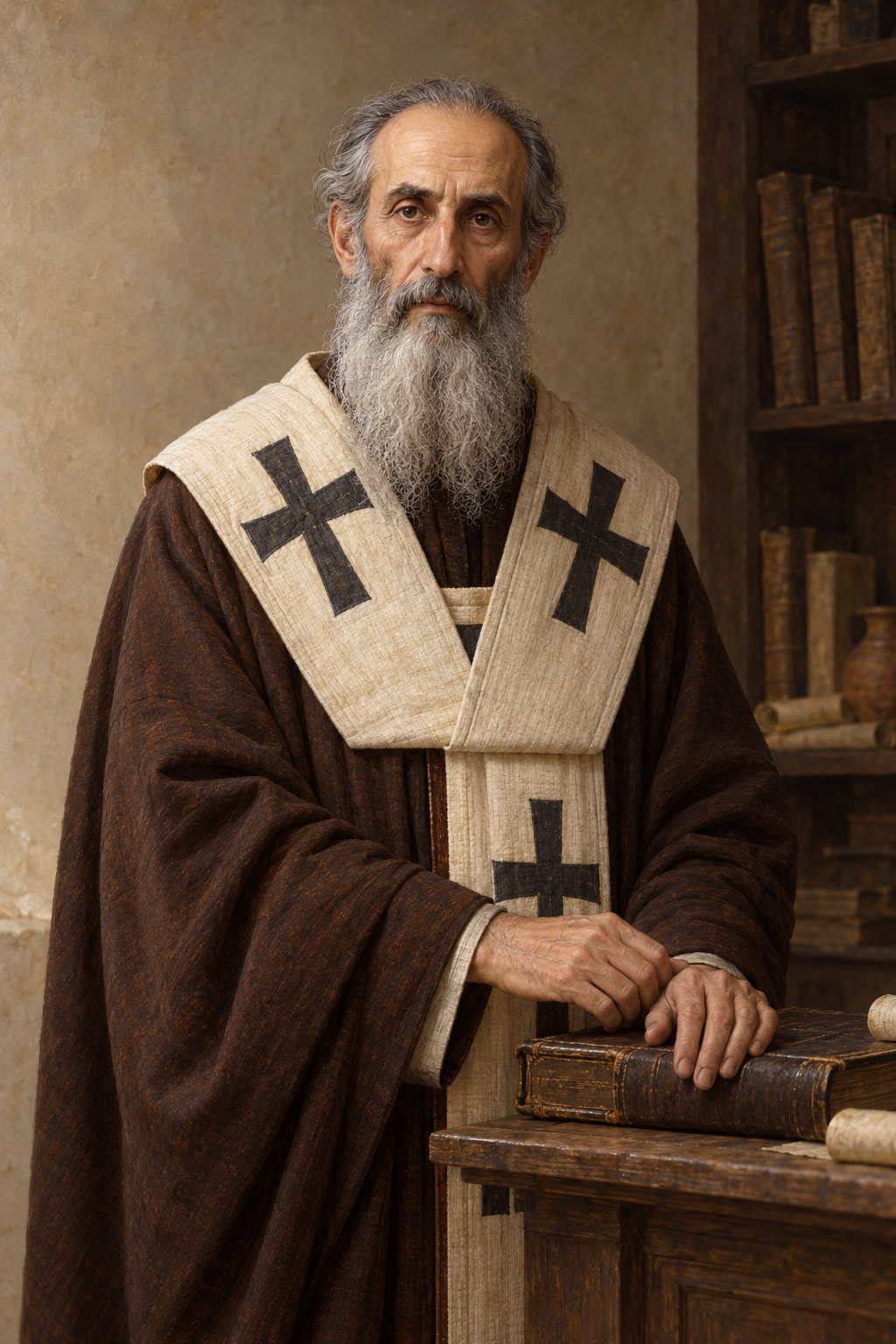
About Philotheos Kokkinos
Philotheos Kokkinos brought the concerns of Byzantine monastic life into the leadership of the Church of Constantinople. A supporter of Gregory Palamas and the emperor John VI Kantakouzenos, he served first as metropolitan of Heraclea in Thrace and twice as patriarch. His sermons and writings addressed doctrine, worship and the lives of saints.
He came from Thessalonike and was probably born around the turn of the fourteenth century, although the year is uncertain. He studied with Thomas Magistros. Mihail Mitrea’s examination of the sources cautions that accusations about his ancestry come from theological opponents and cannot simply be treated as established family history.
His monastic beginnings are also imperfectly documented. He joined Vatopedi on Mount Athos around 1328 and received guidance from Sabas the Younger. He later moved to the Great Lavra. Modern scholarship rejects the unsupported account that he first became a monk on Sinai, which may confuse him with Philotheos Sinaites.
By the summer of 1340 he was a priest: his signature as a hieromonk appears on the Athonite declaration supporting Palamas’s teaching.
The Orthodox Church of Finland’s account places him at the head of the Philokalos monastery in Thessalonike in 1340 and the Great Lavra four years later. In 1347 he became metropolitan of Heraclea. His responsibilities extended beyond monastic administration into the theological disputes then dividing the Byzantine Church.
He participated in the council of 1351 and prepared its record. That same year, while he was away, Heraclea suffered an attack by Genoese and Venetian forces. According to the Finnish church account, his intervention secured the release of many inhabitants held captive by the Genoese.
His leadership was closely tied to the defense of Gregory Palamas. The Orthodox Church in America notes that Philotheos wrote against opponents of hesychasm, as well as on liturgy and saints’ lives. This combination of subjects remained characteristic of his work: he defended theological teaching while also providing texts for the Church’s prayer and remembrance.
Philotheos’s first patriarchate was brief, followed by a second beginning in 1364 and ending in 1376. The Ecumenical Patriarchate connects the latter period with the recognition of Palamas as a saint. It also identifies Philotheos’s allegiance to Kantakouzenos, placing his church leadership within the political struggles of his time.
As patriarch, he presided over Palamas’s glorification and composed a service in his honor. He also established the commemoration of Palamas on the second Sunday of Great Lent. These actions gave the theologian’s memory a recurring place in Orthodox worship, alongside the written defenses of his teaching.
His second patriarchate also included an effort to discuss reunion with the Roman Catholic Church. He sought an ecumenical council, but the discussions did not produce one. The Finnish church account describes the proposal and its failure; it also records his removal when Andronikos IV came to power in 1376.
Philotheos wrote extended accounts of five holy men of his own time: Nikodemos the Younger, Sabas the Younger, Isidore Boucheir, Germanos Maroules and Gregory Palamas. These lives contain journeys through and beyond Byzantium. Mount Athos and Thessalonike stand near the center of the religious world they describe.
The narratives also preserve accounts of women, especially as recipients of reported healings. Their value to historians therefore extends beyond the biographies of their principal subjects.
His liturgical instructions had another kind of afterlife. The Diataxis of the Divine Liturgy sets out actions for the clergy, including their entrance, vesting and preparation of the offerings. Mikhail Zheltov’s study distinguishes an initial Greek form from a revised one and traces their different transmission in Slavonic translations.
The differences include the prayers supplied for vesting, the order of commemorations, and the deacon’s role in removing particles from the offering bread. An early version permits the deacon to make his own commemorations after the priest. Zheltov identifies this as a surviving trace of an older practice in which the deacon had a larger role in preparing the gifts.
The history of those instructions is not confined to a single Greek text. The Athonite Slavonic translation reflects the initial version, while the translations associated with Euthymius of Tarnovo and Cyprian reflect the revised form. Their different wording and arrangement preserve evidence of how the instructions circulated and were adapted.
Philotheos’s influence also reached the ceremonial practice of the patriarchal church. Alexander Rentel’s research, reported by Holy Trinity Seminary, shows that Dimitrios Gemistos combined Philotheos’s Athonite instructions with established Constantinopolitan rites. This was a process of bringing existing practices together, rather than creating an entirely new form of worship.
After his deposition, Philotheos withdrew to a monastery in Constantinople. His death is variously dated: Mitrea favors 1377–1378, while the OCA gives 1379. The precise year remains unsettled.
The OCA commemorates him as a venerable saint on October 11. His legacy includes both the defense of Palamas and the liturgical and hagiographical writings through which he helped shape the Church’s memory and worship.
Wondering how to weigh the stories and sources? Learn how to read a saint biography.