Biography
Phocas the Gardener
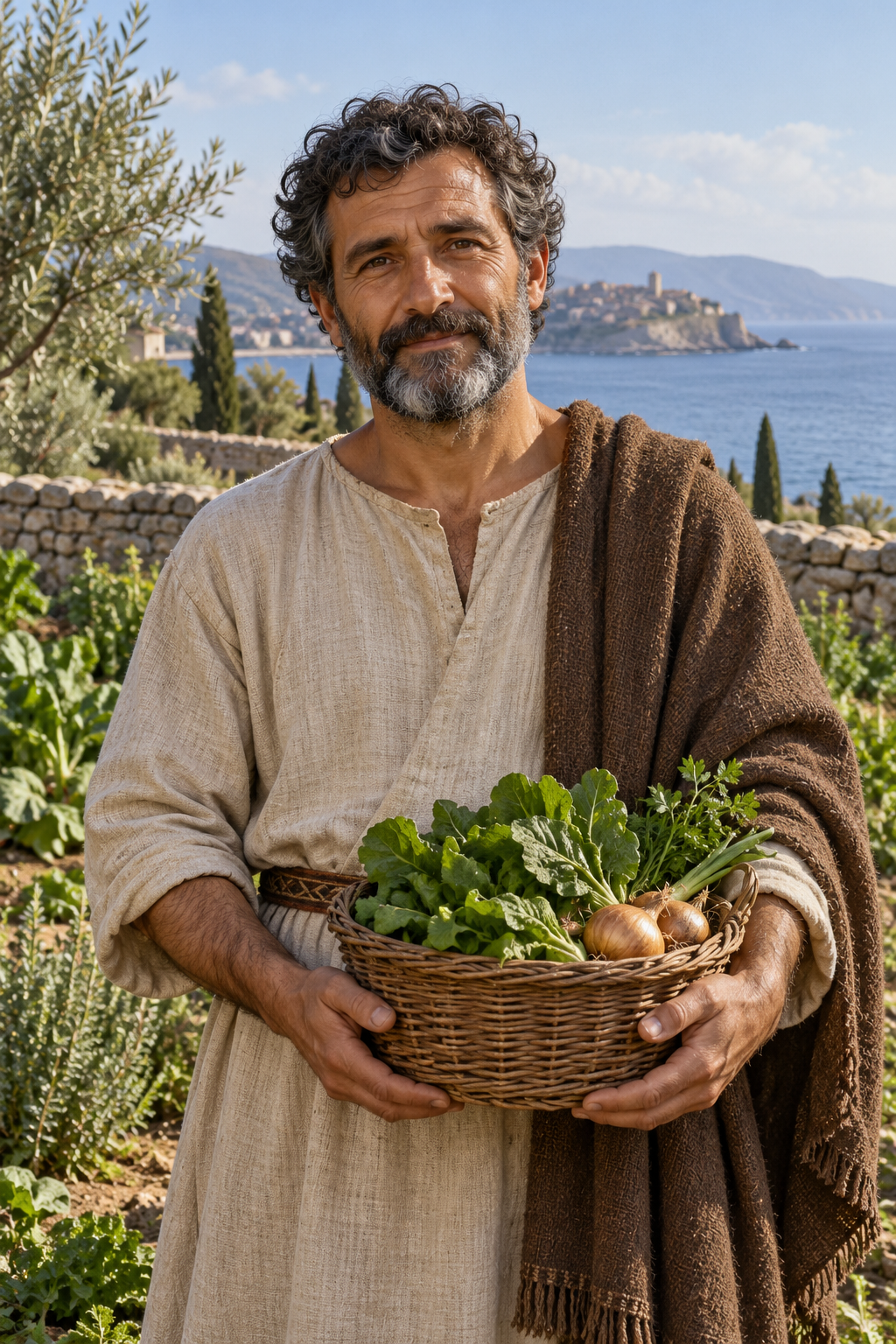
About Phocas the Gardener
Phocas the Gardener is remembered as a Christian martyr of Sinope on the Black Sea. His story survives through Christian remembrance rather than a securely dated account of his life. Art historian Tatjana Starodubcev identifies the early-fifth-century homily of Asterius of Amasea as the principal early witness to the gardener’s cult. Later writings about saints named Phocas added other identities and episodes, making the distinction between them important.
In the traditional account preserved by the Orthodox Church in America, Phocas cultivated a small garden and lived simply from its produce. He shared his modest income and welcomed travelers. The same account remembers him reading Scripture and speaking about faith while selling fruit and vegetables. These details present his ordinary work and hospitality as the setting of his Christian life.
The story reaches its crisis when soldiers arrive seeking a Christian named Phocas. He receives them as guests without revealing that he is the man they seek. During the night he prepares his own grave. When he identifies himself the next day, the soldiers hesitate to kill someone who has welcomed them so generously. He accepts their sentence and is beheaded. The account makes his hospitality, even toward his executioners, the central image of his martyrdom.
His remembrance also entered the lives of sailors. Starodubcev describes the practice reported by Asterius: a crew set aside a share of its meal for Phocas, bought that portion, and gave the money to poor people at the next port. This joined devotion to the martyr with practical charity. Her study traces the spread of his cult around the Black Sea and farther into the Mediterranean. It also argues that later stories about a bishop of Sinope probably developed from the gardener’s earlier cult, rather than providing a separate secure biography of him.
Another distinction concerns Phocas of Antioch. Oxford’s Cult of Saints project separates that martyr’s association with protection from reptiles from the better-known Phocas of Sinope. Stories about the Antioch shrine should therefore not be borrowed to fill gaps in the gardener’s life.
The Orthodox Church in America commemorates the gardener on September 22 and records his invocation by seafarers. Nominis also lists a local September 22 observance and patronage of gardeners, although its narrative combines gardening with the disputed episcopal story. The feast and patronage can be recorded without treating that combination as a settled account of his career.
His gardening patronage has a modest modern expression at St John the Evangelist in Brownswood Park. The parish’s account of its soup garden names Phocas as a patron of vegetable gardeners and describes naming a composter after him. The project grows food for its soup kitchen and brings guests and volunteers together in cultivation.
Wondering how to weigh the stories and sources? Learn how to read a saint biography.