Biography
Pius Kim Jin-hu
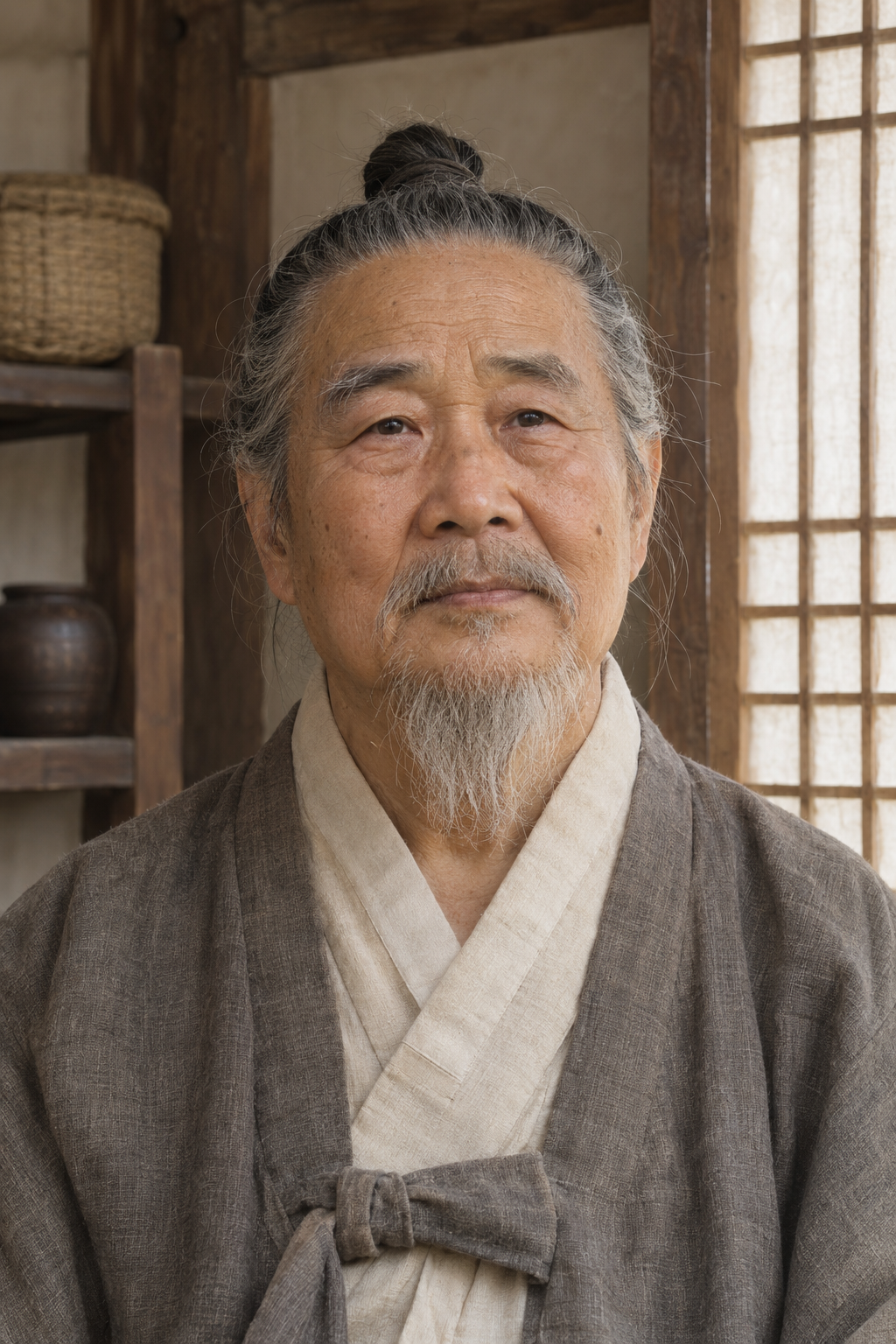
About Pius Kim Jin-hu
Pius Kim Jin-hu was born in Solmoe, in Myeoncheon. The Korean bishops give his birth year as 1739. An older Catholic encyclopedia gives 1738. It identifies Un-jo as his genealogical name and Jin-hu as his courtesy name. It places him in the Gimhae Kim clan and records a minor government position before his conversion.
The family genealogies examined by historian Ma Baek-rak name four sons: Jong-hyeon, Taek-hyeon, Jong-han and Hui-hyeon. Jong-han was also known as Han-hyeon. Taek-hyeon’s line included Pius’s grandson Ignatius Kim Je-jun and his great-grandson Andrew Kim Dae-geon, the future priest.
The bishops describe Pius’s household as yangban, or gentry. That inherited classification is disputed. Historian Kim Su-tae’s 2011 study examines the late family genealogies alongside nineteenth-century missionary descriptions. He argues that a clan affiliation and a place in those genealogies cannot by themselves establish the family’s earlier social rank. He finds the evidence for a commoner background more persuasive. The disagreement concerns the status into which Pius was born; his recorded minor office does not settle it. Kim points out that the family genealogy used to support the claim of gentry status came to light during the Japanese colonial period.
Pius first heard Catholic teaching through his sons. The received official account traces their instruction to Yi Jon-chang. In a 2013 lecture, historian Bang Sang-geun discussed a record about brothers from Deoksan who learned from a Kim living in Myeongnyebang. Bang identified that teacher as Kim Beom-u and interpreted the record as evidence that the eldest son, Jong-hyeon, had studied Catholicism before 1785. This is an argument about the sons’ early instruction; it does not establish an exact year for their father’s conversion.
Pius initially resisted the teaching his children brought home. Obtaining a position under a provincial official made him less willing to listen to their appeals. Eventually he accepted the faith, gave up his position and turned away from his former pursuits. The Catholic encyclopedia describes him thereafter teaching members of his household and bringing them into the Church. In the years that followed, officers took him for questioning in Jeonju, Hongju and Gongju. Authorities in each place demanded that he give up the religion he had accepted.
The grandson Ignatius’s own encyclopedia notice names both his grandfather Pius and his uncle Andrew Jong-han as his teachers in the Catholic faith. Ignatius was a son of Taek-hyeon and grew up at Solmoe. The notice places Pius’s teaching within the household’s religious life before recounting the older man’s imprisonment. Later generations did not encounter him only as the name of an imprisoned ancestor: the received family history also remembers him personally giving instruction.
His first recorded arrest came in 1791. He professed his Catholic faith and was released. Further arrests and releases followed; Oh Se-taek’s account numbers them at four or five, without explaining why the authorities repeatedly let him go. In 1801, during the Shinyu persecution, he was arrested again. He received a sentence of exile, but was released from exile after a time and returned home. His return did not end the pursuit: in 1805 he was seized once more and sent to Haemi.
Accounts differ over his conduct in 1801. The encyclopedia describes steadfastness through his repeated arrests. The current Korean bishops’ biography says that he spoke words of apostasy before his exile. The earlier English account records his arrest, exile and release without saying what he told the authorities.
At Haemi Pius acknowledged his faith before the authorities despite punishment. No death sentence followed, and he remained in prison for almost a decade. Bang’s account describes the respect he gained from officials and jailers through his dignified behaviour. It says that he was consequently able to carry out his religious duties openly while confined. For his family the imprisonment meant losing their home as well. The English account says they had to leave their own village and settle among strangers while he remained at Haemi.
Pius died in Haemi prison on December 1, 1814. The cause of death is unknown; the official biography does not decide whether illness, hunger or other suffering in custody brought about his death. His son Andrew’s final imprisonment came afterwards, during the persecution of 1815. Pius had died before the arrest that led to his son’s execution in 1816.
The family’s later search for his grave met another uncertainty. In 1996 Ma Baek-rak reported locating the family burial ground at Cheongyonggok through descendants who had kept different branch genealogies. Earlier genealogies had directed searches elsewhere. But graves had been moved in 1968, and the register identifying them had been lost. Ma therefore could not securely identify every individual grave, including Pius’s, even while arguing that the family’s ancestors lay there. Some older graves were still identifiable from their stone bases. For Pius and his wife, Ma relied on the entries in family registers that described a joint burial.
Wondering how to weigh the stories and sources? Learn how to read a saint biography.