Biography
Plato of Sakkudion
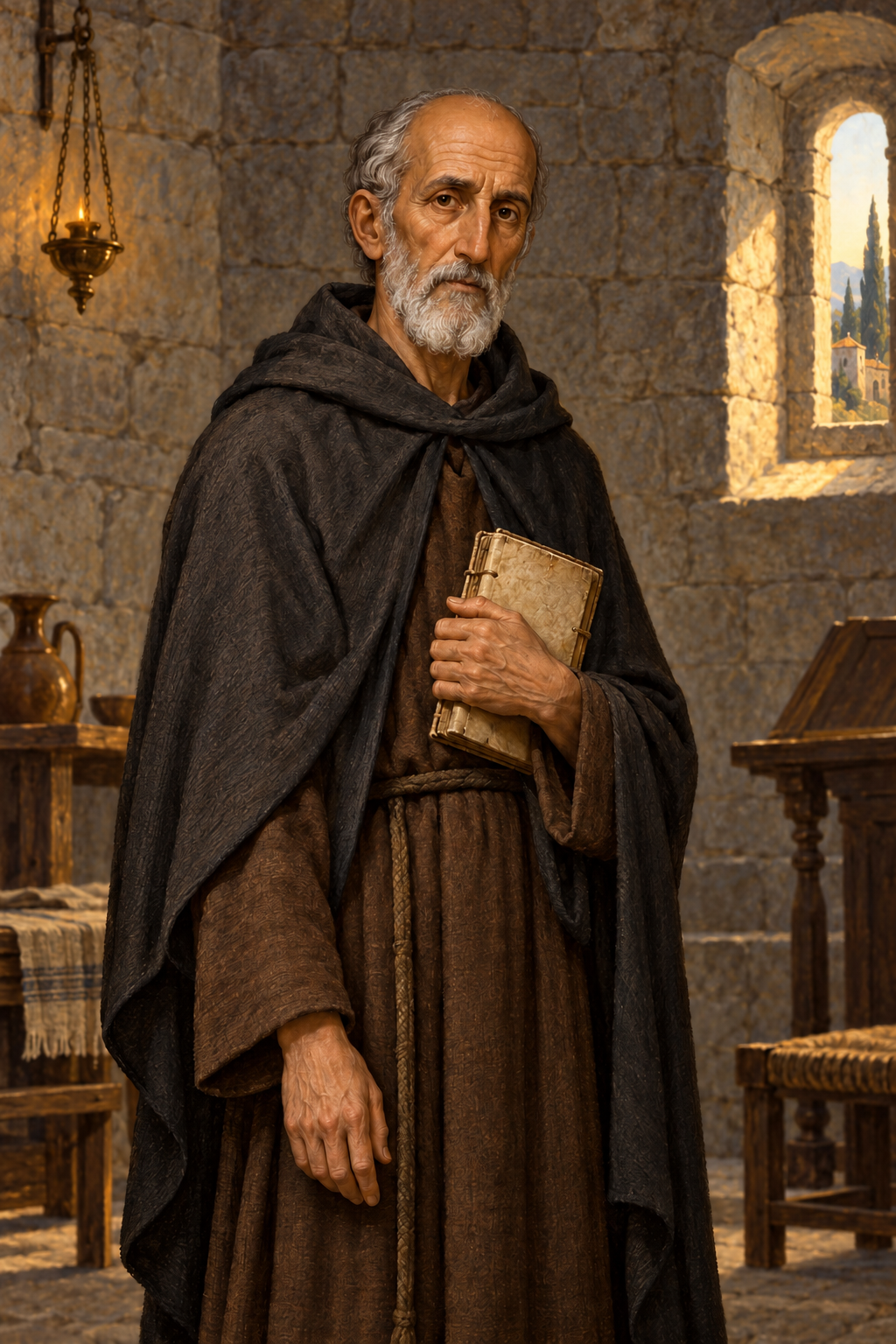
About Plato of Sakkudion
Plato of Sakkudion was a Byzantine monk and the spiritual father of his nephew Theodore the Studite. Born around 735, he lost his parents during the plague of 747–748. An uncle raised him and trained him for work in the imperial financial administration. In 759, Plato gave up that career and entered the monastery of Symbola in Bithynia.
His nephew’s funeral oration describes a more personal part of that departure: Plato distributed wealth to people in need, provided for his sisters, and freed the people he held in slavery. The account presents renunciation as a change in his responsibilities toward others as well as a change of occupation.
At Symbola he became a disciple of Theoktistos. His monastic work included copying books and assembling passages from Christian writers. According to Theodore’s account, manuscripts produced by Plato remained in several monasteries when the funeral oration was written.
The Catholic Church in Norway’s account places ordinary work alongside Plato’s manuscript copying. It describes him baking bread and spreading manure in the fields, accepting the tasks assigned to him under Theoktistos. These episodes are part of a devotional portrait of monastic obedience, rather than a surviving daily record of his work.
During a visit to Constantinople, Plato was offered the bishopric of Nicomedia. The Catholic Church in Norway’s account says that he declined the position and also declined priestly ordination. He returned instead to his monastic home at Symbola.
Dybski’s discussion of the funeral oration also describes help offered outside the monastery. Plato advocated for people accused unjustly, supported people in poverty, and comforted those in distress. Conversations and letters were means of reaching them. The account presents this assistance as part of his pastoral work, without identifying every recipient.
In 781, Plato and Theodore established Sakkudion on a family estate in Bithynia. Plato led the monastery and participated in the Council of Nicaea in 787, supporting the restoration of icon veneration. Illness led him to appoint Theodore as his successor in 794. He subsequently lived in greater seclusion, while remaining closely involved in his nephew’s affairs.
Plato opposed Emperor Constantine VI’s second marriage and was imprisoned in 796.
Plato’s later association with Studion began with a move shared by his nephew and many of the monks of Sakkudion. Benedict XVI’s account of Theodore’s life connects that move to the danger of Arab incursions. The community settled in the urban monastery of Studios at Constantinople.
The Catholic Church in Norway’s account says that, after joining Studion, Plato placed himself under Theodore’s authority and lived in a small cell devoted to prayer and manual work.
In 806, Plato supported Theodore as patriarch and resisted the appointment of the lay official Nicephorus.
During the later exile of the Studite community, Plato remained connected to Theodore by letter. The correspondence used assigned Greek letters to identify members of the scattered community; Plato was given alpha. The prosopography identifies him as Theodore’s co-author of two letters sent to Rome in 809 concerning the marriage dispute.
Illness changed the way Plato could take part in the community during his last years. In Henryk Dybski’s discussion of Theodore’s funeral oration, the elderly monk can no longer manage his daily needs without help or maintain his former physical disciplines. A novice reads beside him when he cannot follow a text himself. Yet he continues to offer counsel, warnings, and consolation to the other monks. The same account describes monks and laypeople visiting him during Lent for a blessing. Patriarch Nicephorus also comes to ask for his prayers and to bid him farewell. Dybski reads that meeting as a sign that their former tensions had been overcome. These details belong to Theodore’s affectionate account of his uncle, which presents pastoral care continuing even as physical strength fails.
Plato is often called “of Studion,” and the Orthodox Church in America commemorates him under that name on April 5. Its devotional account emphasizes his prayer, manuscript copying, and willingness to endure imprisonment.
The name needs a qualification: he had been abbot of Sakkudion, but he was not abbot of Studion. Jules Pargoire made this distinction in his study of Plato’s death. The same study examines an early manuscript note whose date and weekday do not agree, showing why later accounts have offered different death dates.
The critical prosopography places his death at Constantinople on April 4, 814.
The Orthodox Church in America’s account instead gives April 8. Its feast date, April 5, is a separate observance and should not be treated as a resolution of that historical disagreement.
Plato’s influence continued through the nephew he had helped form. In his account of Theodore, Benedict XVI singles out the guidance of Plato and Theodore’s mother as important to Theodore’s own practice of spiritual direction. Theodore called his uncle his father. That remembered relationship places Plato within the formation of a monastic teacher whose work extended beyond the community they had once shared.
Wondering how to weigh the stories and sources? Learn how to read a saint biography.