Biography
Pope Adrian III
About Pope Adrian III
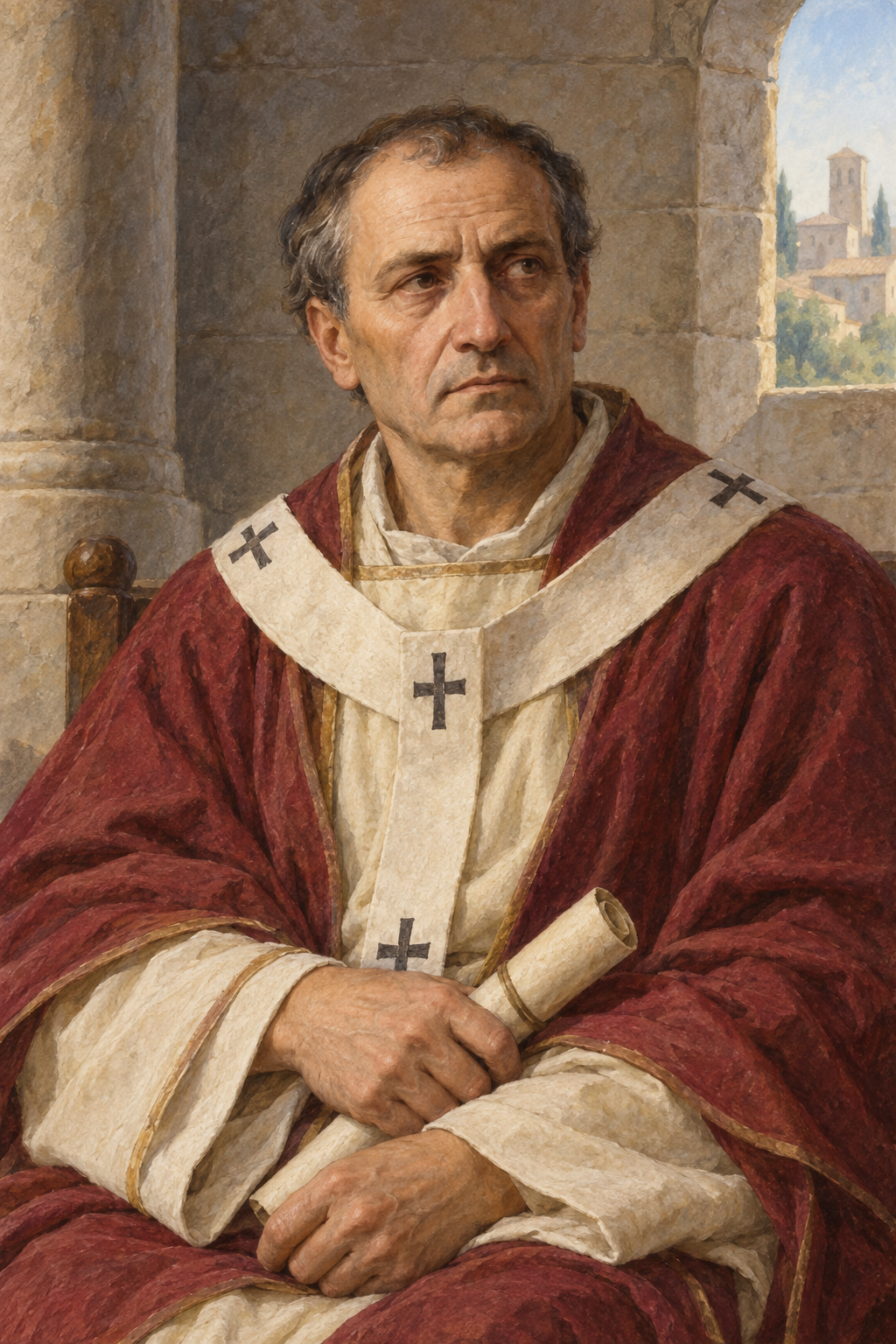
Adrian III governed the Roman church during a short and unsettled period in the late ninth century. The Holy See's papal list gives the beginning of his pontificate as May 17, 884, and its end as August or September 885. It identifies Rome as his birthplace. Nonantola Abbey's account, drawing on the *Liber Pontificalis*, describes him as a Roman son of Benedict. The evidence supports his identity, office, and approximate chronology, but not a birth year or a complete account of early life. He should be understood within the factional politics of Rome and the Carolingian world rather than as a pope whose actions can be neatly reduced to a single edifying episode. The surviving source summaries are uneven, so the record separates well-attested office and burial details from disputed dates and interpretations of policy.A New Catholic Encyclopedia account describes conflicts with Roman aristocratic factions during Adrian's reign. It reports that a Lateran official named George was blinded by Adrian's order and that an aristocratic woman named Mary suffered a public punishment. These are grave actions and belong in an honest biography, even when a saint is the subject. The details come from a critical later synthesis, rather than a complete surviving trial dossier, and should be attributed accordingly. The same reference suggests that Adrian may have continued some policies of John VIII and sought a conciliatory approach to relations with the Byzantine church. The older Roman martyrology later praised his efforts toward reconciliation with Eastern churches. Neither notice warrants claiming that he achieved a completed reunion in his brief pontificate.The account of Adrian's final journey is firmer than the precise date of his death. Nonantola Abbey says the *Annales Fuldenses* record that he left Rome in 885, died on the way to meet Emperor Charles III, and was buried at Nonantola. The abbey associates the death with a place called Wilzachara, probably near what are now Spilamberto and San Cesario sul Panaro. Because even this local account gives the location approximately, the profile should not choose one modern town as a confirmed death site. The Holy See's official list ends the pontificate in August or September 885. Some feast sources use July 8, but that day is not secure as the date of death. The structured life record can responsibly give the year 885 and leave month and day unspecified.The burial at Nonantola helped shape his cult. The abbey explains that the exact origin of local veneration is difficult to place, though a pope's grave in the abbey naturally drew attention. The New Catholic Encyclopedia records that the Holy See approved this existing cult on June 2, 1891, under Leo XIII. Approval of a longstanding local cult should not be retold as if a formal medieval canonization event were documented. Nonantola and the French Bishops' Conference give July 8 for the local feast. The inherited older Roman martyrology instead places him on September 7. Vatican News labels its Saint Adrian III page July 9. These conflicting days concern commemoration; they do not alter the secure 885 death year. The primary field follows the directly documented July 8 local observance and retains September 7 separately as historical.Adrian's record joins a recognized local saint's devotion to a complex historical pontificate. The confirmed points are his service as pope in 884–885, death during travel, burial at Nonantola, and later approved cult. His efforts in church diplomacy and the disturbing reports of harsh factional punishment both deserve source-aware presentation. The art is an imaginative portrait in restrained early medieval bishop's dress, with no claim to reproduce his face or a documented moment. It does not turn the journey, conflict, or veneration into an invented scene. The profile's sparse birth and death fields reflect what the reviewed evidence can actually bear: Rome as an attested origin and 885 as the death year, without a fabricated exact date. Readers can still understand why Nonantola remembers him while seeing the limits and difficulties of the record.
Wondering how to weigh the stories and sources? Learn how to read a saint biography.