Biography
Pope Agapetus I
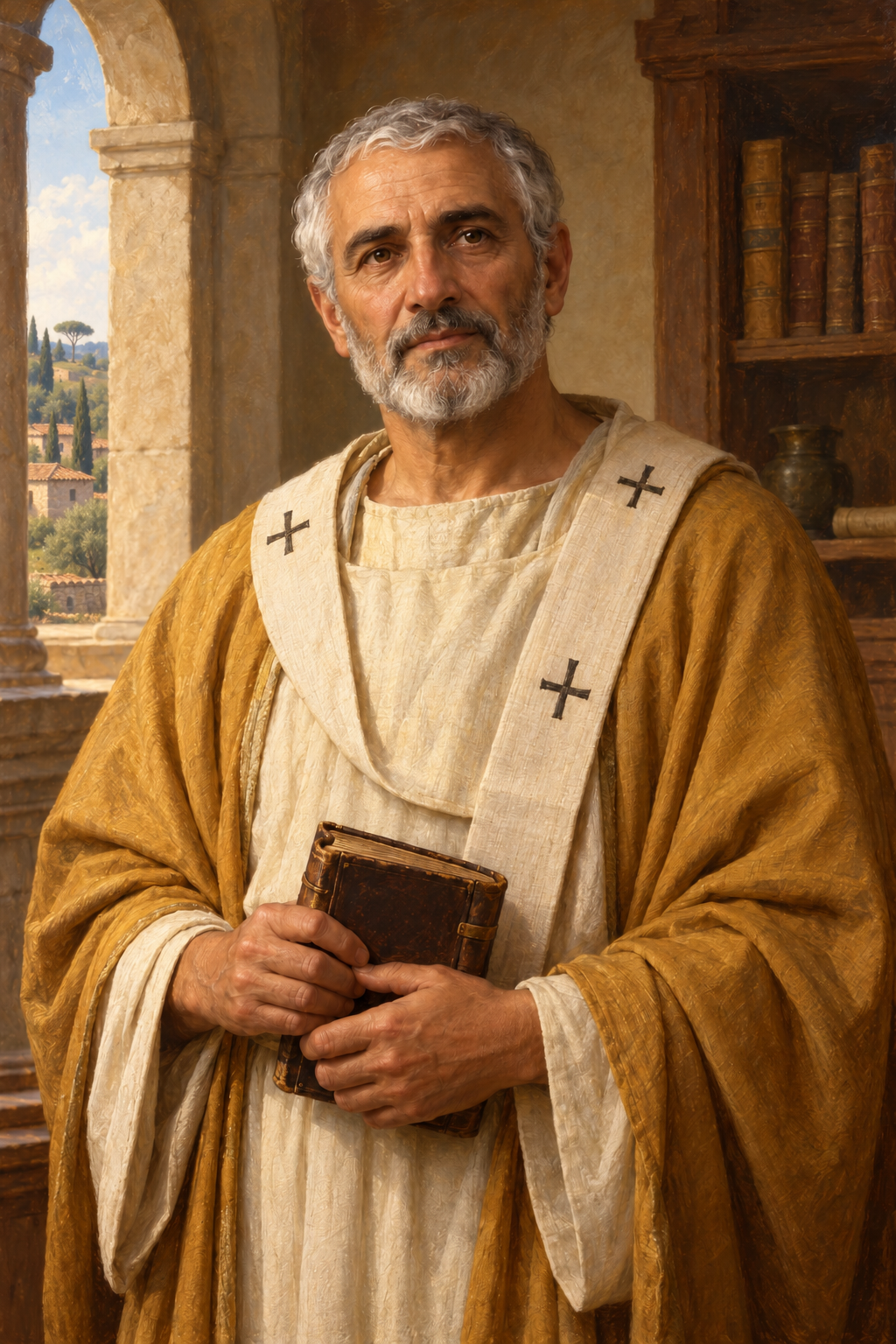
About Pope Agapetus I
Agapetus I became bishop of Rome on May 13, 535, and held office for less than a year. The Vatican’s papal register identifies Rome as his birthplace. His short pontificate brought him into negotiations between the Gothic rulers of Italy and the emperor at Constantinople, while another part of his work concerned the preservation and teaching of Christian learning.
He came from a Roman senatorial family associated with the Caelian Hill. His father, the priest Gordianus, had been killed during the violent disputes surrounding Pope Symmachus in 502. Agapetus’s own birth year is not securely known. Those earlier divisions also formed the background to one of his first acts as pope: he publicly burned the condemnation imposed on Dioscorus, a rival papal claimant. The action rejected attempts by a reigning pope to bind the Church to his chosen successor.
His dealings with other bishops combined strict discipline with provision for appeal. He upheld restrictions preventing converts from Arianism from entering the clergy. At the same time, he accepted the appeal of Contumeliosus, bishop of Riez, who had been condemned for misconduct, and ordered a fresh examination before papal delegates. Reopening the case was a procedural decision rather than a declaration that the accusations were false.
Agapetus’s letter to Caesarius of Arles explains the safeguards he wanted during that appeal. Contumeliosus was to recover his personal property, but remain suspended from celebrating Mass and administering church possessions while the case was examined. The letter also required that he receive adequate support. It shows a concern to keep judgment, punishment and the accused bishop’s material needs distinct, even within a strongly hierarchical system of church government.
Another letter to Caesarius exposes a harder boundary. Asked about resources for feeding the poor, Agapetus appealed to rules forbidding the transfer of church property. He insisted that the refusal came from obedience to those rules rather than personal greed. His explanation records the tension between an immediate charitable need and his understanding of obligations attached to ecclesiastical possessions; it does not erase that tension.
The crisis in Italy soon drew him away from Rome. King Theodahad threatened the Roman senators and their families unless the emperor abandoned his military plans. Under that pressure, Agapetus agreed to travel to Constantinople. His reception there was honorable, but the diplomatic mission failed: Justinian would not call off the invasion. The pope’s presence could influence church affairs without changing the emperor’s determination to recover Italy.
At Constantinople, Agapetus opposed Patriarch Anthimus, whose teaching and transfer from Trebizond were disputed. He withheld communion from him and supported his replacement by Mennas, whom he consecrated on March 13, 536. Bertolini cautions that the dramatic exchanges with Justinian in the Liber pontificalis already bear the marks of legend. They should not be read as a verbatim record of a confrontation in the imperial court.
Agapetus also accepted Justinian’s written profession of faith while maintaining that the emperor’s lay position did not give him authority to teach doctrine. He became ill and died in Constantinople on April 22, 536. His body was returned to Rome in a lead coffin and buried at Saint Peter’s. The Catholic Encyclopedia connects the September commemoration with that burial, rather than with the day of his death.
His educational hopes are known from a collaborator’s own account. In the preface to the Institutiones, Cassiodorus recalls working with Agapetus to raise funds for Christian schools in Rome with paid teachers. They looked toward established centers of learning in the eastern Mediterranean. Cassiodorus says that warfare prevented the project from being realized; his later introductory books offered another way to guide students through Scripture and other learning. The passage preserves a serious undertaking that remained unfinished. The contrast that troubled Cassiodorus was practical: secular authors had a flourishing teaching tradition, while Scripture lacked comparable public instruction. His account presents the proposed school as serving both religious understanding and the ability to speak well. Fundraising and teachers were therefore essential parts of the plan, not incidental arrangements. Remembering Agapetus only through his confrontation with an emperor would miss this quieter effort to give Christian study a lasting home.
A library was a more tangible part of that undertaking. James O’Donnell discusses an inscription preserved in an Einsiedeln manuscript that names Agapetus and celebrates a collection whose different languages expressed a common faith. O’Donnell distinguishes this evidence for the library from unresolved questions about the proposed school, including whom it would have taught and how it would have operated. These uncertainties matter when describing a plan that never became the institution its founders hoped for.
The papal basilica’s guide identifies ruins beside the Clivus Scauri as the hall of Agapetus’s library. His memory also continues in worship: the Orthodox Church in America commemorates him on April 17, and Catholic references record April 22 and September 20.
Wondering how to weigh the stories and sources? Learn how to read a saint biography.