Biography
Pope Agatho
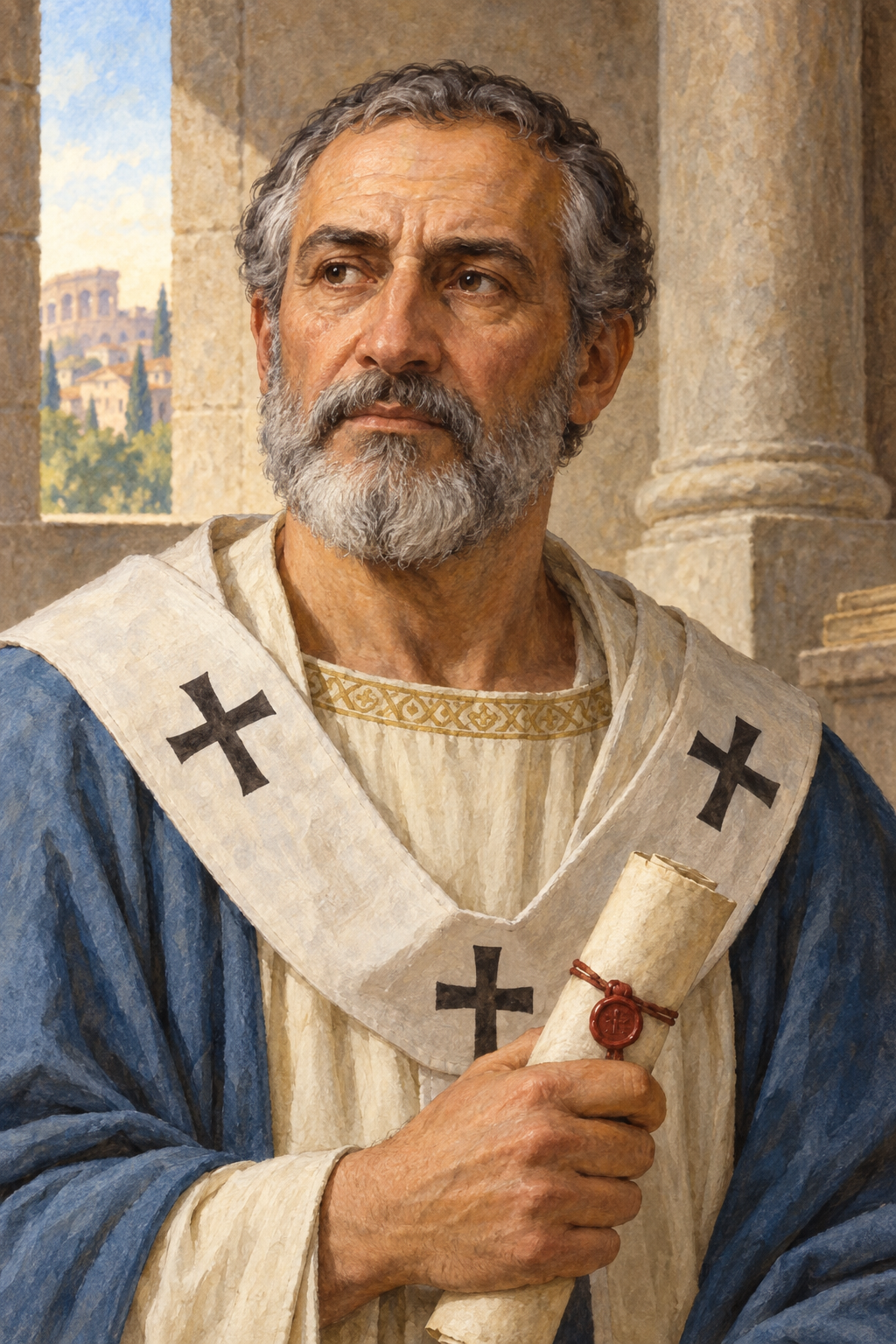
About Pope Agatho
Agatho was bishop of Rome during a period when Christians across the Mediterranean were debating how to speak about the human and divine wills of Christ. The Holy See's papal list dates his service from June 27, 678, to January 10, 681, and gives Sicily as his birth region. It does not name a birthplace within the island or a birth year. The older Roman martyrology later praised his learning and commemorated him on January 10. These sources support a firm outline of office and death without a detailed childhood narrative. Agatho's importance lies chiefly in letters, deliberation, and representatives sent to a council, rather than in a series of reliably documented private episodes. The profile records what can be known of his public ministry and leaves the unsupported portions of his life unfilled.The major issue of Agatho's pontificate was Monothelitism, a teaching that Christ had one will rather than both a human and a divine will. The New Catholic Encyclopedia says Agatho worked for wider Western participation through local synods and a Roman gathering in 680. That gathering prepared representatives and a statement of faith for the council called by Emperor Constantine IV at Constantinople. Agatho sent a letter to the emperor, while another letter conveyed the Roman synod's position. The council's surviving acts record the presentation and examination of these documents. Agatho did not travel to preside there in person. His contribution was real and substantial, but it was made within a larger process involving the emperor, bishops, delegates, and communities in more than one region.The Third Council of Constantinople met across 680 and 681. It rejected Monothelitism and accepted the teaching that Christ has human and divine wills. The council also condemned the earlier Pope Honorius I among those it judged to have aided the error. That difficult detail is part of the council record and should not be suppressed to create a tidier story. Agatho's delegates participated, but he died before the council's work was complete; his successor Leo II later received and confirmed its decisions. The profile therefore should not say Agatho singlehandedly ended the dispute or issued the final council acts. It can say that his synod and letters shaped the deliberation. Such attribution gives a more faithful picture of both his work and the council's collective character.Agatho's responsibilities extended beyond this theological debate. The New Catholic Encyclopedia reports his response to Wilfrid of York's appeal over the division of a diocese, steps involving Ravenna, and relief from an imperial tax on new popes. The same account says he sent a church musician to England. These details locate him in the practical governance of distant churches as well as in council correspondence. They should be stated without inflating their outcomes: a reported decision or dispatch does not prove that every local disagreement was settled. The sources reviewed here give more evidence for public actions than for the pope's personal spiritual habits. The martyrology's praise of sanctity expresses later veneration; it does not supply an independent daily record of his life. That distinction lets a biography be both respectful and historically careful.January 10 joins his historical chronology to his ongoing commemoration. The Holy See lists that day as the end of his pontificate in 681, and both the older Roman martyrology and Vatican News use it for his saint's day. Sicily remains only a regional origin; Rome in the martyrology is the place of its listing and should not be treated as an automatically proved death site. The portrait is an imaginative image of a late antique bishop with a scroll, chosen to suggest correspondence. It does not portray the actual appearance of Agatho or a preserved council letter. The strongest public record is an office with firm dates, a regional origin, and a substantial but shared role in a defining council. The gaps in his early life and death location remain visible rather than filled by conjecture.
Wondering how to weigh the stories and sources? Learn how to read a saint biography.