Biography
Pope Alexander I of Rome
About Pope Alexander I of Rome
Pope Alexander I of Rome is one of the earliest bishops of Rome remembered in Catholic succession lists. The places him after Evaristus and before Sixtus I and discusses the ancient chronological traditions that try to date his episcopate. The reviewed sources support his identity as an early bishop of Rome, but they do not give the kind of full biography available for later saints.
That limitation should shape the catalog record. The current index row gives Rome as his birthplace and Bishop as his class. Bishop is secure from the papal source family. Rome as birthplace is weaker and should remain under review unless a better source confirms it. The final profile should not supply a birth date, family background, detailed education, or conversion story, because the reviewed replacement sources do not provide those facts.
The ancient chronology is itself cautious material. New Advent discusses Eusebius and the Liberian Catalogue and notes that ancient witnesses differ in the exact dating of Alexander's episcopate. The public profile can say he is remembered as an early second-century bishop of Rome, but it should not freeze a specific reign span in the catalog without a chosen critical standard.
This makes Alexander different from later saints in the same batch. For him, the central editorial work is not selecting colorful events from a rich biography, but preventing later traditions from becoming overconfident facts. The catalog can still help readers by naming the evidence problem plainly: early lists preserve his episcopal memory, while fuller narrative details arrive from later and less secure tradition.
Later tradition attached several liturgical claims to Alexander. New Advent mentions traditions connecting him with blessing houses using water mixed with salt and with a phrase in the Eucharistic liturgy. Those claims may belong in a future tradition note, but they should not be treated as documented personal acts in the base profile. They are better described as later attributions preserved in ecclesiastical tradition.
The same principle applies to liturgical observance. A feast day should not be added merely because a later source calls him a saint. The packet should first verify a current Roman Martyrology or liturgical calendar entry. Until then, the record should remain deliberately incomplete rather than filling fields from habit.
The most important source correction concerns martyrdom. New Advent explicitly distinguishes Pope Alexander I from the martyr Alexander associated with the Via Nomentana. Encyclopedia.com likewise treats martyrdom material with caution. Therefore the slow-vetted packet should not add Martyr as a class, should not assign a martyrdom place, and should not present a dramatic death narrative as fact. This corrects the kind of overreach that can happen when early papal lists and later martyr traditions are blended.
This correction should be visible to future reviewers because the name Alexander appears in more than one early Christian context. A reader may expect a martyr story, but the reviewed sources warn that the pope and the Via Nomentana martyr should not be treated as the same person. The final page should serve that reader by being clear rather than ornate.
The existing generic Vatican pontiffs source is not enough for a final slow-vetted record. It can identify a pope in the broad list of Roman pontiffs, but it does not provide the critical distinctions needed for this saint. The review packet should therefore cite the replacement sources and preserve the old source only as index history, not as the basis for a completed biography.
Alexander's sanctity in the catalog is best presented through careful memory rather than narrative richness. He is remembered as an early bishop of Rome in the line of Roman succession. Later tradition honored him as a saint and attached devotional or liturgical material to his name. The public page can be useful precisely by saying what is known, what is traditional, and what should not be conflated.
The featured events generated by the simple importer will be placeholders from the first biography sentences, but the final approval packet should replace or review them carefully. Good event candidates are not "martyrdom" or "invented liturgical reforms"; they are succession-list remembrance, early chronology, later attributions, source criticism about the Via Nomentana, and cautious veneration.
The final profile should therefore be concise, but not empty. It can explain that Alexander belongs to the earliest period of Roman episcopal memory, that his chronology is preserved through ancient lists, and that modern Catholic reference sources caution against identifying him with the Via Nomentana martyr. It should leave birth and death dates, feast observance, patronage, martyrdom, and liturgical-invention claims for separate review or omission.
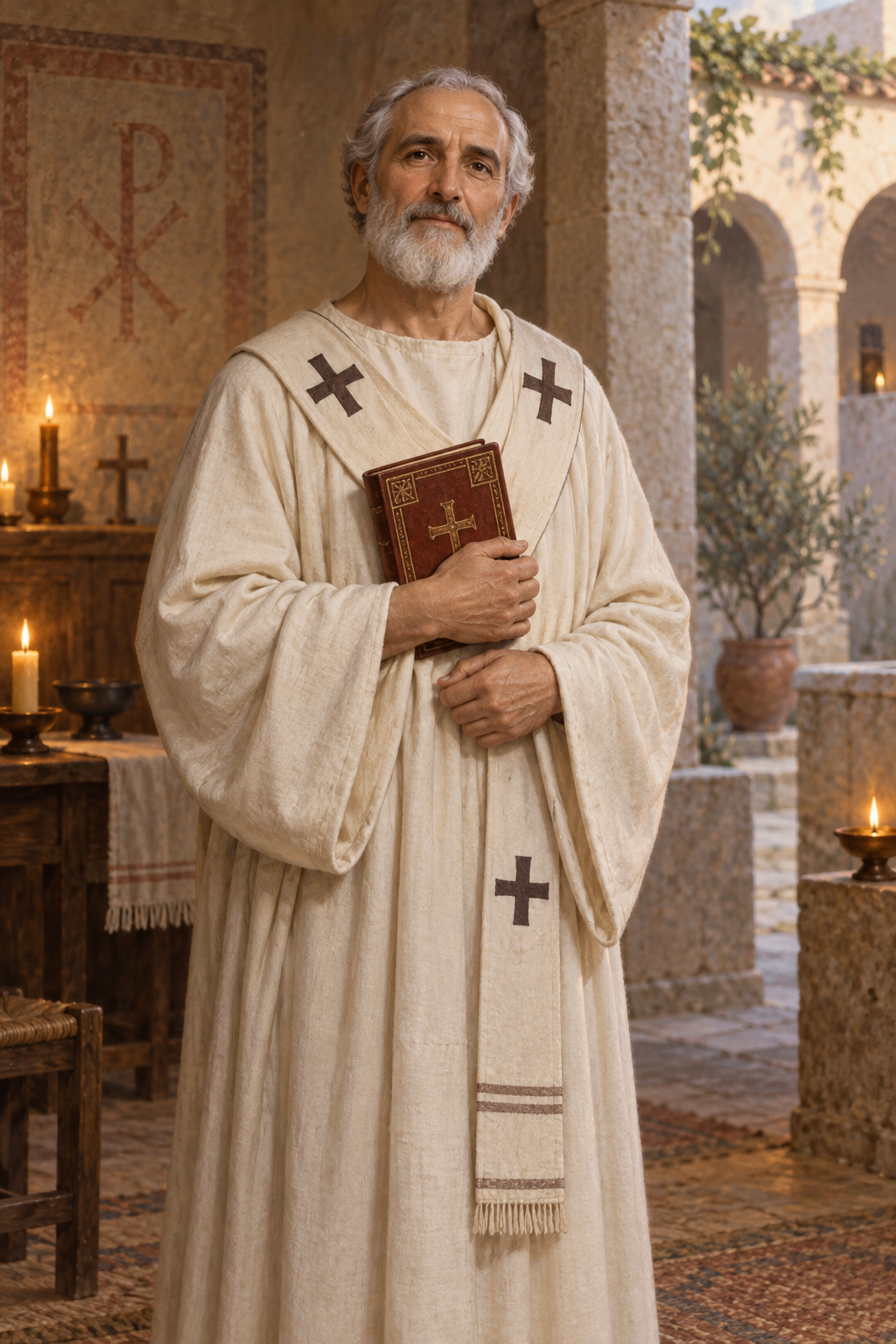
Artwork should follow the same editorial restraint. A simple early Christian bishop with a Gospel book is suitable because it visualizes episcopal memory without asserting a precise likeness or death scene. A tiara, medieval papal vestments, or execution imagery would make the image more confident than the sources allow.
Wondering how to weigh the stories and sources? Learn how to read a saint biography.