Biography
Pope Anterus
About Pope Anterus
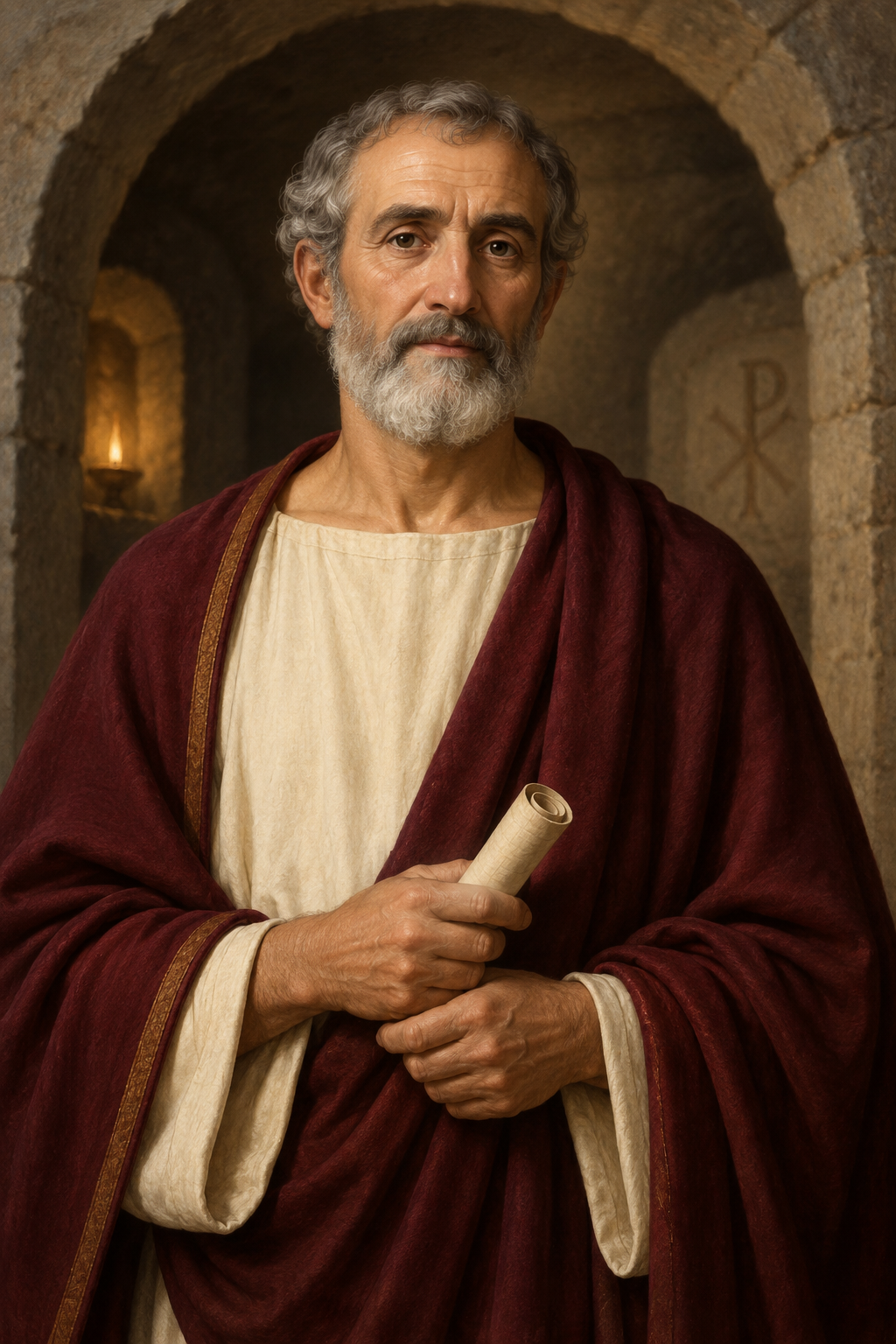
Anterus became bishop of Rome after Pontian resigned in 235. Pontian had been condemned to mines in Sardinia during the reign of Maximinus Thrax, and his resignation made succession possible. The Liberian Catalogue, as assessed by the Enciclopedia dei Papi, dates Anterus's election to November 21 of that year. The Holy See gives the same beginning and ends his pontificate on January 3, 236. His tenure therefore lasted only a little more than forty days. Sources do not preserve a reliable account of what he taught, how he organized the Roman community, or what decisions he made in that brief time. His place in the succession is secure, while a detailed ministry narrative is beyond the surviving evidence.The Holy See lists Greece as Anterus's place of birth. A critical review traces a Greek origin and a father's name to the later Liber Pontificalis, rather than to a contemporary birth record. His name and the Greek language of the surviving epitaph are consistent with connections to the Greek-speaking world, but they cannot identify a particular birthplace or childhood. The profile therefore does not turn the broad Greece label into a named city, nor assign a birth year. The gap matters because early Roman bishops often survive in later biographies that mix a remembered succession with details supplied long afterward. For Anterus, the firm outline begins with his election; the preceding decades remain obscure.Later tradition associates Anterus with collecting the records of martyrs. The Liber Pontificalis says that he asked church notaries to gather and preserve their acts. The Enciclopedia dei Papi finds no historical foundation for this report and explains that a proposed connection between the project and Anterus's own death arose from a disputed repair of a difficult text. The story can tell readers how later Christians imagined a pope protecting the memory of witnesses to their faith, but it cannot establish that Anterus founded an archive or personally stored a collection. Nothing in the short contemporary record allows that activity to be dated within his pontificate. The portrait's rolled papyrus is therefore symbolic devotional art, not an image of a known surviving document.The question of martyrdom is similarly unsettled. The later Liber Pontificalis calls Anterus a martyr, and the older Roman martyrology repeats that designation. The earlier Liberian Catalogue says instead that he 'fell asleep,' wording often used for natural death, and the early list of martyrs does not include him. The Enciclopedia dei Papi notes that some historians still allow the possibility of death during persecution, so the evidence does not prove the opposite claim either. The New Catholic Encyclopedia regards the martyr report as untrustworthy. The fair account is that Anterus died on January 3, 236, and was later honored in a martyr tradition, while the circumstances of his death remain unknown. His structured classification records his documented office as bishop without making the debated manner of death a settled fact.A more tangible witness survives in the burial record. A fragment of a Greek inscription naming Anterus as bishop was discovered in the papal crypt of the Callixtus cemetery. Its find location and form support its authenticity, according to the Enciclopedia dei Papi. The Pontifical Commission for Sacred Archaeology identifies the crypt as a burial place of third-century Roman bishops. The stone cannot reveal Anterus's personality, cause of death, or precise ancestry, but it gives a firm place to a name otherwise carried chiefly by lists. Roman liturgical books began commemorating him on January 3 from the ninth century, later than his life. That feast keeps his short service in memory without requiring the uncertain acts story or martyrdom claim to be treated as established history.
Wondering how to weigh the stories and sources? Learn how to read a saint biography.