Biography
Pope Benedict II
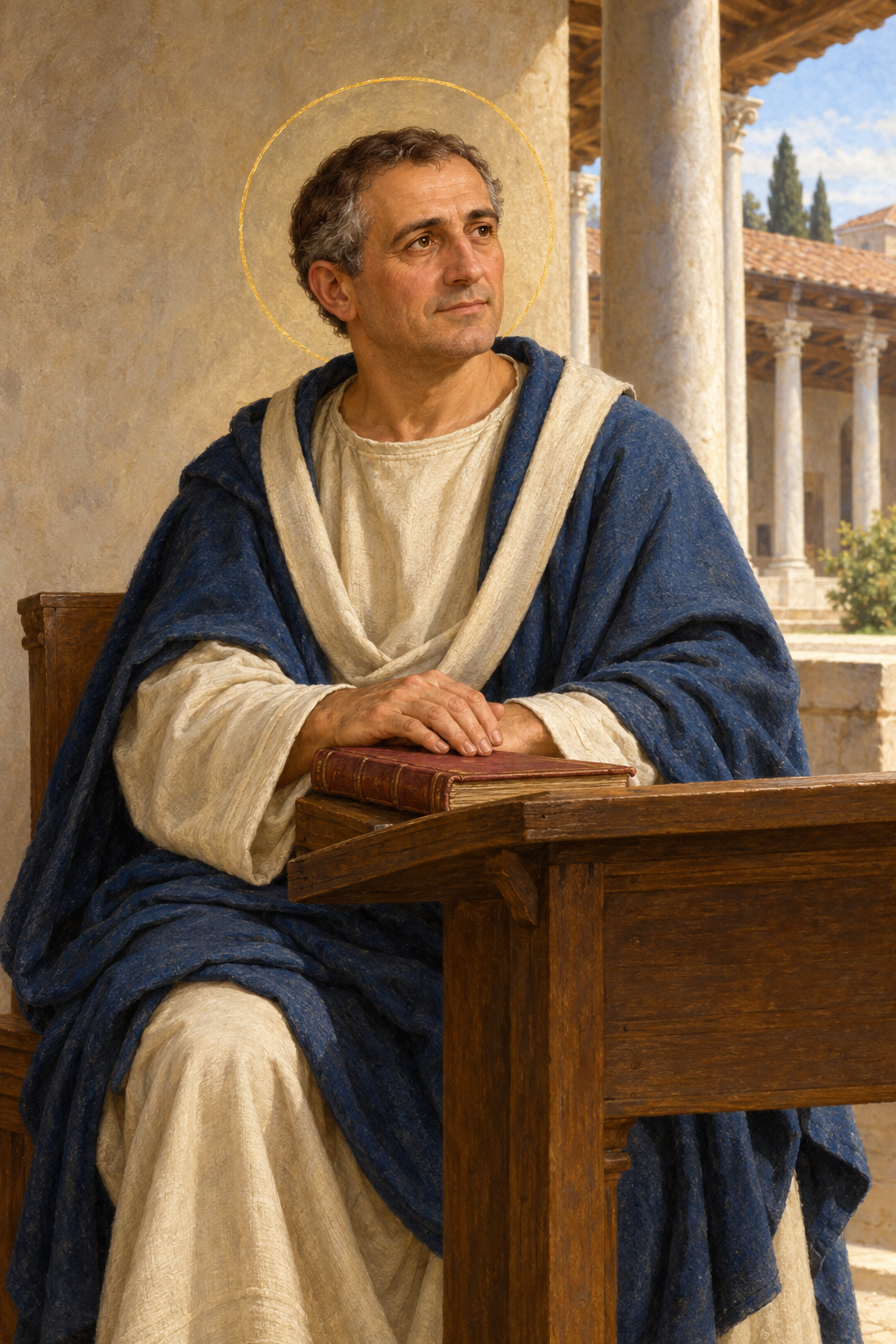
About Pope Benedict II
Benedict II was a Roman churchman whose pontificate lasted less than a year, from June 26, 684, to May 8, 685. He had been elected earlier, but waited for imperial approval before his consecration. That delay became one of the matters his brief administration sought to address.
The Liber pontificalis remembers him as someone who had served the Roman Church from childhood. It praises his study of Scripture and skill in chanting, then describes his conduct as a priest in terms of humility, gentleness and care for people in need. These are the qualities his early biographer chose to associate with his rise to episcopal office. The account places him within the city’s clergy, rather than presenting him as a monk arriving from another community.
That emphasis on learning and singing has a wider setting. Historian Rosamond McKitterick notes that the lives of several popes in this part of the Liber pontificalis praise those skills, although they are less prominent elsewhere in the collection. Benedict’s remembered formation belongs to a period when these biographies stressed the Roman bishops’ continuity of service and leadership in matters of faith. Such praise tells us something about the community’s ideals as well as the individual it commemorated.
Benedict’s predecessor, Leo II, had died in 683. The long wait before a successor could be consecrated exposed the practical difficulty of seeking authorization from Constantinople. Constantine IV subsequently allowed the imperial representative at Ravenna to give the necessary permission. Bertolini distinguishes this delegation from complete freedom from imperial authority: the change shortened the process while preserving an official role for the emperor’s government in Italy.
Relations with the emperor also took a more personal ceremonial form. Constantine sent locks of hair from his sons Justinian and Heraclius, which Benedict received with the clergy and army of Rome. The Catholic Encyclopedia describes this gesture as adoption. It expressed a connection between the imperial household and the Roman Church through a symbolic act, rather than through the princes becoming members of the pope’s household.
Benedict was already conducting church business before his consecration. In his letter to the notary Peter, he identified himself as a priest elected to the apostolic see. Peter had been assigned by Leo II to carry the decisions of the sixth ecumenical council to Spain. Benedict instructed him to complete that mission and obtain the bishops’ signatures beneath the council’s definition. He wanted their agreement to show that they shared the same inherited faith as Rome.
The letter describes a mission involving both church and royal authorities. Peter was to deal with the king, bishops and a prominent count, carrying the council’s teaching alongside an imperial decree. Benedict urged diligence and prompt completion, presenting the work as service to the spiritual welfare of those who received it. The document gives a concrete view of how he pursued agreement: through an envoy, texts to be examined and signatures to be gathered.
Agreement did not remove every disagreement. The Council of Toledo in November 684 endorsed the council’s rejection of Monothelitism, the teaching that Christ had only one will. Benedict nevertheless objected to expressions in an account of the faith sent by Julian of Toledo. The New Catholic Encyclopedia also records his unsuccessful effort to persuade Macarius, the deposed patriarch of Antioch, to abandon that teaching. His correspondence and interventions therefore should not be summarized as an unbroken series of doctrinal victories. Macarius was given forty days for reflection, with daily visits from Benedict’s adviser Boniface. The unsuccessful outcome matters: repeated instruction did not secure the change of conviction that the pope sought. This was a sustained attempt at persuasion, but the record does not allow it to be presented as a reconciliation achieved.
The exchange with Julian became particularly strained. Benedict communicated his criticisms orally through the envoy rather than setting them out in his letter. Julian considered the manner of delivery disrespectful and replied. Bertolini notes that it is uncertain whether this reply reached Rome before Benedict died. The episode reveals how the handling of a message could deepen a dispute even when the parties accepted the same council.
His care for Rome also took material form. The early biography records a gift of thirty pounds of gold for clergy, charitable religious communities and church attendants. The inclusion of organizations serving people in need gives substance to its praise of his generosity. Alongside decisions about doctrine and office, the record preserves provision for those who maintained worship and charitable service.
Benedict also supported Wilfrid of York’s cause and restored Roman churches. He died on May 8, 685, and was buried at Saint Peter’s. His brief pontificate left both practical acts of care and disputes that outlasted him. His restoration work and gifts benefited places of worship as well as the people responsible for their upkeep.
Wondering how to weigh the stories and sources? Learn how to read a saint biography.