Biography
Pope Caius
About Pope Caius
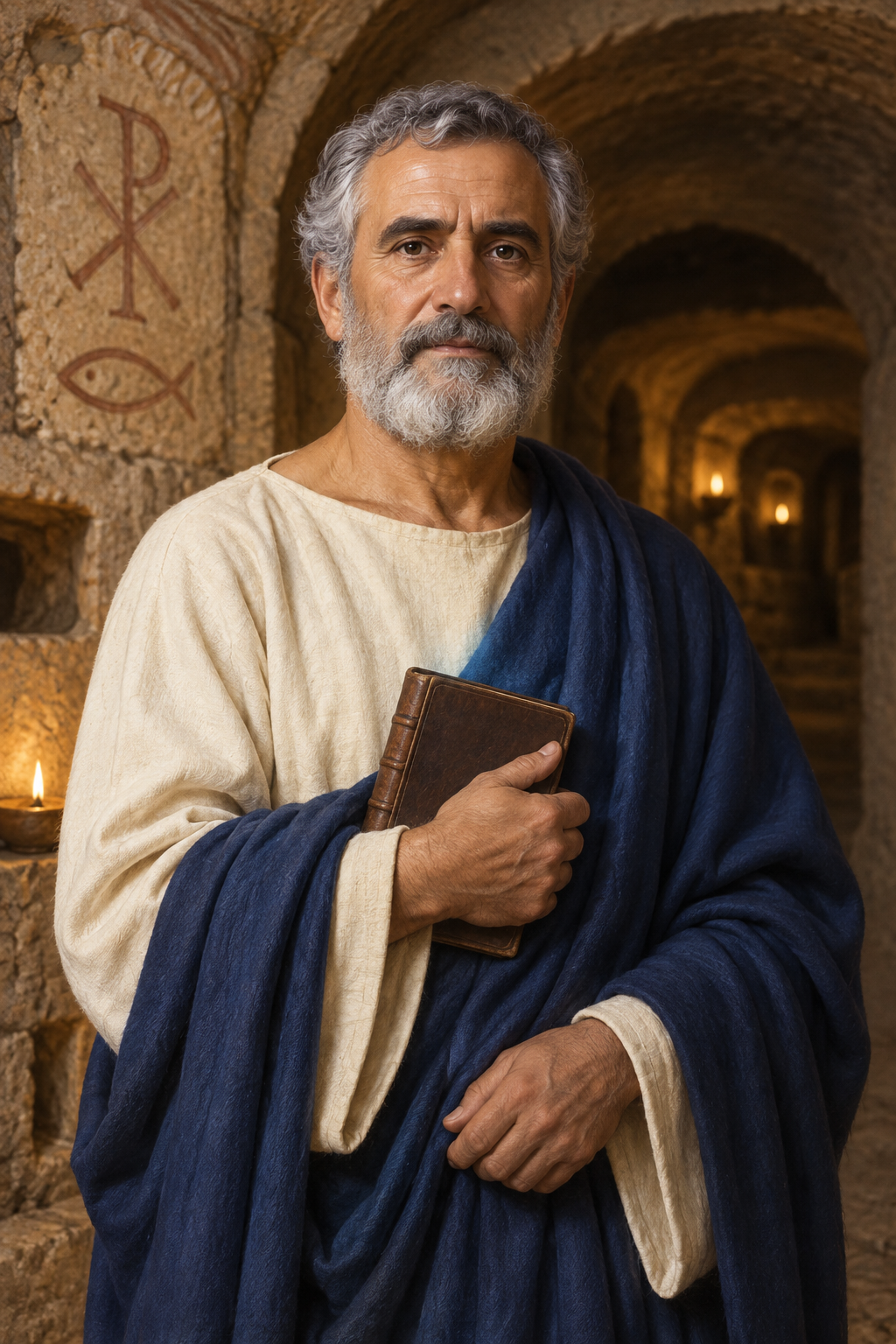
Caius became bishop of Rome on December 17, 283, and served until April 22, 296, according to the dates kept by the Holy See. The Catholic Encyclopedia explains that the Liberian Catalogue supplies this chronology, while a different figure in Eusebius gives a longer tenure. The official list identifies Dalmatia as his place of origin but supplies no town or birth year. Treccani likewise describes him as Dalmatian. These details place him within the late third-century Roman church but do not yield a story of his childhood or route into ministry. A responsible profile begins with the attested bishop and leaves the unsupported earlier years open.His years in office fell during a relative lull between major campaigns against Christians. Treccani sets his tenure between the persecution under Valerian and the later one under Diocletian. That setting is important: Diocletian's great persecution began after Caius's death, so the common image of him hiding through that campaign or being executed in it does not fit the chronology. The sources reviewed do not preserve specific pastoral rulings that can be securely assigned to him. Claims that he ordered a fixed series of minor clerical ranks or belonged to an imperial family circulate in later stories, but the early record does not establish them. The profile gives the community's broad historical setting without making imagined decisions into his biography.The older Roman martyrology commemorates Caius on April 22 and calls him a martyr under Diocletian. That is evidence of later devotion, not independent evidence of a trial or execution. The Catholic Encyclopedia points to the fourth-century Depositio Episcoporum, which lists him among bishops rather than in the martyr list. Treccani also labels his martyrdom a tradition. The most careful conclusion is that he died on April 22, 296, and his manner of death is unknown. The profile does not have to deny the devotional language to acknowledge the historical gap. It can identify him as a bishop, describe the traditional martyr title, and avoid adding a structured martyr classification unsupported by the earlier sources.Caius was buried in the Callixtus cemetery, the same complex associated with several early bishops of Rome. The fourth-century deposition list names his burial there, and Treccani reports that an epitaph was found. These witnesses support a real burial and remembered office. They do not reveal his face, private faith practices, or family network. In particular, the February 19 Roman martyrology remembers Gabinus and calls him the pope's brother, but that later notice is neither a feast for Caius nor sufficient evidence to encode a family relationship. The imaginative portrait places a closed book in his hands as a general sign of pastoral teaching; no personal book is known to survive.The Catholic church's current Vatican News calendar places Caius on April 22, the same day as the older Roman martyrology. It is also the date the Holy See gives for the end of his pontificate in 296. This alignment supports April 22 as the catalog's Catholic feast, replacing February 19, which belongs to Gabinus's notice. His historical importance is modestly but firmly stated: a Dalmatian-origin bishop led the Roman community for more than twelve years, and early lists and burial evidence kept his name in its succession. The gaps are part of the story. They allow readers to see both the durability of his remembrance and the limits of what can be recovered about a third-century life.
Wondering how to weigh the stories and sources? Learn how to read a saint biography.