Biography
Pope Celestine I
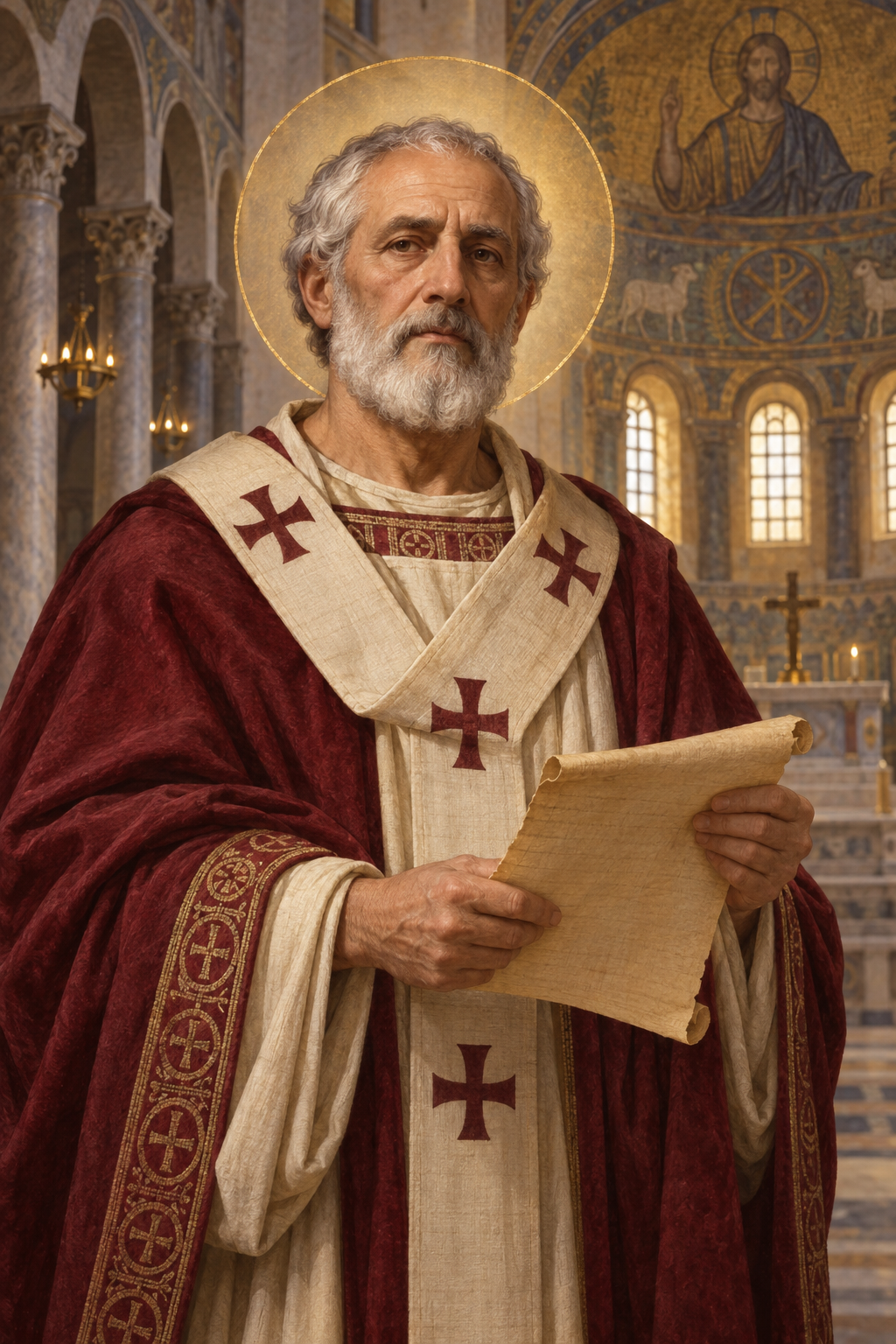
About Pope Celestine I
Celestine I came from Campania, according to the Holy See's papal list, but no birth year or smaller birthplace is given there. An older Catholic reference calls him Roman and names his father, illustrating how the surviving accounts differ in precision and confidence. Celestine appears as a deacon before becoming bishop of Rome in 422. The Holy See dates his pontificate from September 10, 422, to July 27, 432. Early service can be described without inventing how he was educated or what drew him into ministry. His nearly ten years as bishop took place while communities around the Mediterranean negotiated questions of teaching, leadership and communion. The written record is fuller for his public correspondence than for private details.The dispute associated with Nestorius of Constantinople became a central concern. Celestine received reports and in 430 held a Roman synod that judged Nestorius's teaching unacceptable, according to the Catholic Encyclopedia. Cyril of Alexandria was already deeply involved in the dispute and carried communication between churches. Celestine's action mattered, yet it was one strand in a debate involving eastern bishops and the emperor. The council called at Ephesus in 431 was not a private meeting organized and concluded by the pope alone. Its surviving acts show letters and delegates from Rome alongside the work of Cyril and the assembled bishops. Describing that shared process allows the doctrinal decision to be stated accurately without turning it into a single man's achievement.At Ephesus, the council affirmed that the one Jesus Christ is truly divine and human, and upheld the title Theotokos, 'God-bearer,' for Mary in relation to him. The dispute had personal and political edges as well as theological ones, and the sequence of sessions and counterclaims was not simple. Celestine did not preside at Ephesus in person. His representatives were among those who received and signed proceedings, while Cyril and other bishops worked on the ground. The transmitted acts are the strongest source for describing what occurred there. They also caution against an account that skips the voices of the participants who were present or claims Celestine individually authored all the council's decisions.Celestine's attention also reached northwest Europe. The Catholic Encyclopedia describes his action against Pelagian teaching in Britain and the sending of Palladius toward Ireland. Later stories about Patrick and Celestine should be treated separately from the clearer early report about Palladius; a papal mission for one person cannot simply be transferred to another. Several writings and liturgical changes were later credited to Celestine, but the same historical reference doubts his authorship of the Capitula Coelestini and the claim that he introduced the Introit to the Roman Mass. His documented influence is substantial without those additions. Letters, judgments and contacts with other bishops give a firmer picture of his work than a catalog of doubtful innovations.The Holy See gives July 27, 432, as the end of Celestine's pontificate, and Vatican News currently commemorates him on July 27. Earlier Catholic sources used April 6; the older Roman martyrology records that date. The Orthodox Church in America commemorates him April 8, although its short life gives a conflicting April death date. These are distinct calendar witnesses, not proof that he died more than once. The record uses the Holy See's chronology for the life date, the present Vatican listing for the Catholic feast, and the direct Orthodox listing for that tradition. A July 31 OCA page mentions Celestine in another saint's story, so it cannot establish his own feast. His papacy remains significant through the church correspondence and council record that still invite careful reading.
Wondering how to weigh the stories and sources? Learn how to read a saint biography.